Advice is a noun, and advise is a verb. That one rule answers almost every advice vs advise question, but knowing the rule and using it in a real sentence are two different things. This article is the practice version: 20 sentences to fill in, verb drills, and a quick quiz, all with answers.
If you want the full explanation first, read Advice vs Advise: Which Is Correct?, which covers the origin, British and American spelling, common mistakes, and everyday examples. Then come back here and test yourself.
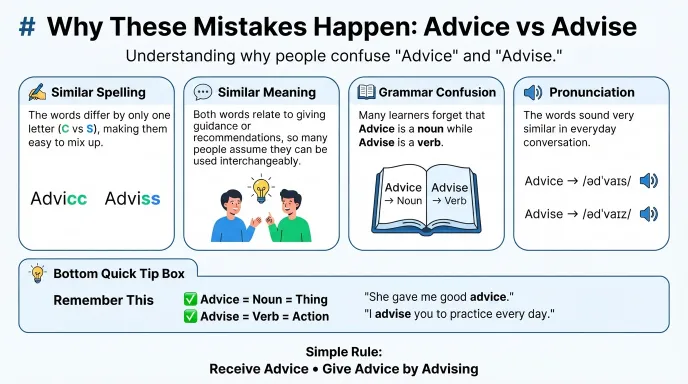
The quick reminder before you start: advice is something you receive, and advise is something you do. Keep that in mind and work through the sentences below.
Advice vs Advise: Quick Answer
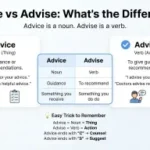
The difference is simple:
- Advice = a noun that means guidance or recommendations.
- Advise = a verb that means to give guidance or recommendations.
Examples
✅ She gave me good advice.
✅ I advise you to save money.
❌ She gave me good advise.
❌ I advice you to save money.
Easy Memory Trick
- Advice = Thing you receive.
- Advise = Action you do.
20 Practice Sentences
Fill in each blank with advice or advise. The answers are given after each sentence, and the full answer table follows the list.
- She gave me excellent ___ on my job application. Answer: advice. Advice is the noun, the thing you receive.
- I ___ you to read the contract before you sign it. Answer: advise. Advise is the verb, the action of giving guidance.
- Thank you for your helpful ___. Answer: advice. After your (a possessive) comes the noun advice.
- The teacher ___ us to practise every day. Answer: advises. Third person singular takes advises.
- I need some ___ about buying a used car. Answer: advice. Advice is uncountable, so use some advice, not an advice.
- He ___ his friend to save money each month. Answer: advised. Past tense of advise is advised, never adviced.
- Her ___ was simple: start small and stay consistent. Answer: advice. Here the word names the guidance itself, so it is the noun.
- Doctors ___ patients to drink more water. Answer: advise. Doctors do the action, so use the verb advise.
- Can you give me a piece of ___? Answer: advice. Advice has no plural; count it with a piece of advice.
- My father ___ me to learn a new skill every year. Answer: advised. Past tense, so advised.
- That was the best ___ I have ever received. Answer: advice. Received points to the noun advice.
- I would ___ you to check the dates twice. Answer: advise. Would is followed by the verb advise.
- She is always asking for ___, but she never follows it. Answer: advice. Asking for points to the noun.
- The lawyer ___ her client to stay calm in court. Answer: advised. Past tense, so advised.
- A little ___ can save a lot of trouble. Answer: advice. A little is used with the uncountable noun advice.
- They ___ visitors to arrive thirty minutes early. Answer: advise. They takes the base verb advise.
- His ___ helped me pass the interview. Answer: advice. His is a possessive, so the noun advice follows.
- Please ___ me on which course to choose. Answer: advise. Please is followed by the verb advise.
- Good ___ is easy to give and hard to follow. Answer: advice. Good describes the noun advice.
- The manager ___ the team to keep a backup of every file. Answer: advised. Past tense, so advised.
| Sentence | Answer | Why |
| She gave me excellent ___ on my job application. | advice | Advice is the noun, the thing you receive. |
| I ___ you to read the contract before you sign it. | advise | Advise is the verb, the action of giving guidance. |
| Thank you for your helpful ___. | advice | After your (a possessive) comes the noun advice. |
| The teacher ___ us to practise every day. | advises | Third person singular takes advises. |
| I need some ___ about buying a used car. | advice | Advice is uncountable, so use some advice, not an advice. |
| He ___ his friend to save money each month. | advised | Past tense of advise is advised, never adviced. |
| Her ___ was simple: start small and stay consistent. | advice | Here the word names the guidance itself, so it is the noun. |
| Doctors ___ patients to drink more water. | advise | Doctors do the action, so use the verb advise. |
| Can you give me a piece of ___? | advice | Advice has no plural; count it with a piece of advice. |
| My father ___ me to learn a new skill every year. | advised | Past tense, so advised. |
| That was the best ___ I have ever received. | advice | Received points to the noun advice. |
| I would ___ you to check the dates twice. | advise | Would is followed by the verb advise. |
| She is always asking for ___, but she never follows it. | advice | Asking for points to the noun. |
| The lawyer ___ her client to stay calm in court. | advised | Past tense, so advised. |
| A little ___ can save a lot of trouble. | advice | A little is used with the uncountable noun advice. |
| They ___ visitors to arrive thirty minutes early. | advise | They takes the base verb advise. |
| His ___ helped me pass the interview. | advice | His is a possessive, so the noun advice follows. |
| Please ___ me on which course to choose. | advise | Please is followed by the verb advise. |
| Good ___ is easy to give and hard to follow. | advice | Good describes the noun advice. |
| The manager ___ the team to keep a backup of every file. | advised | Past tense, so advised. |
Verb Drills: Advise Changes, Advice Does Not
Advise is a verb, so it changes with tense: advise, advises, advised, advising. Advice is a noun and never changes. Work through these five drills.
- Present tense. She ___ her students to revise daily. Answer: advises. Third person singular takes advises.
- Past tense. Yesterday, he ___ me to wait. Answer: advised. The past of advise is advised, never adviced.
- Continuous. She is ___ her brother on his CV. Answer: advising. The -ing form is advising.
- Uncountable. I need ___ about this decision. Answer: some advice. Advice has no plural, so never write an advice or many advices.
- Counting it. Can you give me ___ advice? Answer: a piece of. Count advice with a piece of advice, a lot of advice, or some advice.
Advice in Four Places: Email, School, Work, Everyday
The same rule works everywhere. Try one sentence from each place where people use these words most.
- Email: Thank you for your ___. Answer: advice. And: I ___ you to reply by Friday. Answer: advise.
- School: The teacher’s ___ was clear. Answer: advice. And: She ___ us to read the question twice. Answer: advises.
- Work: My manager’s ___ saved the project. Answer: advice. And: He ___ the team to back up their files. Answer: advised.
- Everyday: Good ___ is free, but it is rarely followed. Answer: advice. And: I ___ you to carry water on a hot day. Answer: advise.
5 Exam Traps to Watch For
- “Please advice me.” Wrong. Please is followed by the verb, so write “Please advise me.”
- “Adviced.” Wrong spelling. The past tense is advised, with an s before the d.
- “An advice” or “many advices.” Wrong. Advice is uncountable. Write some advice, a piece of advice, or a lot of advice.
- “Thanks for your advise.” Wrong. Your is a possessive, so the noun follows: “Thanks for your advice.”
- “I advice you.” Wrong. After I, use the verb: “I advise you.”
Quick Quiz: 10 Questions
No peeking. Choose advice or advise for each sentence, then check the answers below.
- I need your ___ on this matter. Answer: advice. After your comes the noun advice.
- She ___ me to apply early. Answer: advised. Past tense, so advised.
- His ___ was to start over. Answer: advice. Was points to the noun advice.
- They ___ tourists to book tickets in advance. Answer: advise. They takes the base verb advise.
- Can you give me some ___? Answer: advice. Some is used with the uncountable noun advice.
- The coach ___ the players to rest well. Answer: advised. Past tense, so advised.
- That is terrible ___; please ignore it. Answer: advice. Terrible describes the noun advice.
- I ___ you to save a copy of your work. Answer: advise. I takes the verb advise.
- We ___ our students to ask questions. Answer: advise. We takes the base verb advise.
- A word of ___: never share your password. Answer: advice. Of is followed by the noun advice.
| Question | Answer | Why |
| I need your ___ on this matter. | advice | After your comes the noun advice. |
| She ___ me to apply early. | advised | Past tense, so advised. |
| His ___ was to start over. | advice | Was points to the noun advice. |
| They ___ tourists to book tickets in advance. | advise | They takes the base verb advise. |
| Can you give me some ___? | advice | Some is used with the uncountable noun advice. |
| The coach ___ the players to rest well. | advised | Past tense, so advised. |
| That is terrible ___; please ignore it. | advice | Terrible describes the noun advice. |
| I ___ you to save a copy of your work. | advise | I takes the verb advise. |
| We ___ our students to ask questions. | advise | We takes the base verb advise. |
| A word of ___: never share your password. | advice | Of is followed by the noun advice. |
Quick Correction Table
If you only remember one table from this article, make it this one. Every row is a mistake people actually make.
| Incorrect | Correct |
| Please advice me. | Please advise me. |
| Thanks for your advise. | Thanks for your advice. |
| I need an advise. | I need some advice. |
| She adviced me yesterday. | She advised me yesterday. |
| Can you give me an advise? | Can you give me some advice? |
| He gave me many advices. | He gave me a lot of advice. |
Frequently Asked Questions
1. What is the difference between advice and advise? Advice is a noun that means guidance or recommendations. Advise is a verb that means to give guidance or recommend something.
2. Is “Please advice me” correct? No. The correct sentence is “Please advise me,” because advise is the verb.
3. Can I say “an advice”? Generally, no. Advice is an uncountable noun. Correct forms include some advice, a piece of advice, and helpful advice.
4. How can I remember the difference? Advice ends in C, like Counsel (a noun). Advise ends in S, like Suggest (a verb). Advice is what you receive, advise is what you do.
Conclusion
Advice is the noun and advise is the verb, and that is the whole rule. The mistakes come from spelling, not from meaning: adviced is never correct, and an advice is never correct. Practise with the sentences above until the right form comes without thinking, and check the explanation article whenever a sentence still feels uncertain.