English has many words that sound exactly the same but have completely different meanings. By, Buy, and Bye are perfect examples. These words are called homophones because they share the same pronunciation but have different spellings and meanings. Many students, English learners, and even native speakers confuse these words while writing emails, essays, text messages, or social media posts.
People often search for “By vs Buy vs Bye” because spelling checkers may not catch the mistake. For example, writing “I will by a new phone” instead of “I will buy a new phone” is incorrect, even though both words sound the same. Likewise, saying “Bye the window” instead of “By the window” changes the meaning of the sentence.
Learning the difference is easy once you understand the purpose of each word. This guide explains their meanings, origins, examples, common mistakes, and usage tips in simple English. By the end, you’ll know exactly when to use by, buy, and bye with confidence.
By vs Buy vs Bye:Quick Answer
Although by, buy, and bye sound alike, they have different meanings.
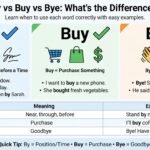
| Word | Meaning | Example |
| By | Near, beside, through, or written by someone | The book was written by Sarah. |
| Buy | To purchase something | I want to buy a new laptop. |
| Bye | A short form of goodbye | Bye! See you tomorrow. |
Quick Examples
- Please stand by the door.
- I need to buy groceries.
- Bye! Have a wonderful day.
Easy Memory Trick
- By = Near, beside, through
- Buy = Purchase
- Bye = Goodbye
The Origin of By vs Buy vs Bye
Although these three words sound exactly the same today, they come from completely different historical roots
Origin of Buy
The word buy comes from the Old English bycgan, meaning to purchase or obtain something by paying money. While the spelling changed slightly over time, the meaning has remained almost unchanged.
Origin of Bye
The word bye is much newer. It developed as a shortened form of goodbye, which originally came from the phrase “God be with ye.” Over time, the expression became shorter until bye became the common farewell we use today.
Why Do They Sound the Same?
English pronunciation has changed throughout history, but spellings often stayed connected to each word’s origin. As a result, by, buy, and bye are pronounced the same even though they have different spellings and meanings.
British English vs American English Spelling
Unlike many English words, by, buy, and bye have the same spelling in both British English and American English. There are no spelling differences between these words.
The only difference you may notice is in accent and pronunciation, but the spelling and meanings remain exactly the same
Comparison Table
| Word | American English | British English | Meaning |
| By | ✅ By | ✅ By | Near, beside, through, or written by someone |
| Buy | ✅ Buy | ✅ Buy | To purchase something |
| Bye | ✅ Bye | ✅ Bye | Goodbye |
American English Examples
- I will buy a new phone.
- Please sit by me.
- Bye! Have a nice day.
British English Examples
- I will buy a new mobile phone.
- Please stand by the entrance.
- Bye! See you later.
Key Takeaway
if you’re writing for readers in the United States, United Kingdom, Canada, Australia, or anywhere else, the correct spellings are always:
- By
- Buy
- Bye
Which Spelling Should You Use?
The correct word depends entirely on what you want to say, not where your audience lives.
Use By When You Mean:
- Near or beside
- Through a method
- Written or created by someone
- Before a certain time
Examples
Use Buy When You Mean:
To purchase something with money.
Examples
- I want to buy a new laptop.
- She plans to buy a house.
- We should buy fresh vegetables.
Use Bye When You Mean
To say goodbye.
Examples
- Bye! See you tomorrow.
- She waved and said, “Bye!”
- It’s time to say bye.
Audience:Based Advice
| Audience | Recommended Usage |
| United States | By, Buy, Bye |
| United Kingdom | By, Buy, Bye |
| Canada | By, Buy, Bye |
| Australia | By, Buy, Bye |
| International English | By, Buy, Bye |
Tip: There is no British or American spelling difference. Simply choose the word that matches your intended meaning.
Common Mistakes with By vs Buy vs Bye
Because these words sound exactly alike, they are often confused in writing.
Common Errors
| ❌ Incorrect | ✅ Correct |
| I will by a car. | I will buy a car. |
| Stand bye the door. | Stand by the door. |
| Buy everyone! | Bye everyone! |
| Written buy Sarah. | Written by Sarah. |
| Please by this book. | Please buy this book. |
| She stood buy me. | She stood by me. |
How to Remember
By = Position or Method
Think of by when talking about location, transport, authorship, or deadlines.
Examples
Buy = Purchase
If money is involved, use buy.
Examples
Bye = Goodbye
If someone is leaving or ending a conversation, use bye.
Examples
Quick Memory Trick
- By → Near or through
- Buy → Purchase
By vs Buy vs Bye in Everyday Examples
Knowing the meanings of by, buy, and bye is helpful, but seeing them in real-life situations makes them much easier to remember. Here are examples from emails, news articles, social media, and formal writing

In Emails
By
- Please submit your report by Monday.
- The presentation was prepared by our marketing team.
Buy
- We need to buy new office chairs this week.
- Can you buy the software license before Friday?
Bye
In News Headlines
By
- New Climate Report Released by Scientists
- Book Written by Local Author Wins Award
Buy
- More Families Buy Electric Vehicles This Year
- Consumers Buy Online More Than Ever
Bye
On Social Media
By
- Stop by my profile later!
- Made with ❤️ by our amazing team.
Buy
- Time to buy a new phone!
- I finally bought my dream laptop.
Bye
In Formal Writing
By
- The proposal was approved by the committee.
- Payment must be completed by the deadline.
Buy
- Customers may buy products through our website.
- Investors continue to buy company shares.
Bye
The word bye is uncommon in formal writing. Instead, writers usually use:
- Goodbye
- Farewell
- Best regards
- Sincerely
However, bye may appear in quotations or informal communication.
Everyday Conversation Examples
| Situation | Correct Sentence |
| Talking about location | Sit by me. |
| Shopping | Let’s buy some snacks. |
| Leaving | Bye! See you tomorrow. |
| Transport | We traveled by train. |
| Deadline | Finish the work by 5 p.m. |
| Greeting | She smiled and said, “Bye!“ |
By vs Buy vs Bye : Google Trends & Usage Data
The keywords by, buy, and bye receive thousands of searches because they are among the most commonly confused English homophones.
People usually search for these words to:
- Learn the correct spelling.
- Improve grammar and writing.
- Prepare for school exams.
- Write professional emails.
- Avoid common English mistakes.
Search Popularity
By
The word by is one of the most frequently used words in English. It appears in grammar lessons because it has many meanings, including location, authorship, transportation, and deadlines.
Buy
Searches for buy increase during major shopping events such as:
- Black Friday
- Cyber Monday
- Holiday sales
- Back-to-school shopping
People often search for phrases like:
- Buy online
- Buy now
- Where to buy
Bye
The word bye is popular in searches related to:
- English greetings
- Text messages
- Informal writing
- Conversation practice
Countries Where This Topic Is Popular
People commonly search for By vs Buy vs Bye in:

- 🇺🇸 United States
- 🇬🇧 United Kingdom
- 🇨🇦 Canada
- 🇦🇺 Australia
- 🇮🇳 India
- 🇵🇰 Pakistan
- 🇳🇿 New Zealand
The topic is especially popular among English learners, teachers, bloggers, students, and professional writers.
By vs Buy vs Bye Comparison Table

| Feature | By | Buy | Bye |
| Part of Speech | Preposition, Adverb | Verb | Interjection |
| Main Meaning | Near, through, written by | Purchase something | Goodbye |
| Pronunciation | /baɪ/ | /baɪ/ | /baɪ/ |
| British English | Same spelling | Same spelling | Same spelling |
| American English | Same spelling | Same spelling | Same spelling |
| Used in Formal Writing | ✅ Yes | ✅ Yes | ❌ Rarely |
| Used in Conversation | ✅ Yes | ✅ Yes | ✅ Yes |
| Example | Stand by me. | Buy a new book. | Bye! See you soon. |
Quick Summary
| Word | Remember It As |
| By | Near, through, beside, author |
| Buy | Purchase with money |
| Bye | Goodbye |
Frequently Asked Questions
1. What is the difference between by, buy, and bye?
By is a preposition that means near, through, beside,or written by someone. Buy is a verb that means to purchase something. Bye is an informal way to say goodbye
2. Are by, buy, and bye homophones?
Yes. They are homophones, meaning they have the same pronunciation but different spellings and meanings.
Example:
3. Is “I will by a car” correc
No.
The correct sentence is:
✅ I will buy a car.
Here, buy means to purchase
4. Is “Stand bye the door” correct?
No.
The correct sentence is:
✅ Stand by the door.
By means near or beside
5. Do British and American English spell these words differently?
No.
Both British English and American English use the same spellings:
- By
- Buy
- Bye
Only pronunciation and accent may vary slightly
6. Can bye be used in formal writing?
Usually, no.
Bye is mainly used in:
- Conversations
- Text messages
- Informal emails
- Social media
In formal writing, use:
7. How can I remember the difference?
Use this simple memory trick:
- By = Near, beside, through, or written by someone.
- Buy = Purchase with money.
- Bye = Goodbye.
Conclusion
Although by, buy, and bye sound exactly the same, they have completely different meanings and uses. These words are common English homophones, which means they share the same pronunciation but have different spellings. Understanding the difference will help you write more clearly and avoid common grammar mistakes.
differences between British and American English, you only need to choose the word that matches your intended meaning.
if you’re writing an email, completing homework, posting on social media, or creating professional content, using the correct word improves your writing and communication. Practice these words with everyday examples, and soon you’ll use by, buy, and bye naturally and confidently every time.
Learn More!
Myself or Me: Which One Is Correct?
Behavioral or Behavioural: Which Spelling Is Correct?
Gage or Guage? The Correct Spelling Explained Simply
Related articles: Delux or Deluxe: Why Only Deluxe Is Standard, Can or May: Meaning, Rules, and Correct Usage.
See the dictionary definitions for by and buy.

Hi, I’m Sehrish Iqbal, and I enjoy writing about the English language and the little differences between words that often cause confusion. I create simple and easy-to-understand articles about grammar, spelling, commonly confused words, and correct word usage. My goal is to make English easier to understand and help students, writers, and English learners use the right words with confidence.