Have you ever typed “being or beeing” and stopped because you were not sure which spelling was correct? You are not alone. This is a common spelling question because the word being contains the letters “ei,” which can make it look unusual. Some people write “beeing” by mistake because they connect it with the word “be.” However, English spelling does not always follow simple sound rules.
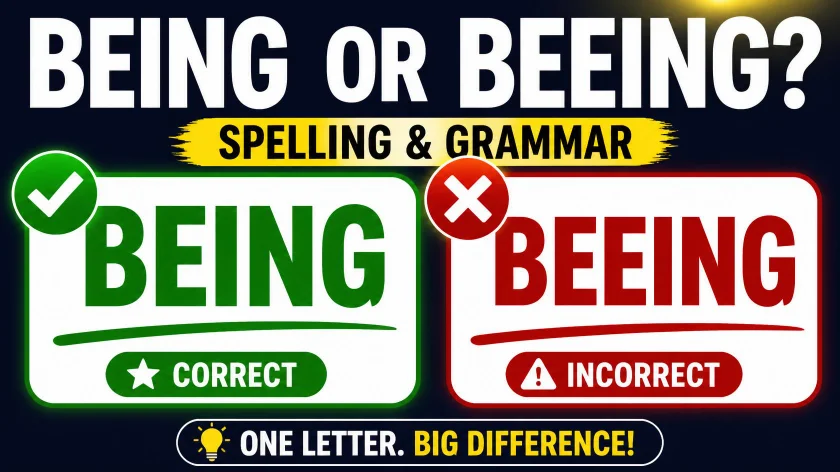
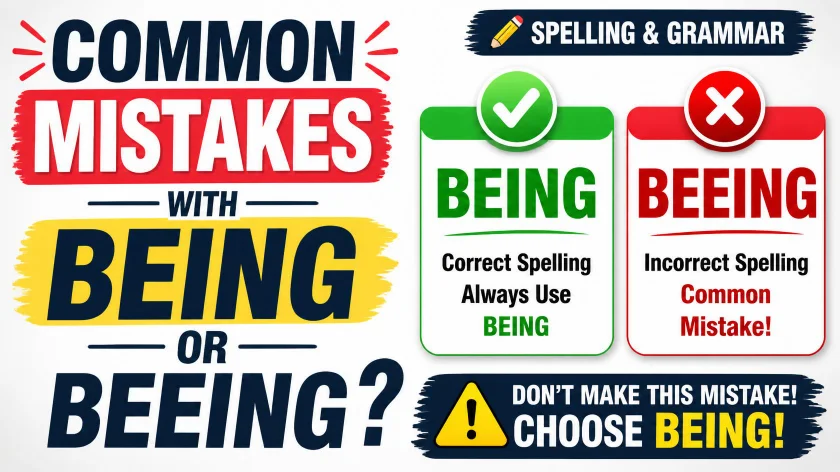
The correct spelling is being. The spelling beeing is incorrect in standard English. Being can be used as a noun, a present participle of “be,” or in phrases such as “being honest” and “being there.” It is used often in everyday English, academic writing, emails, news, and social media.
This guide explains being or beeing, including the correct spelling, its origin, common mistakes, British and American usage, and real examples. If you are unsure which form to use, the simple answer is: always use “being” in standard English.
Being or Beeing : Quick Answer
Being is the correct spelling.
Beeing is a common spelling mistake and should not be used in standard English.
Correct
- I am being honest.
- She is being helpful.
- Being kind is important.
- He enjoys being alone.
Incorrect
- I am beeing honest.
- She is beeing helpful.
- Beeing kind is important.
A simple way to remember it is:
Be + ing = being
The final e in “be” is removed before adding ing.
The Origin of Being

The word being comes from the verb be. The verb “be” has a very old history and comes from several forms found in Old English and other Germanic languages.
Over time, English developed the word being as the present participle of “be.” It can also work as a noun. For example, “a human being” means a person or human.
The spelling being follows the normal English formation of the word. When ing is added to “be,” the result is being, not “beeing.”
The extra e in “beeing” is usually caused by treating “be” as if the entire word should remain unchanged before adding “ ing.”
British English vs American English Spelling
There is no British American spelling difference between “being” and “beeing.”
Both British English and American English use:
being
| English Variety | Correct Spelling | Incorrect Spelling |
| British English | being | beeing |
| American English | being | beeing |
| Canadian English | being | beeing |
| Australian English | being | beeing |
| Global English | being | beeing |
Unlike words such as colour/color or centre/center, “being” does not normally change spelling between major English varieties.

Which Spelling Should You Use?
Use being regardless of your English variety.
For US English
Use being in schoolwork, emails, websites, business writing, and everyday communication.
For UK and Commonwealth English
Use being as well. British, Australian, and other Commonwealth English users normally spell the word the same way.
For Global English
If you write for an international audience, being is the correct and safest choice.
There is no need to choose between “being” and “beeing” based on location. Being is correct everywhere in standard English.
Common Mistakes with Being or Beeing
1. Writing “beeing”
Wrong: He is beeing very careful.
Correct: He is being very careful.
2. Adding “ ing” without changing “be”
Some learners think:
be + ing = beeing
But this is not how the word is formed in standard English.
The correct form is:
be → being
3. Confusing Being With Been
Being and been are different words.
- I am being careful.
- I have been careful.
“Being” is the present participle, while “been” is the past participle of “be.”
4. Confusing Being With Been in Questions
Correct: Why are you being so quiet?
Correct: Where have you been?
These words have different grammatical roles.
Being in Everyday Examples
In Emails
Thank you for being patient while we review your request.
In News
The company is being investigated by regulators.
On Social Media
Thanks for being here!
In Formal Writing
Being prepared can improve the quality of your work.
In Daily Conversation
Why are you being so serious?
In Education
Being consistent is important when learning a new skill.
Being or Beeing : Google Trends & Usage Data
Search interest for “being or beeing” mainly comes from people who are unsure about the spelling. The search is usually connected with English learning, spelling checks, grammar questions, and writing correction.
The correct word being is used far more widely because it is a standard English word. It appears in books, websites, news articles, academic writing, emails, and everyday conversations.
The incorrect form beeing may appear in searches because people make spelling mistakes and then search for confirmation.
Usage can also vary by context. Searches for “being or beeing” are likely to come from English learners and people checking their writing, while “being” itself has broad usage across English speaking countries.
For exact current search volume numbers, Google Trends should be checked for the specific country and date range because search interest changes over time.
Being vs Beeing: Comparison Table
| Variation | Correct? | Example |
| being | Yes | She is being helpful. |
| beeing | No | She is beeing helpful. |
| been | Yes, but different word | She has been helpful. |
| be | Yes, but different form | Try to be helpful. |
The key point is that being and beeing are not alternative spellings. Only being is correct.
FAQs About Being or Beeing
Is “being” correct?
Yes. Being is the correct spelling in standard English.

Is “beeing” a word?
No. Beeing is generally considered a spelling error when someone means the word “being.”
Why do people spell being as beeing?
People may spell it “beeing” because they add hing directly to “be” without knowing the correct spelling pattern.
Is being the same in British and American English?
Yes. Both British English and American English normally spell it being.
How do you remember the spelling of being?
Remember:
be → being
Do not write beeing.
What is the difference between being and been?
Being is the present participle, while been is the past participle.
Example:
- She is being helpful.
- She has been helpful.
Can I use “being” in formal writing?
Yes. Being is completely acceptable in formal writing when it fits the sentence.
Conclusion
The answer to “being or beeing” is simple: being is correct, and beeing is incorrect in standard English. The word “being” comes from the verb “be” and is used as both a verb form and a noun. It appears in everyday conversations, emails, news reports, academic writing, and formal documents.
There is also no British English versus American English spelling difference here. Writers in both varieties use being. Other English varieties, including Canadian and Australian English, also normally use the same spelling.
The most useful rule is easy to remember: be becomes being, not beeing. Also, do not confuse being with been, because they have different grammatical functions.
If you are writing for school, work, a website, or a professional audience, always choose being. Once you remember this simple spelling rule, the being or beeing confusion becomes easy to avoid.
Related articles: Onto or Unto: Which Is Correct and How to Use It?, Flu or Pneumonia: When to Seek Care, Vice or Vise: Meaning and Usage Guide.
See the dictionary definitions for being and beeing.