Nov 13, 2026 · @WhackDigital
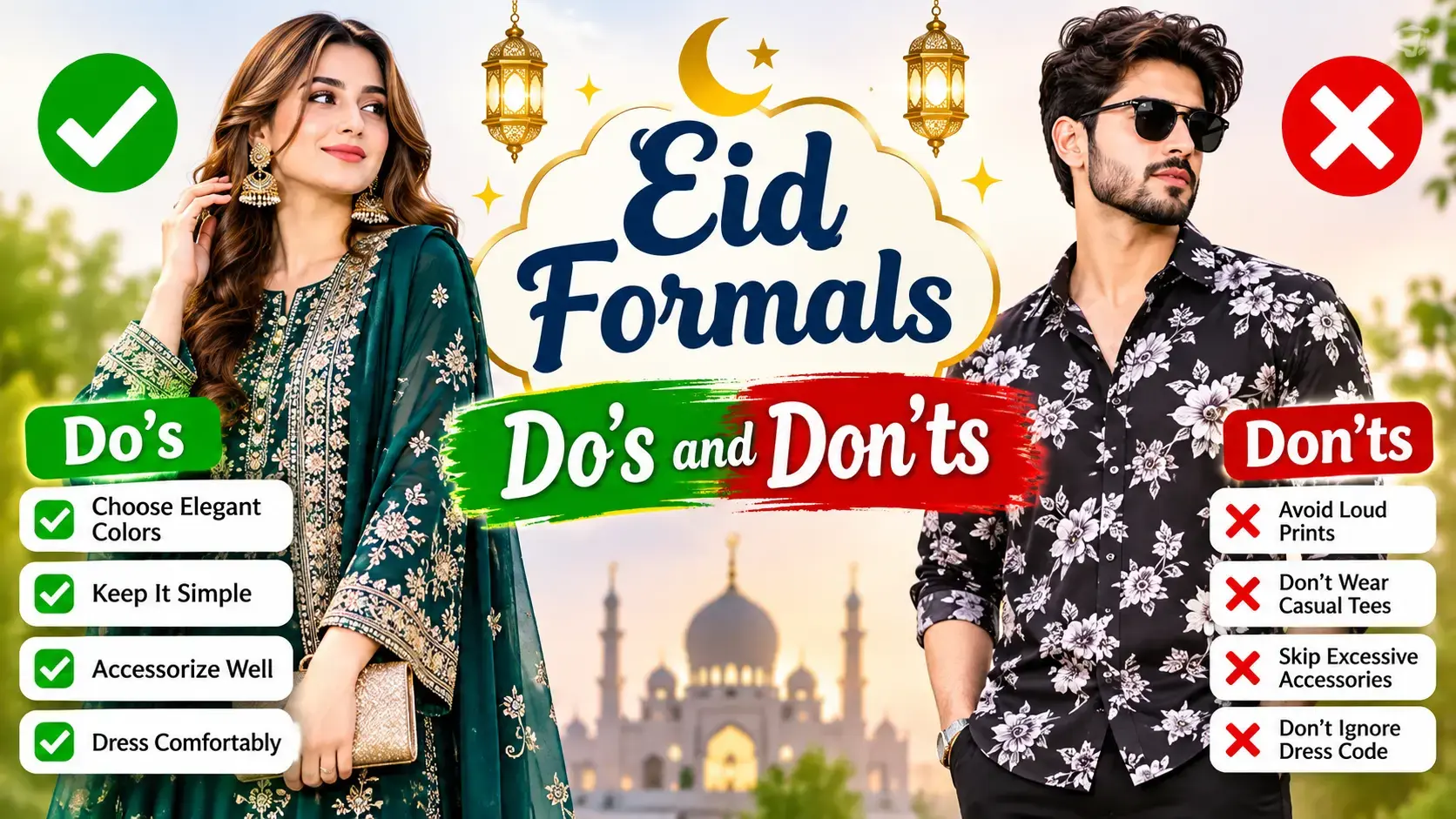
Eid formals are the outfits we plan for weeks. They come out for the big family dinner, the Eid milan party and the photos that end up on every phone in the family. Getting them right feels wonderful.
Getting them wrong is easy too. A formal that is too heavy, too busy or simply wrong for the setting can make a long day feel even longer. These quick do’s and don’ts will help you wear yours with ease.
The Do’s
Do Match the Formal to the Occasion
Not every Eid event calls for the same level of dressing. A family lunch suits a lighter formal with neat embroidery. An evening dinner or an Eid milan party is the time for fuller work and deeper colors. When you browse Maria.B. Eid formals, you will find everything from lighter silk prints to heavily embellished velvet. Choose by the event first, then by what catches your eye.
Do Keep Modesty in Mind
Eid gatherings bring together elders, children and extended family. A dupatta large enough to cover your head, sleeves of a comfortable length and a lining under sheer fabrics all help you feel at ease. If you plan to stop at the mosque or visit older relatives, a modest cut is the respectful choice.
Do Let One Element Lead
A great formal look has a clear star. If your shirt is heavily embroidered, keep the jewelry simple. If you want to wear your grandmother’s statement necklace, pick a cleaner neckline that gives it room. When every piece competes, none of them stands out.
Do Dress for the Weather
Eid moves through the seasons, so check the forecast before you choose. Velvet and raw silk suit cold evenings. Chiffon and lighter silk work better on warm days. In winter, plan for an elegant shawl you are happy to be photographed in, since a bulky coat will hide your outfit.
Do Rehearse the Full Look
Try the complete outfit at least a day before Eid. Wear the shoes, the jewelry and the dupatta together. Sit down, walk around and lift your arms. This is when you will notice a hem that is too long, a neckline that slips or an earring that keeps catching on the dupatta.
The Don’ts
Don’t Wear a Heavy Formal From Dawn to Midnight
A fully embellished outfit can feel tiring after a few hours. If your day starts with morning prayers and ends with a late dinner, wear something lighter early on. Change into the heavier formal for the evening, when the lights are warm and it will look its best.
Don’t Pile On Accessories
Heavy earrings, a full necklace, stacks of bangles, a tikka and a bold clutch can all fight for attention. Pick two or three pieces that suit the outfit and leave the rest at home. Your formal should do most of the talking.
Don’t Let the Dupatta Drag
Long, heavy dupattas can sweep the floor, catch on chairs and slip at the worst moment. Pin yours at the shoulder with a small safety pin in a matching tone. If it is very long, drape it across both shoulders to keep the ends off the ground.
Don’t Skip the Finishing Touches
Small details make a formal look polished. Steam out creases, snip any loose threads and remove every tag and sticker. Check the back of the outfit in a mirror before you leave the house. Spray perfume on your skin before you dress, since it can leave marks on silk and chiffon.
Don’t Forget a Backup
Spills happen at every Eid table. A drop of qorma or a splash of chai can ruin the moment if you have no plan. Keep a simple pret outfit pressed and ready at home. Carry a stain remover wipe and a couple of spare pins in your clutch, just in case.
Summary
An Eid formal is a small celebration in itself. Match it to the event, keep it modest and let one element shine. Skip the accessory overload, tame the dupatta and take care of the little details. Do that, and you will look polished, feel comfortable and enjoy every moment of Eid with the people you love.