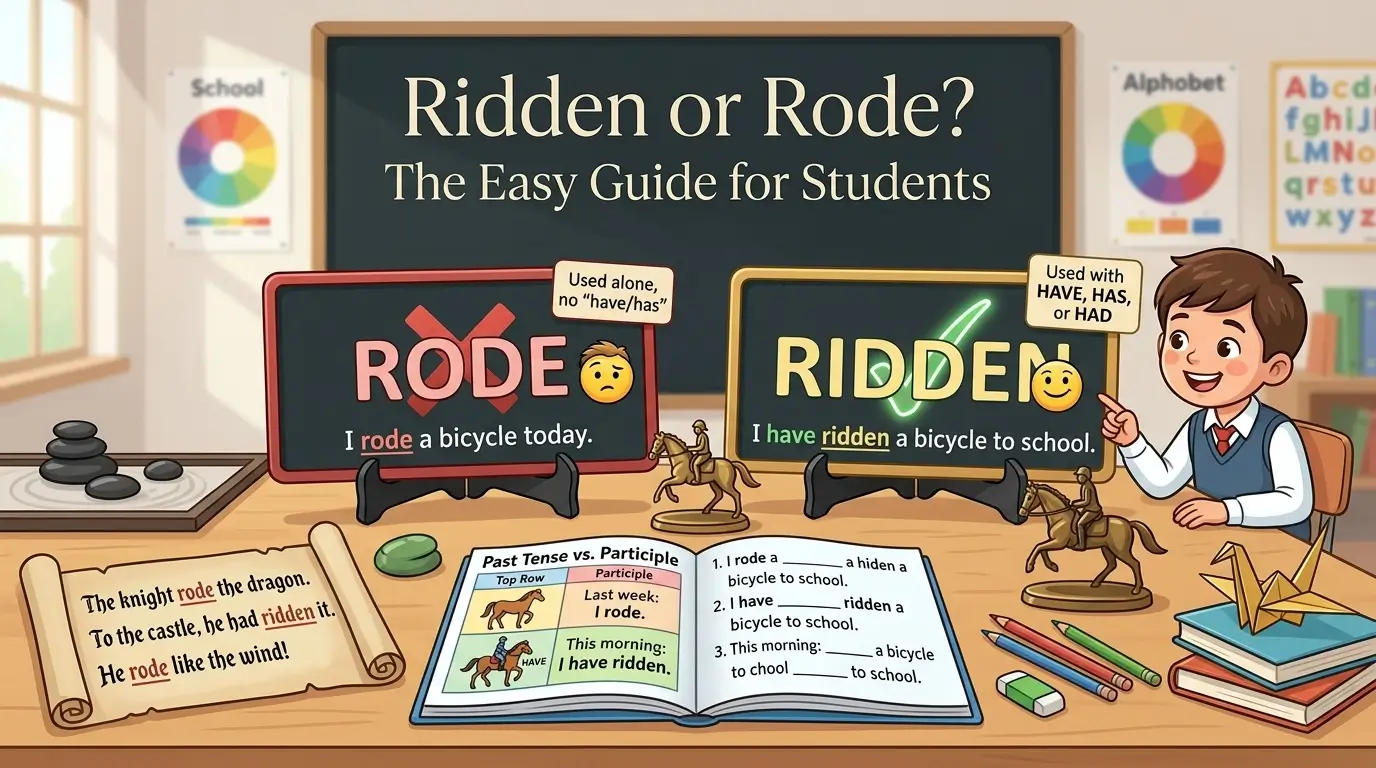
Rode is used for the simple past, while ridden is used with helping verbs like has, have, or had.
Have you ever wondered if you should write ridden or rode? Many English learners and even native speakers get confused because both words come from the verb ride. You may see sentences like “I have rode a bike” or “I have ridden a bike” and wonder which one is correct.
The confusion happens because rode and ridden are different forms of the same verb. They are used in different grammar situations. Using the wrong word can make your writing incorrect in school work, emails, blogs, and professional documents.
This guide explains the difference between ridden and rode, when to use each word, common mistakes, and simple examples. You will also learn through a comparison table, British and American English notes, and answers to common questions. By the end, you will know which word to use in your sentence.
Ridden or Rode: Quick Answer
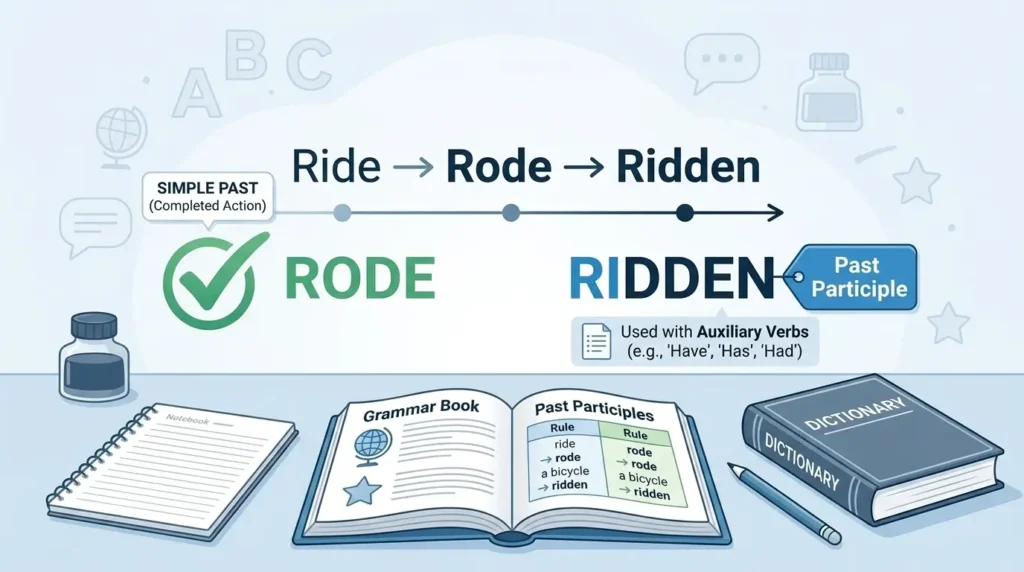
The short answer is simple:
- Rode is the simple past tense of ride.
- Ridden is the past participle of ride and must be used with helping verbs like has, have, or had.
Examples
✅ I rode my bicycle yesterday.
✅ She rode the horse last weekend.
✅ I have ridden many horses.
✅ They had ridden the train before.
❌ I have rode a bike. (Incorrect)
| Base Verb | Past Tense | Past Participle |
| Ride | Rode | Ridden |
The Origin of Ridden or Rode
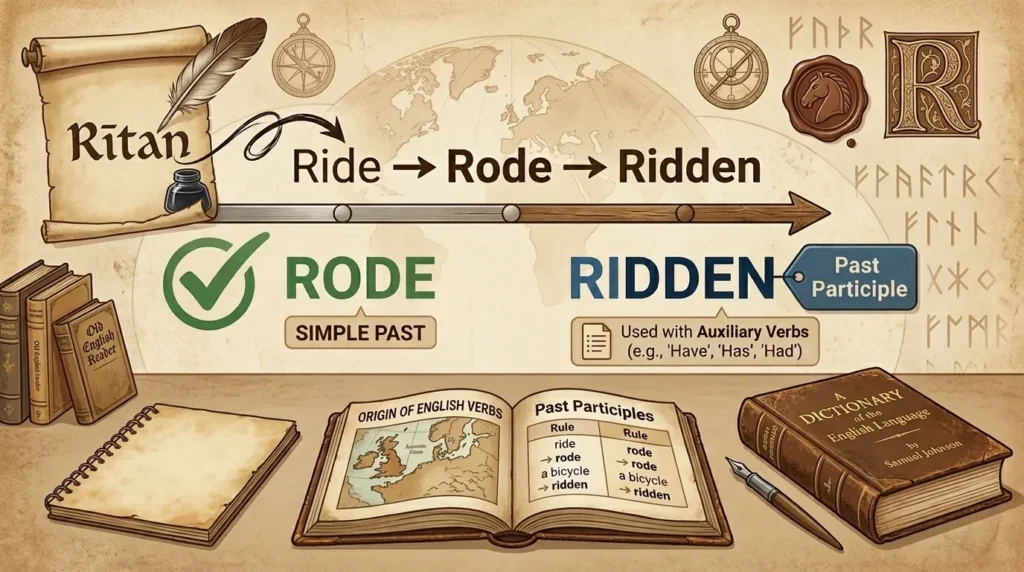
Both rode and ridden come from the Old English verb rīdan, which means to travel on horseback or by vehicle.
Over time, English kept different forms of many irregular verbs.
Examples include:
- Ride → Rode → Ridden
- Write → Wrote → Written
- Drive → Drove → Driven
Unlike regular verbs that simply add -ed, irregular verbs change their spelling.
That’s why:
- Yesterday → rode
- Have/has/had → ridden
These forms have stayed the same for hundreds of years.
British English vs American English Spelling

Good news!
There is no difference between British English and American English. Both use rode and ridden.
Both countries use exactly the same forms.
Examples
British English:
- He rode the train to London.
- She has ridden horses since childhood.
American English:
- He rode the subway yesterday.
- She has ridden horses for years.
Comparison Table
| Feature | British English | American English |
| Past tense | Rode | Rode |
| Past participle | Ridden | Ridden |
| Spelling | Same | Same |
| Meaning | Same | Same |
Which Spelling Should You Use?
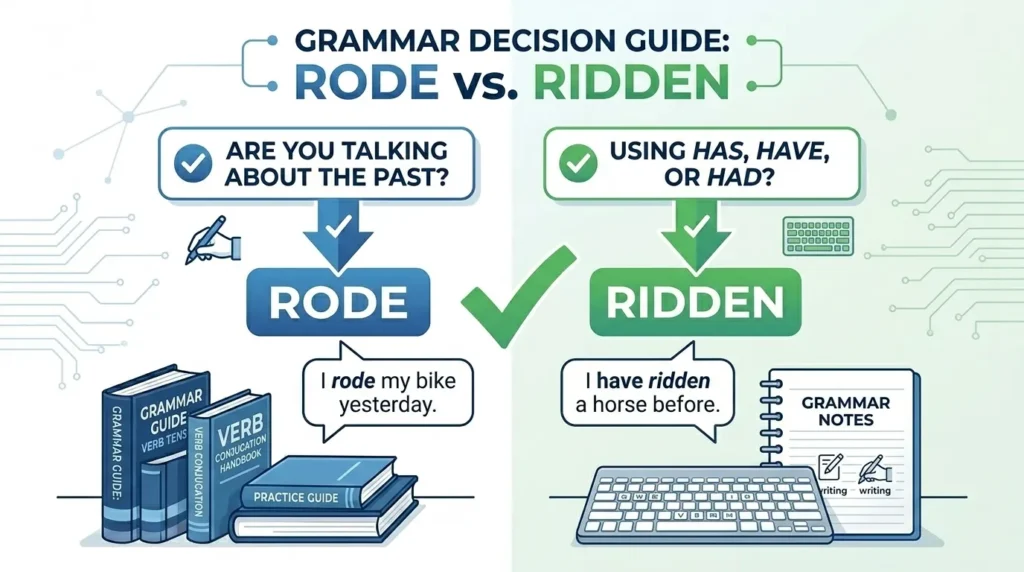
Choose the correct form based on grammar, not location.
If you’re writing for an American audience
Use:
- Rode (past)
- Ridden (past participle)
If you’re writing for a British or Commonwealth audience
Use exactly the same forms.
If you’re writing for a global audience
Follow standard English grammar:
- Yesterday = rode
- Have/has/had = ridden
Examples:
✅ We rode bikes yesterday.
✅ We have ridden bikes many times.
Common Mistakes with Ridden or Rode
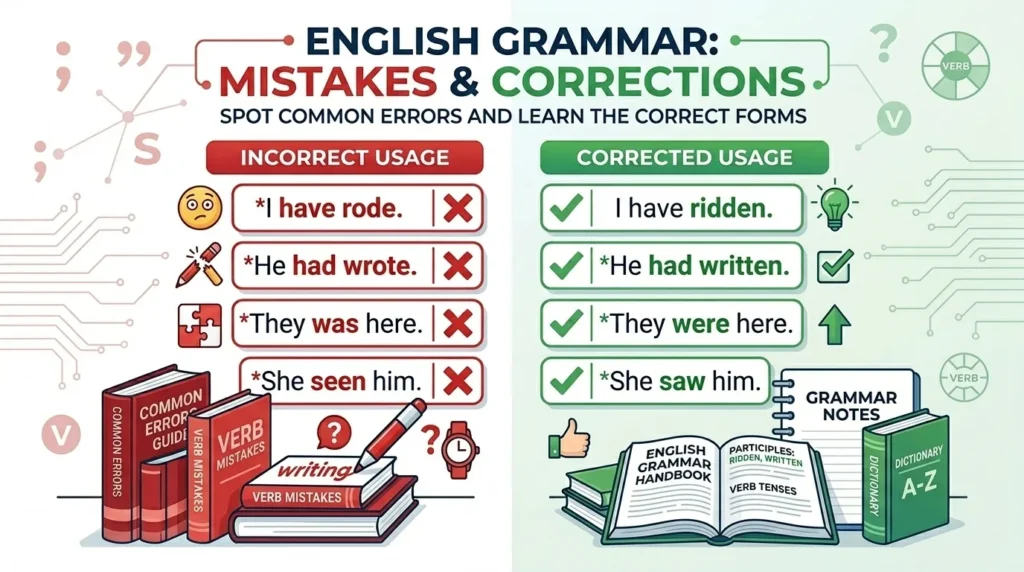
Many learners make these mistakes.
| Incorrect | Correct |
| I have rode a horse. | I have ridden a horse. |
| She has rode a bike. | She has ridden a bike. |
| Yesterday I ridden home. | Yesterday I rode home. |
| They had rode together. | They had ridden together. |
| We ridden all day. | We rode all day. |
Easy Rule
- No helping verb → Rode
- Has/Have/Had → Ridden
Ridden or Rode in Everyday Examples

In Emails
“I rode the company shuttle yesterday.”
“I have ridden this route several times.”
In News
“The athlete rode through the city during the parade.”
“The champion has ridden over 200 races.”
On Social Media
“I rode my new bike today!”
“I’ve ridden 50 miles this week.”
In Formal Writing
“The inspector rode to the site on horseback.”
“The officer had ridden this path before.”
Ridden or Rode: Google Trends & Usage Data

Search data shows that many people search for:
- ridden or rode
- have rode or have ridden
- rode vs ridden
- ridden meaning
- past tense of ride
Most searches come from countries where English is widely spoken, including:
- United States
- United Kingdom
- Canada
- Australia
- India
People often search for these words when writing essays, emails, resumes, or preparing for English exams.
Keyword Comparison
| Keyword | Meaning | Correct Usage |
| Ride | Base verb | I ride every day. |
| Rode | Past tense | I rode yesterday. |
| Ridden | Past participle | I have ridden before. |
| Riding | Present participle | I am riding now. |
FAQs
Is it ridden or rode?
Both are correct, but they are used differently. Rode is the past tense, while ridden is the past participle.
Is “I have rode” correct?
No. The correct sentence is:
I have ridden.
Is “I rode a horse yesterday” correct?
Yes. This is the correct past tense.
Why is “ridden” used with “have”?
Because ridden is the past participle and must be used with helping verbs like has, have, or had.
Which is more common, rode or ridden?
Both are common. Rode appears more in simple past sentences, while ridden appears in perfect tenses.
Can British and American English use different spellings?
No. Both use rode and ridden in exactly the same way.
How can I remember the difference?
Remember this simple rule:
- Yesterday → Rode
- Have/Has/Had → Ridden
Conclusion
Understanding the difference between ridden and rode is easy when you know how English verbs work. Both words come from the verb ride, but they are used in different ways.
Use rode when you talk about something that happened in the past. For example: “She rode her bike yesterday.” Use ridden after helping words like has, have, or had. For example: “She has ridden her bike every day this week.”
There is no difference between British English and American English. Both use rode and ridden in the same way. Remember this simple rule: use rode for the simple past and ridden after helping verbs. This will help you avoid common mistakes and make your writing clearer and more correct.
Read More: Holistic or Wholistic: Which Spelling Is Correct?

Passionate about language and clear communication, I explore the subtle differences between words and expressions through well-researched, practical content. My goal is to help readers write with greater clarity, confidence, and precision by making complex language concepts easy to understand.