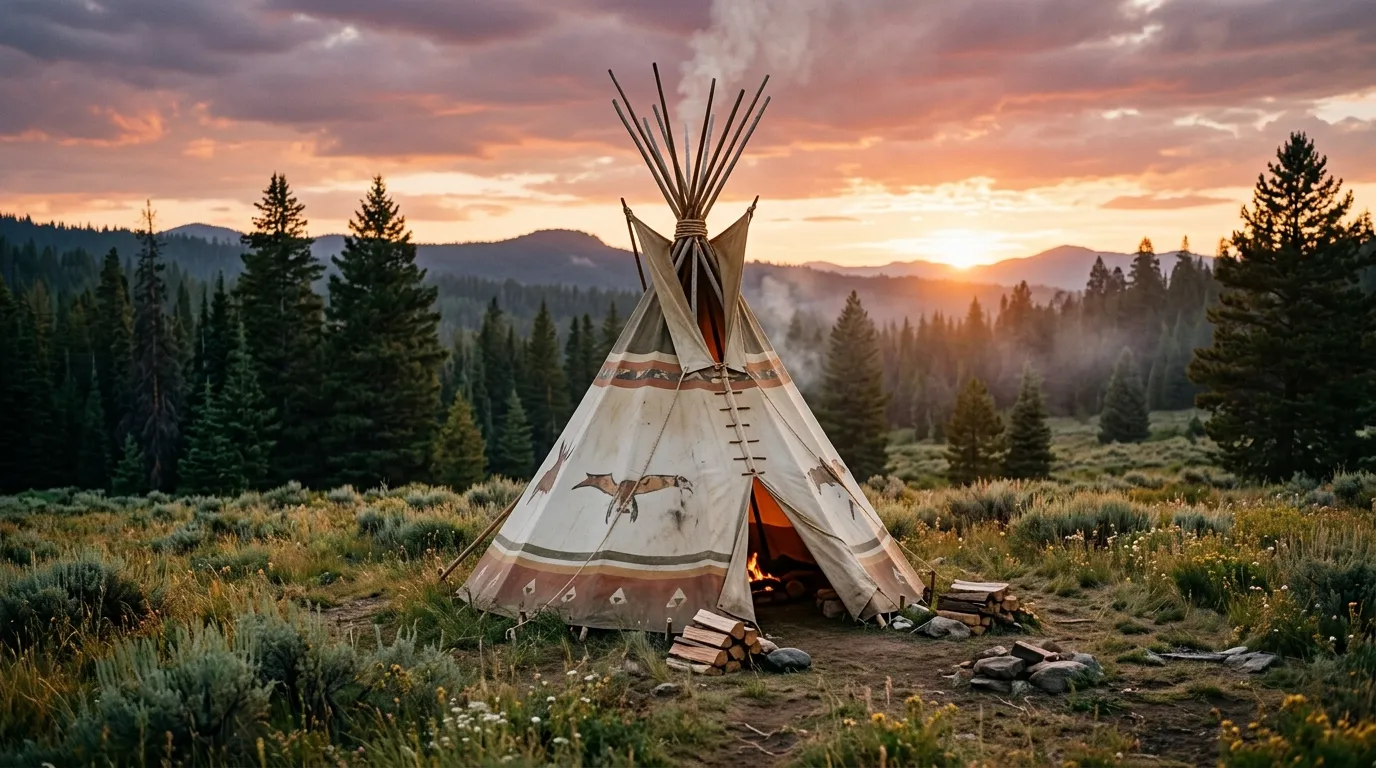
Tipi and teepee refer to the same type of traditional conical dwelling. Tipi is the preferred modern spelling, especially in historical, cultural, and Indigenous contexts, while teepee is a common English variant.
If you have ever searched for the correct spelling of the word for a traditional cone-shaped shelter, you may have come across both tipi and teepee.
So, which one is correct?
The answer is that both spellings are used, but tipi is generally the preferred spelling today, especially when referring respectfully and accurately to the traditional Indigenous dwelling of the Plains peoples.
Teepee is a familiar English spelling and has been widely used for many years. You may still see it in books, children’s materials, product names, camping descriptions, and general writing.
The two words refer to the same basic type of structure, but tipi is often preferred because it is closer to the original form and is commonly used by museums, cultural organizations, and Indigenous communities.
Let’s look at the difference in detail.
Tipi vs. Teepee: At a Glance
| Feature | Tipi | Teepee |
| Meaning | Traditional conical dwelling | Same |
| Pronunciation | Usually pronounced “TEE-pee” | Usually pronounced “TEE-pee” |
| Usage | Preferred modern spelling | Common English variant |
| Cultural context | Often preferred | Common but more anglicized |
| Capitalization | Usually lowercase | Usually lowercase |
| Plural | Tipis | Teepees |
| Correct? | Yes | Yes |
What Does Tipi Mean?
A tipi is a traditional conical dwelling historically used by several Indigenous peoples of the Great Plains and surrounding regions of North America.
Traditional tipis were designed around a framework of long poles and were covered with materials such as animal hides. Later versions could use canvas and other materials.
Their cone-like design made them practical for communities that moved from place to place.
The word tipi comes from a language of the Plains, and its structure is related to a term meaning essentially “dwelling” or “place where one lives.”
Today, tipi is widely used as the preferred English spelling in many cultural and educational contexts.
What Does Teepee Mean?
Teepee is an English spelling variant of tipi.
It represents the way the word came to be written in English based on its pronunciation.
For example:
The children learned about traditional teepees in their history class.
This sentence is understandable and uses a common English spelling.
However, when discussing Indigenous history or culture, many writers and institutions prefer tipi.
Tipi or Teepee: The Main Difference
The biggest difference is not meaning. It is spelling and usage preference.
Tipi is generally considered the preferred modern spelling.
Teepee is a traditional English variant that remains widely recognized.
You can think of the relationship like this:
Tipi = preferred spelling
Teepee = common variant
Both generally refer to the same traditional dwelling.
Why Is Tipi Preferred?
There are several reasons tipi has become the preferred spelling in many modern contexts.
One reason is that it is closer to the original Indigenous term rather than an English spelling based mainly on pronunciation.
Another reason is cultural accuracy. Museums, educational institutions, historians, and Indigenous communities may prefer terminology that more closely reflects Indigenous languages and traditions.
Using tipi can therefore be a more respectful and accurate choice when discussing the dwelling in a historical or cultural context.
This does not mean that teepee is meaningless or always incorrect. It remains a recognized English variant.
When to Use Tipi
Use tipi when you want the preferred modern spelling, especially in:
- Historical writing
- Educational material
- Museum descriptions
- Cultural discussions
- Academic writing
- Indigenous history
- General modern writing
Examples
The museum has a traditional tipi on display.
The students learned how Plains communities used tipis.
The family visited a cultural exhibition featuring a tipi.
Several tipis were set up during the cultural event.
When Is Teepee Used?
Teepee is still common in general English.
You may see it in:
- Children’s books
- General-interest articles
- Camping products
- Toy descriptions
- Home decor
- Casual writing
- Older books
For example:
The children played in a small teepee in the backyard.
Here, the word may simply describe a cone-shaped play tent inspired by the traditional structure.
In this modern commercial or casual context, teepee is still frequently encountered.
Tipi and Teepee in Children’s Products
One place where teepee remains especially common is product descriptions.
You may see terms such as:
- Kids’ teepee
- Children’s teepee tent
- Indoor teepee
- Play teepee
- Canvas teepee
These products are usually modern play tents rather than traditional Indigenous dwellings.
For example:
The children built a cozy teepee in the playroom.
The word is being used as a familiar name for the shape of the tent.
Is Tipi More Correct Than Teepee?
It depends on what you mean by “correct.”
Both tipi and teepee are recognized English forms.
However, tipi is generally the preferred spelling in contemporary cultural and historical writing.
So, if you are writing an educational article about the traditional Indigenous dwelling, tipi is usually the better choice.
If you are describing a children’s play tent or using a product’s established name, teepee may be perfectly appropriate.
Tipi vs. Teepee in Formal Writing
For formal writing, tipi is generally the stronger choice when referring to the traditional dwelling.
For example:
The Plains peoples developed highly practical tipi designs.
This is a clear and modern usage.
You could also write:
The Plains peoples developed highly practical teepee designs.
The meaning is understandable, but tipi is often preferred in contemporary historical and cultural writing.
Plural Forms
The plural forms are also worth knowing.
Tipi
Plural:
tipis
Example:
Several tipis stood along the edge of the settlement.
Teepee
Plural:
teepees
Example:
Several teepees were shown in the historical photographs.
So the pattern is:
Tipi → tipis
Teepee → teepees
Common Mistakes
Mistake 1: Thinking Teepee Is Completely Wrong
It is not.
Teepee is a recognized English spelling and is still widely used.
However, tipi is generally preferred in modern cultural and historical contexts.
Mistake 2: Thinking Tipi and Teepee Are Different Structures
Usually, they refer to the same traditional type of dwelling.
The difference is primarily spelling and usage.
Mistake 3: Using Tipi and Teepee as if They Have Different Meanings
In most ordinary contexts, they have the same basic meaning.
The context may influence which spelling is more appropriate.
Mistake 4: Using Teepee for Every Cone-Shaped Tent
Not every cone-shaped tent is a traditional tipi.
Modern play tents may be called teepees because of their shape, but that does not necessarily make them traditional Indigenous structures.
Tipi vs. Wigwam
Another common source of confusion is wigwam.
A tipi and a wigwam are not simply two spellings of the same word.
A tipi is a conical dwelling traditionally associated with various Indigenous peoples of the Great Plains and surrounding areas.
Wigwam is a broader term historically used for different types of Indigenous dwellings, often associated with peoples in the eastern woodlands and other regions.
So:
Tipi ≠ wigwam
They refer to different traditional structures.
Tipi vs. Tent
A tipi is also not simply the same thing as a modern camping tent.
Although both provide shelter, a traditional tipi has a specific cultural history, structure, and design.
Modern camping tents are designed using a wide range of materials and shapes.
The word tipi should therefore be used with some cultural and historical awareness.
Charlotte Hornets vs Milwaukee Bucks: Schedule & Games
How to Remember Tipi and Teepee
The easiest way to remember the difference is:
Tipi = preferred modern spelling
Teepee = common English variant
If you are writing about Indigenous history or culture and are unsure which form to use, tipi is generally the safer and more appropriate choice.
If you are talking about a children’s play tent, teepee is also commonly used.
Tipi or Teepee: Full Comparison Table
| Category | Tipi | Teepee |
| Meaning | Traditional conical dwelling | Same basic meaning |
| Origin | Indigenous term | Anglicized English spelling |
| Modern preference | Generally preferred | Common variant |
| Cultural writing | Often preferred | Less preferred |
| Casual English | Common | Very common |
| Children’s products | Used | Very common |
| Singular | Tipi | Teepee |
| Plural | Tipis | Teepees |
| Pronunciation | Usually “TEE-pee” | Usually “TEE-pee” |
Example Sentences
Using Tipi
The museum displayed a traditional tipi.
The students studied how tipis were constructed.
The historical site included several reconstructed tipis.
The guide explained the cultural significance of the tipi.
Using Teepee
The children played inside a small teepee.
The store sells a canvas teepee for children.
The family bought a decorative teepee for the playroom.
The book showed a picture of a traditional teepee.
Both forms can be understood, but the context can determine which one is the better choice.
Frequently Asked Questions
Is tipi or teepee correct?
Both tipi and teepee are recognized English forms. Tipi is generally the preferred modern spelling, especially in historical and cultural contexts.
Is teepee an incorrect spelling?
No. Teepee is a common English variant of tipi.
Which spelling is preferred today?
Tipi is generally preferred in contemporary historical, educational, and cultural writing.
What is the plural of tipi?
The plural is tipis.
What is the plural of teepee?
The plural is teepees.
Do tipi and teepee mean the same thing?
Yes, in most contexts they refer to the same type of traditional conical dwelling.
Is a tipi the same as a wigwam?
No. A tipi and a wigwam refer to different types of traditional Indigenous dwellings.
Should I use tipi in an academic article?
Generally, yes, especially when discussing the traditional dwelling and Indigenous history or culture.
Why do some people spell it teepee?
Teepee is an English spelling that developed from the pronunciation of the original term and became widely established in English.
Conclusion
When choosing between tipi and teepee, both forms can be found in English, but tipi is generally the preferred modern spelling.
Tipi is especially appropriate when writing about Indigenous history, culture, archaeology, museums, and traditional dwellings.
Teepee remains a common English variant and is frequently seen in casual writing, children’s books, and descriptions of modern play tents.
The two forms generally refer to the same type of conical dwelling, but choosing tipi can provide greater cultural and linguistic accuracy in formal or educational contexts.
The simple rule is:
Tipi = preferred modern spelling
Teepee = common English variant
If you are unsure which one to use in a formal article, tipi is usually the better choice.

I’m an experienced article writer who creates clear, engaging, and SEO-friendly content that helps readers find the information they need. I specialize in writing well-researched articles, blog posts, guides, and informative content on a wide range of topics.
My writing focuses on simple language, strong structure, accurate information, and search intent. I aim to make every article easy to read while also helping websites improve their visibility on search engines.
I enjoy turning complex topics into useful, reader-friendly content that informs, answers questions, and keeps readers engaged. Whether you need an SEO article, blog post, educational guide, or website content, I can create content tailored to your audience and goals.