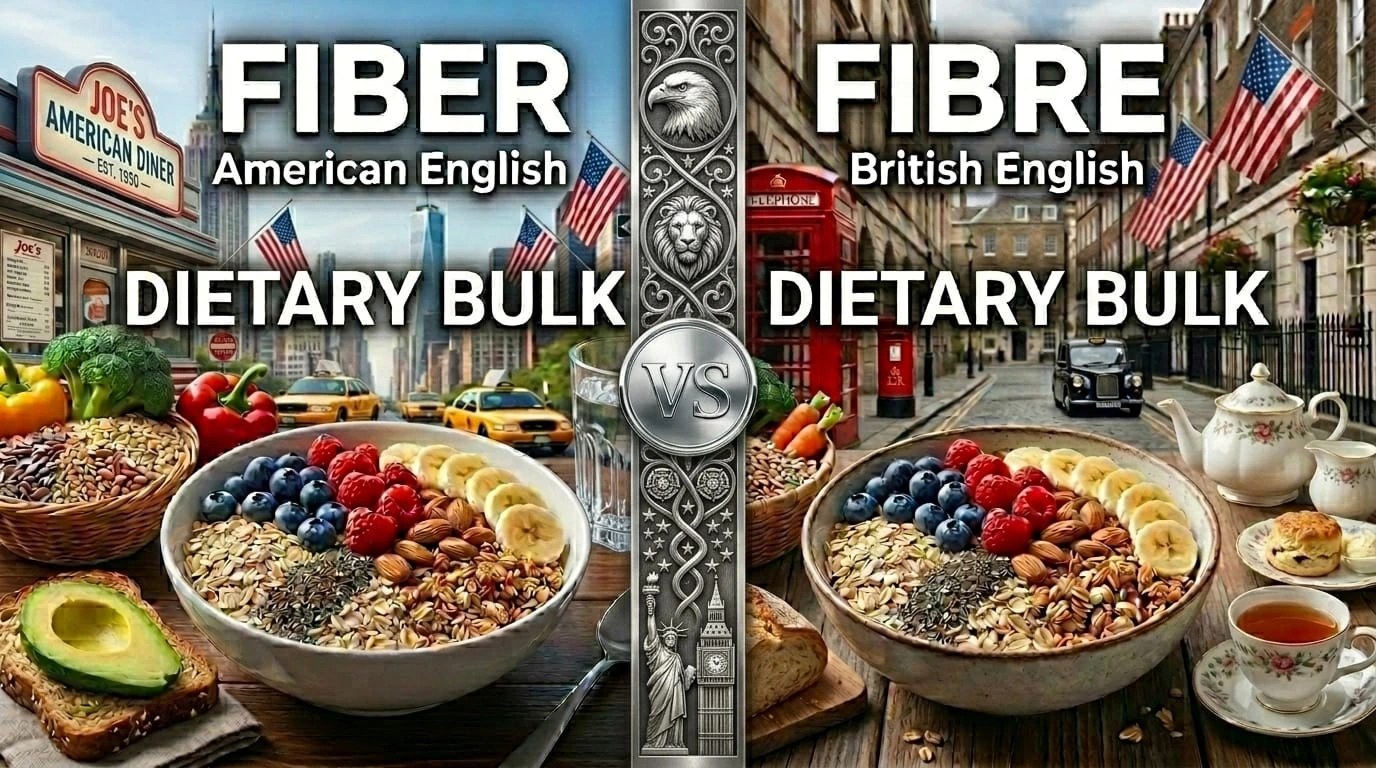
Fiber or fibre mean the same thing. The difference is spelling. Fiber is used in American English, while fibre is used in British English and many other regions.
A few years ago, I was editing a health article for a client. I changed the phrase “high fibre foods” to “high fiber foods” without thinking much about it. A few minutes later, the client sent a message asking why I changed the spelling. That question made me smile because I had seen this confusion many times before.
You may have had the same moment.
Maybe you were writing a school assignment. Maybe you were creating a blog post. Perhaps you were reading food labels or internet articles and noticed two spellings for what looked like the same word.
Suddenly your brain starts asking questions.
Is one wrong? Is one more formal? Do they mean different things?
The confusion happens because English changes from place to place. One country keeps one spelling. Another country keeps another.
The good news is simple. You do not need to memorize complicated rules.
By the end of this guide, you will know exactly when to use fiber and fibre, where each spelling appears, and how to avoid common mistakes.
Fiber or Fibre: Quick Answer
Fiber and fibre have the same meaning.
Both words describe thin strands of material or dietary roughage found in food. The only difference is the spelling style.
Examples:
- “Eating more fiber can help digestion.”
- “Doctors recommend foods rich in fibre.”
Both sentences are correct.
The Origin of Fiber or Fibre
The story starts a long time ago.
The word came from the Latin word fibra, which meant a thread or strand.
As English changed over time, different regions developed different spelling habits.
Later, spelling reforms happened in the United States. Many words became shorter and simpler.
Examples include:
- Colour → Color
- Centre → Center
- Fibre → Fiber
Britain kept many older spellings.
America changed some of them.
That is why two versions exist today.
Neither spelling is newer in meaning. The difference mostly comes from regional language history.
Fiber or Fibre Explained: Key Differences or Variations
The meaning stays the same.
The spelling changes based on the audience and region.
| Term | Meaning | When to Use | Region/Context |
| Fiber | Thin strands or dietary roughage | American writing | United States |
| Fibre | Thin strands or dietary roughage | British and international writing | UK, Canada, Australia |
Examples
Fiber
- This cereal contains extra fiber.
- Optical fiber cables send information quickly.
Fibre
- Fresh fruits provide healthy fibre.
- Cotton fibre feels soft.
The meaning never changes.
Only the spelling changes.
Which Version Should You Use?
Your audience should guide your choice.
For students in the United States
Use fiber
Reason:
- American schools use it
- Most textbooks use it
- Readers expect it
For students in the United Kingdom
Use fibre
Reason:
- It matches British spelling rules
- Teachers usually expect this style
For bloggers and online writers
Match your audience location.
Reason:
- Readers trust familiar spelling
- Consistency looks professional
For global or neutral writing
Choose one style and stay consistent.
Many international writers use fibre, but either version works if used consistently.
Common Mistakes with Fiber or Fibre
People often mix styles in the same piece of writing.
Here are common errors.
| Mistake | Correction | Why It Happens |
| High fiber foods improve fibre intake. | High fiber foods improve fiber intake. | Mixed spelling styles |
| Fibre optic fiber cables | Fibre optic cables | Unnecessary repetition |
| Fibber foods are healthy | Fiber foods are healthy | Spelling confusion |
| Eat more fiberses daily | Eat more fiber daily | Extra endings added |
| Fiber and fibre mean different things | Fiber and fibre mean the same thing | Meaning confusion |
Why these mistakes happen
- People switch between US and UK spelling
- Search engines show both versions
- Different books use different standards
Fiber or Fibre in Real-World Examples
Professional email
“Please update the nutrition section to include recommended daily fiber intake.”
News headline
“Experts say fibre intake among adults remains lower than recommended.”
Social media post
“Trying to eat more fiber this week. My breakfast finally looks healthy.”
Formal report
“The study found that increased fibre consumption improved digestive health.”
Notice how each example fits naturally into real situations.
Fiber or Fibre: Data, Trends & Usage
Search interest for this topic remains strong.
Search intent
Primary intent: Informational
Users often ask:
- Is fiber correct?
- Is fibre correct?
- What is the difference?
- Which spelling should I use?
Regions with strong interest
Fiber
- United States
- American education sites
- Health and nutrition websites
Fibre
- United Kingdom
- Australia
- Canada
- International publications
Audiences searching this topic
- Students
- Bloggers
- ESL learners
- Health writers
- Business writers
One useful insight
Health content and food labels have made this question more common. People see one spelling on packaging and another online, which creates uncertainty.
Standalone Comparison Table
| Term/Variant | Meaning | Region/Context | Best Used When |
| Fiber | Dietary roughage or strands | United States | American writing |
| Fibre | Dietary roughage or strands | UK and many global regions | British writing |
| Fiber optic | Technology term | Mostly US spelling | American technical writing |
| Fibre optic | Technology term | UK spelling | British technical writing |
FAQ
Q: What does fiber or fibre mean?
A: Both words refer to thin strands of material or roughage found in foods. The meaning stays exactly the same.
Q: How do you use fiber or fibre correctly?
A: Match the spelling to your audience. Use fiber for American English and fibre for British English.
Q: Fiber vs fibre: what is the difference?
A: The only difference is spelling. The meaning does not change.
Q: Is fiber acceptable in formal writing?
A: Yes. It is completely acceptable in formal American writing.
Q: Which version is correct: fiber or fibre?
A: Both are correct. The right choice depends on regional spelling rules.
Q: Where does fiber or fibre come from?
A: The word comes from the Latin word fibra. Different regions later adopted different spelling styles.
Q: Can fiber or fibre be used in health writing?
A: Yes. Both are commonly used in health, nutrition, and medical content.
Conclusion
Now the answer feels much simpler.
You learned that fiber and fibre mean the same thing. You discovered that the difference stems from regional spelling preferences and the varying expectations of different audiences for different styles.
Keep these points in mind:
- Fiber is American English
- Fibre is British English
- The meaning stays the same
- Stay consistent in your writing
The goal is not picking a “better” word. The goal is choosing the spelling your readers expect.
Once you know your audience, the decision becomes easy.
Now you know exactly how to use fiber or fibre: go try it in your next piece of writing.
Bookmark this guide so you never second-guess fiber or fibre again.
Prioritise vs Prioritize: Which Spelling Should You Use (2026)