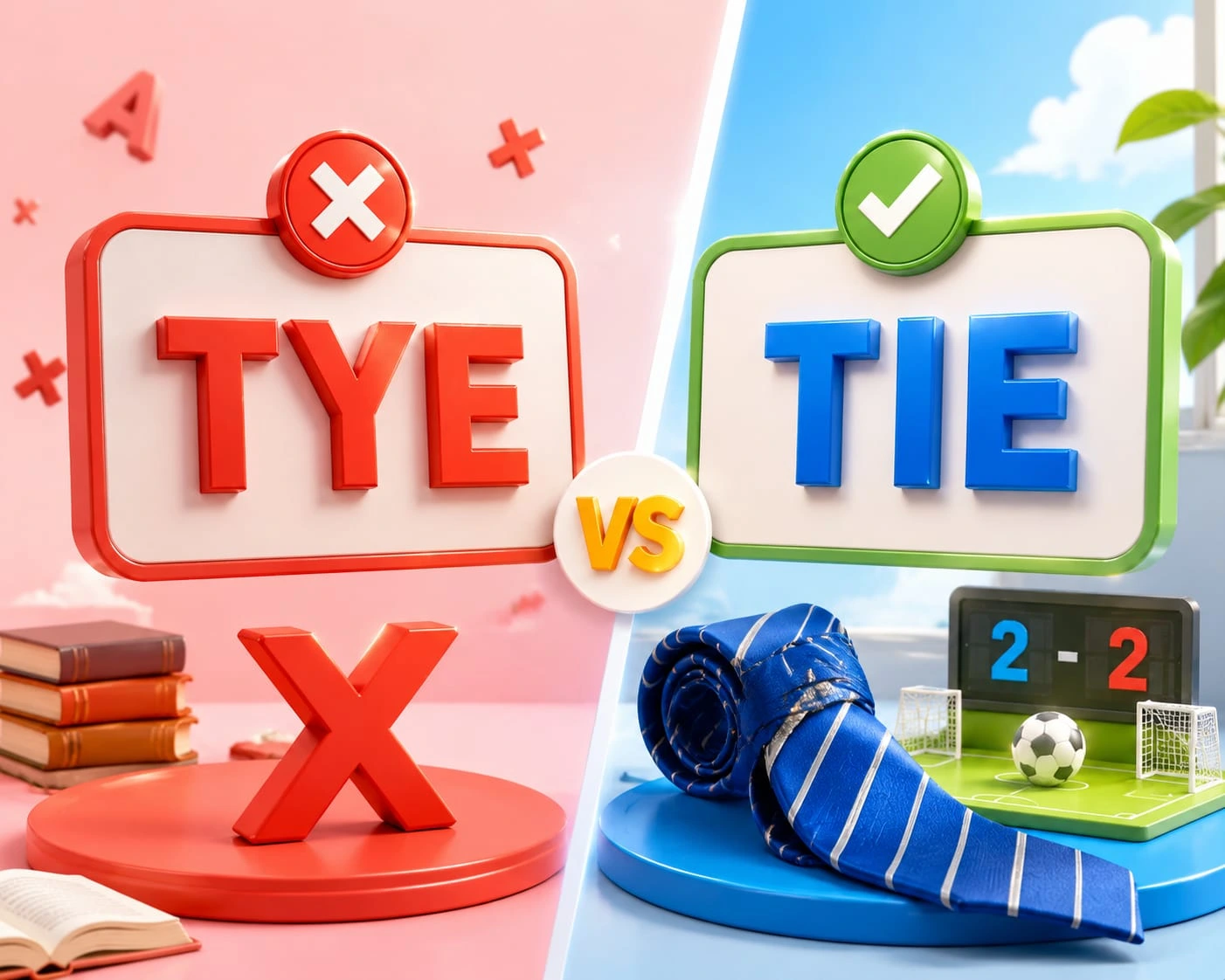
" Tye is usually a name or a less common word, while tie is the correct word for a knot, equal score, or connection in everyday English."
A few years ago, I was editing a student’s email that said, “Please tye the package before sending it.” I stopped for a second. I knew what the student wanted to say, but one small spelling mistake changed everything.
That happens more often than people think.
Words like tye and tie create confusion because they sound exactly the same. Your brain hears one sound, but then you have to decide which spelling belongs on the page. Many people search this term because they want to know if tye is a spelling mistake, a different version, or a real word.
The confusion can appear anywhere. You might write an email at work, post on social media, complete homework, or send a quick message to a friend. One wrong letter can make your writing look strange.
The good news is that the answer is simple. Once you understand what each word means and where it belongs, you will stop guessing. Let’s clear up the confusion.
Tye or Tie: Quick Answer
Tie is the standard word used in normal English. It means to fasten something, create a connection, or end with equal results.
Tye exists, but it is mostly used as a surname, place name, or uncommon word.
Examples:
- Please tie your shoes.
- The game ended in a tie.
- Tye Johnson joined the meeting today.
The Origin / Background of Tye or Tie
The word tie comes from old English words linked to binding or fastening things together.
People have used the word for hundreds of years. Its meaning stayed mostly the same through history.
Tye has a different background. It appears in some family names and place names. In older English, it also had rare meanings connected with common land or pathways.
The confusion happens because both words sound identical. Your ears cannot hear the spelling difference.

That is why many people type tye when they actually mean tie.
Tye or Tie Explained: Key Differences or Variations
The biggest difference is simple.
Tie is a common everyday word.
Tye is rare.
| Term | Meaning | When to Use | Region/Context |
| Tie | Fasten, connect, equal score | Daily writing | Global English |
| Tye | Name or uncommon word | Names and special uses | Limited use |
Examples:
Tie
- Please tie the ribbon.
- The match ended in a tie.
- Family ties are important.
Tye
- Tye Williams sent the report.
- Tye may appear as a last name.
Which Version or Approach Should You Use?
For students
Use tie in school writing because it is the standard spelling.
For business professionals
Use tie in emails, reports, and presentations.
For writers and content creators
Choose tie unless you are talking about a person’s name.
For global audiences
Use tie because readers everywhere understand it.

Simple rule:
If you mean fasten, connect, or equal score, use tie.
Common Mistakes with Tye or Tie
People often make the same errors.
| Mistake | Correct Form |
| Please tye your shoes.❌ | Please tie your shoes.✔️ |
| The game ended in a tye.❌ | The game ended in a tie.✔️ |
| Strong family tyes matter.❌ | Strong family ties matter.✔️ |
| Tye the package carefully.❌ | Tie the package carefully.✔️ |
| We had a voting tye.❌ | We had a voting tie.✔️ |
Why does this happen?
- Both words sound alike.
- Spell-check sometimes misses names.
- People type too quickly.
Tye or Tie in Real-World Examples
Professional Email
“Please tie all project files together before uploading them.”
News Headline
“Local teams finish in a dramatic tie after extra time.”
Social Media Post
“Can’t tie my shoes with one hand while holding coffee!”
Formal Report
“The report found a strong tie between customer trust and repeat sales.”
Tye or Tie: Data, Trends & Usage
Search behavior shows that tie receives much higher search interest than tye.
People usually search tye or tie because they want:
- Correct spelling
- Grammar help
- Writing support
- Homework help
Search intent: Informational
Regions with high interest often include:
- United States
- United Kingdom
- Canada
- Australia
- India
One useful insight stands out.
People type faster than ever now. Small spelling mistakes happen more often in texts, emails, and social posts.
Comparison Table
| Term/Variant | Meaning | Region/Context | Best Used When |
| Tie | Fasten something | General English | Daily communication |
| Tie | Equal result | Sports and competition | Scores and results |
| Tie | Connection or relationship | Professional and social use | Describing links |
| Tye | Personal name | Specific people or places | Proper nouns |
FAQs
Q: What does tye or tie mean?
A: Tie means to fasten, connect, or end equally. Tye is mostly used as a name.
Q: How do you use tie correctly?
A: Use tie when talking about knots, relationships, or equal scores. Example: Tie your shoes.
Q: Tye vs tie: what’s the difference?
A: Tie is a common English word. Tye is uncommon and usually appears in names.
Q: Is tie acceptable in formal writing?
A: Yes. Tie is completely correct in business writing, reports, and academic work.
Q: Which version is correct: tye or tie?
A: In almost every normal situation, tie is correct.
Q: Where does tie come from?
A: The word comes from old English words linked to binding or fastening.
Q: Can tie be used in business writing?
A: Yes. Businesses often use tie to describe relationships, links, and connections.
Conclusion
Small spelling choices can create big confusion. Tie and tye sound the same, which makes mistakes easy. The good news is that you only need one simple rule.
Use tie when talking about fastening something, creating a connection, or describing equal results. This is the word you will use in school, work, emails, articles, and daily conversation. Tye is real, but it usually appears as a person’s name or in rare situations.
Remember these key points:
- Tie is the common English word.
- Tye is uncommon.
- Most people should use tie.
- Think about meaning before choosing the spelling.
Now you know exactly how to use tye or tie. Bookmark this guide so you never second-guess the word again. Share it with someone who keeps making the same mistake.
Tye or tie explained with meanings, spelling rules, examples, and simple tips to avoid common mistakes in everyday writing.