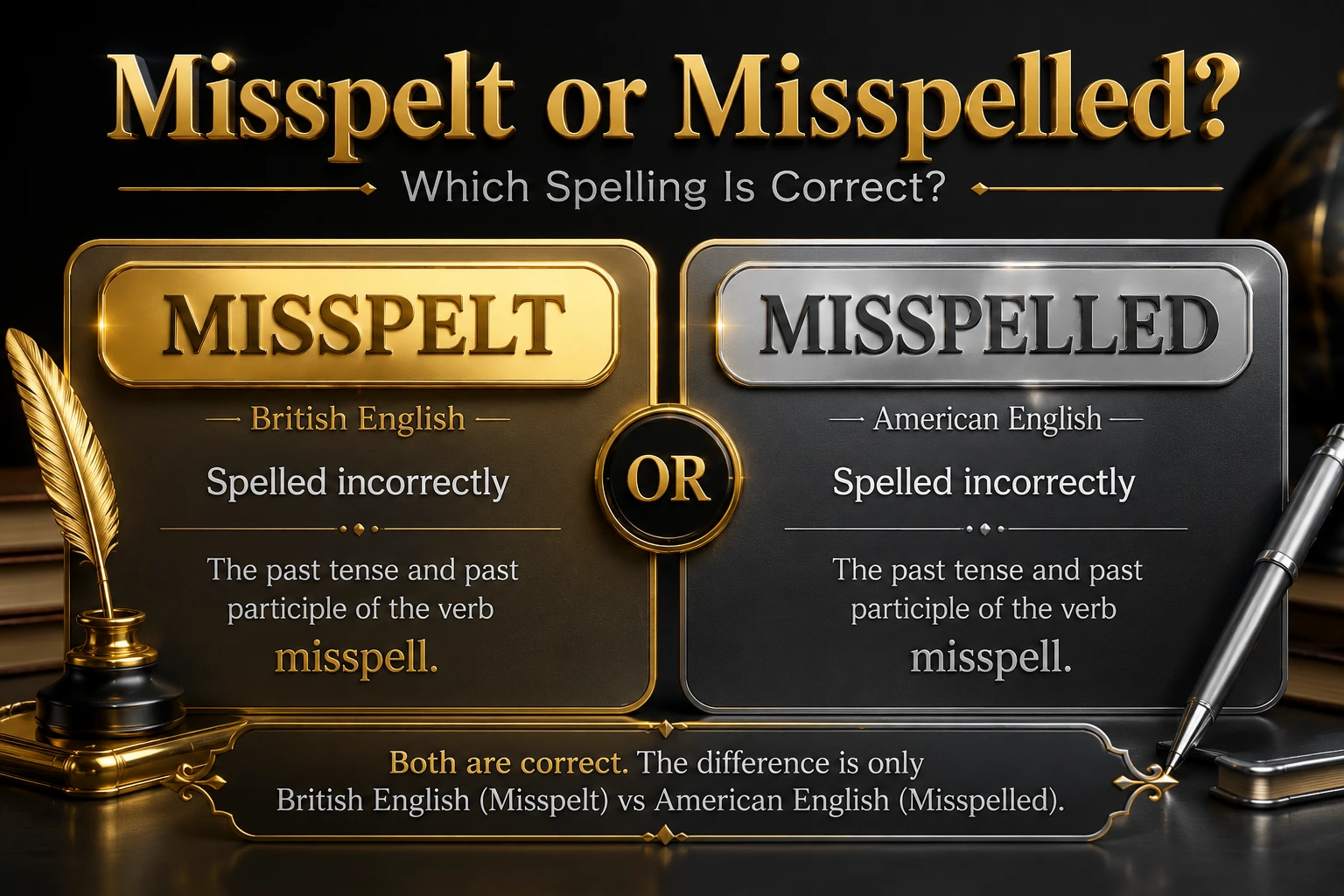
Both “misspelt” and “misspelled” are correct spellings of the past tense of misspell. Misspelled is the preferred spelling in American English, while misspelt is more common in British English.
A few months ago, I was proofreading one of my blog posts before publishing it. My grammar checker underlined misspelt with a red line and suggested misspelled instead. At first, I thought I had made a spelling mistake. After checking several trusted dictionaries, I discovered something surprising—both spellings are correct.
If you’ve ever paused while writing and wondered whether to use misspelt or misspelled, you’re not alone. Students, teachers, writers, and even professional editors often search for this answer because English spelling changes depending on the variety of English you use.
The good news is that the choice is much simpler than it seems. Once you understand the difference between British English and American English, you’ll know exactly which spelling fits your audience.
By the end of this guide, you’ll learn the meaning of both words, where they came from, when to use each one, common mistakes to avoid, and real-world examples that make everything easy to remember.
Misspelt or Misspelled: Quick Answer
Both misspelt and misspelled mean exactly the same thing.
They are the past tense and past participle of the verb misspell, which means to spell a word incorrectly.
The only real difference is regional spelling preference.
Simple examples
- She misspelled the customer’s name on the certificate. (American English)
- He misspelt the scientific term in his homework. (British English)
No matter which spelling you choose, the meaning stays the same.
The Origin and History of Misspelt or Misspelled
The verb misspell comes from two simple parts:
- mis- meaning wrongly or incorrectly
- spell meaning to write letters in the correct order
Together, misspell literally means to spell something incorrectly.
The spelling difference appeared because English developed differently in different parts of the world.
British English often keeps -t endings in many irregular verbs, while American English usually prefers -ed endings.
Here are a few familiar examples:
| British English | American English |
|---|---|
| dreamt | dreamed |
| learnt | learned |
| spoilt | spoiled |
| burnt | burned |
| spelt | spelled |
| misspelt | misspelled |
This pattern explains why both spellings exist today.
Neither spelling is newer or more correct than the other. They simply belong to different English varieties.
Misspelt vs Misspelled Explained
Although these words look different, they share the same meaning and grammar.
| Term | Meaning | When to Use | Region |
|---|---|---|---|
| Misspelt | Spelled incorrectly | British writing | UK, Australia, New Zealand, South Africa |
| Misspelled | Spelled incorrectly | American writing | United States, Canada (often), international businesses |
Misspelt
Misspelt follows the traditional British pattern that ends many past-tense verbs with -t.
Example:
The student’s surname was misspelt on the exam certificate.
You’ll commonly see this spelling in:
- British newspapers
- UK schools
- Oxford-style writing
- British publishers
Misspelled
Misspelled uses the regular -ed ending that American English prefers.
Example:
My name was misspelled on the airline ticket.
You’ll often find it in:
- American schools
- US government documents
- Business emails
- Microsoft and Google spell check (US English)
Which Version Should You Use?
The best spelling depends on who will read your writing.
Use misspelled if:
- Your audience is in the United States.
- You’re writing for American companies.
- You’re creating content for US universities.
- Your website follows American English.
Use misspelt if:
- Your readers are mainly in the United Kingdom.
- You’re writing for British schools.
- Your publisher follows UK English.
- Your content uses British spelling throughout.
For international readers
Pick one style and stay consistent.
For example:
If your article uses:
- colour
- favourite
- travelled
then write misspelt.
If your article uses:
- color
- favorite
- traveled
then write misspelled.
Consistency always looks more professional than mixing spelling styles.
Why Do Spell Checkers Sometimes Say One Is Wrong?
Many people become confused because their computer is set to only one variety of English.
For example:
- Microsoft Word (US English) accepts misspelled.
- Microsoft Word (UK English) accepts misspelt.
- Google Docs behaves the same way.
- Most phone keyboards also depend on your language settings.
So, if your document marks one spelling as incorrect, it usually means your language settings don’t match the spelling you’ve chosen.
Changing the language from English (US) to English (UK) can solve the issue instantly.
Read more: Flautist or Flutist: Which One Should You Use?
Common Mistakes with Misspelt or Misspelled
Many writers know that both spellings are correct. The problem usually starts when they mix English styles or use the wrong form of the verb.
Here are the most common mistakes and how to fix them.
| ❌ Mistake | ✅ Correct | Why? |
|---|---|---|
| I misspelted the word. | I misspelled the word. / I misspelt the word. | Never combine -t and -ed together. |
| My article uses colour but misspelled. | Use misspelt instead. | Stay consistent with British English. |
| My article uses color but misspelt. | Use misspelled instead. | Stay consistent with American English. |
| She has misspell my name. | She has misspelled / misspelt my name. | Use the past participle after has. |
| This word is miss spell. | This word is misspelled / misspelt. | It is one word, not two. |
Remember this simple rule
- Don’t mix British and American spellings in the same document.
- Choose one style before you start writing.
- Keep that style from beginning to end.
Misspelt or Misspelled in Real-World Examples
Seeing the words in everyday writing makes them much easier to remember.
Professional email
British English
Your surname was misspelt on the registration form. We have corrected the error and attached the updated certificate.
American English
Your last name was misspelled on the registration form. The corrected document is attached.
News headline
British newspaper
School apologises after student’s name was misspelt on award certificate.
American newspaper
City office admits resident’s name was misspelled on official document.
Social media post
I can’t believe my own name was misspelled on my coffee cup again! 😂
or
They misspelt my name for the third time this week!
Formal report
During the final review, several employee names were misspelled and were corrected before publication.
or
During proofreading, a few technical terms were misspelt and required revision.
Everyday conversation
Person A:
Why are you erasing that word?
Person B:
Because I misspelled it.
British version:
Person B:
Because I misspelt it.
Misspelt or Misspelled: Data, Trends & Usage
Although both spellings are correct, they are not searched equally around the world.
Search Intent
Primary search intent: Informational
People usually want to know:
- Which spelling is correct?
- Is misspelt a real word?
- Is misspelled American English?
- Which spelling should I use?
- Why do dictionaries show both?
Where each spelling is most common
| Region | Preferred Spelling |
|---|---|
| United States | Misspelled |
| United Kingdom | Misspelt |
| Australia | Misspelt |
| New Zealand | Misspelt |
| Canada | Mostly Misspelled, but both appear |
| International business | Usually Misspelled |
Why people search this topic
Most searches happen because:
- Spell check highlights one version.
- Students are preparing essays.
- Writers want to match style guides.
- Bloggers aim to keep spelling consistent.
- English learners notice different spellings in books and online.
Why this matters today
More people write for a global audience than ever before.
A website may have readers from the United States, the United Kingdom, Australia, Canada, and many other countries.
Using the correct regional spelling helps your writing look polished and professional. It also builds trust with readers who expect a specific variety of English.
Quick Comparison Table
| Term/Variant | Meaning | Region/Context | Best Used When |
|---|---|---|---|
| Misspelt | Spelled incorrectly | British English | Writing for UK, Australia, New Zealand, or British publishers |
| Misspelled | Spelled incorrectly | American English | Writing for the United States, international businesses, or US audiences |
Tips to Remember the Difference
If you often forget which spelling belongs to which variety of English, these memory tricks can help.
Think of other British spellings
British English often prefers -t endings.
For example:
- dreamt
- learnt
- burnt
- spoilt
- spelt
- misspelt
Think of American spelling patterns
American English usually prefers -ed endings.
Examples include:
- dreamed
- learned
- burned
- spoiled
- spelled
- misspelled
Match the rest of your writing
If your article includes:
- colour
- favourite
- organise
- travelling
then misspelt fits naturally.
If your article includes:
- color
- favorite
- organize
- traveling
then misspelled is the better choice.
One easy rule
British English = Misspelt
American English = Misspelled
That’s all you need to remember.
Frequently Asked Questions (FAQs)
Q1. What does misspelt or misspelled mean?
Both misspelt and misspelled mean spelled incorrectly. They are the past tense and past participle forms of the verb misspell. The only difference is the variety of English being used.
Q2. Which is correct: misspelt or misspelled?
Both are correct.
- Misspelt is the preferred spelling in British English.
- Misspelled is the preferred spelling in American English.
Choose the one that matches the rest of your writing.
Q3. Is misspelt a real word?
Yes. Misspelt is a standard and accepted word in British English. You’ll find it in respected dictionaries and in books, newspapers, and academic writing from the UK and other British English-speaking countries.
Q4. Is misspelled acceptable in formal writing?
Absolutely. Misspelled is the standard form in American English and is widely accepted in formal writing, including business emails, academic papers, reports, and official documents.
Q5. Why does my spell checker mark one spelling as incorrect?
Most spell checkers follow your language settings.
- If your document is set to English (US), it will usually prefer misspelled.
- If it is set to English (UK), it will usually prefer misspelt.
Changing your language settings will normally solve the issue.
Q6. Can I use misspelt and misspelled in the same document?
It’s best not to.
Mixing British and American spellings can make your writing look inconsistent. Pick one style at the beginning and use it throughout the document.
Q7. Is there any difference in meaning between misspelt and misspelled?
No. They have exactly the same meaning. The difference is only regional. Your choice depends on whether you’re writing in British or American English.
Final Thoughts
When it comes to misspelt or misspelled, the answer is refreshingly simple: both spellings are correct. The key is knowing who you’re writing for.
If your audience is in the United States, misspelled is the natural choice. If you’re writing for readers in the United Kingdom, Australia, or other British English-speaking countries, misspelt is the preferred form.
Here are the main points to remember:
- Both words have the same meaning.
- Misspelled is standard in American English.
- Misspelt is standard in British English.
- Keep your spelling style consistent throughout your writing.
- Match this word with other regional spellings, such as color/colour, favorite/favourite, or learned/learnt.
English has many spelling differences, but this is one of the easiest to master. Once you know your audience, choosing the right spelling becomes second nature.
Now you know exactly when to use misspelt or misspelled. Bookmark this guide for future reference, and share it with anyone who has ever paused over this common spelling question.
Read more: Grey or Gray: Which Spelling Should You Use?

Passionate about language and clear communication, I explore the subtle differences between words and expressions through well-researched, practical content. My goal is to help readers write with greater clarity, confidence, and precision by making complex language concepts easy to understand.


