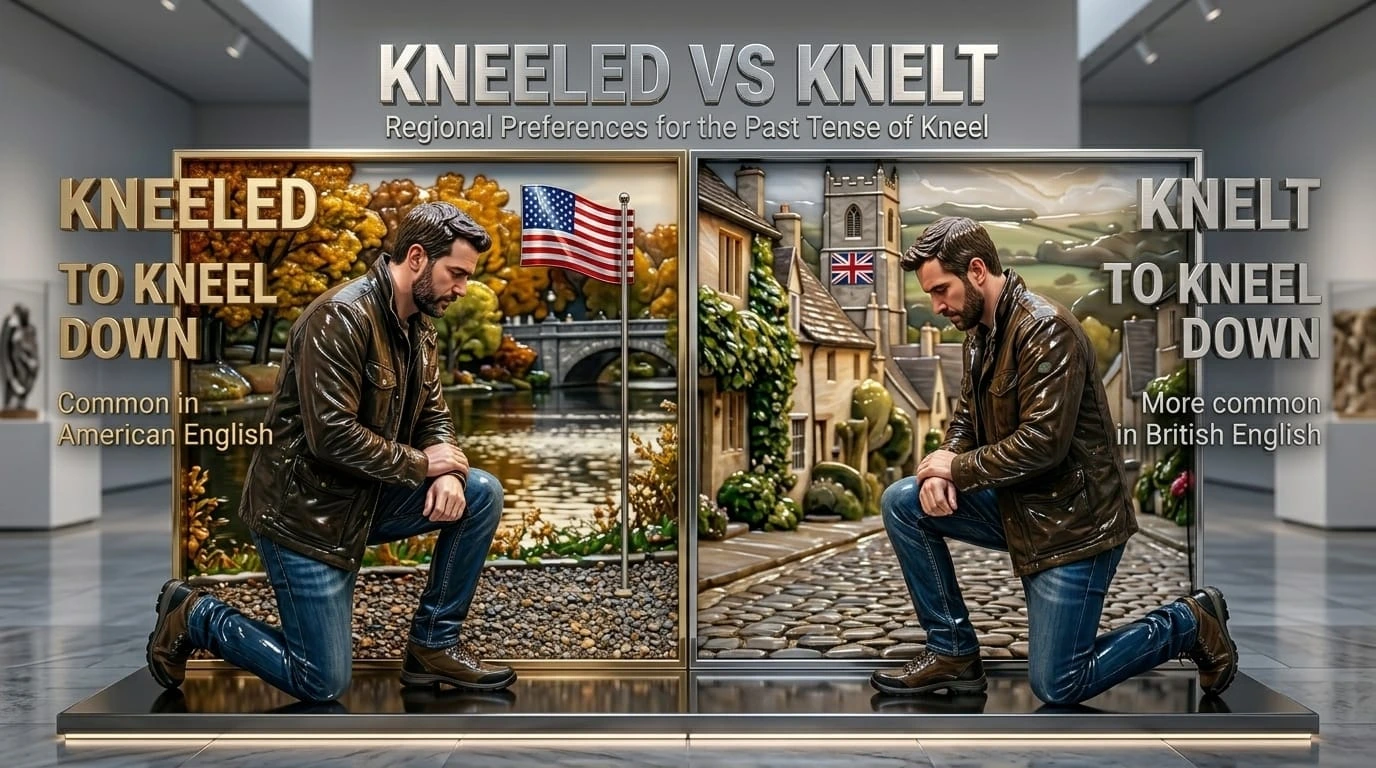
Kneeled or knelt are both correct past-tense forms of kneel. Knelt is more common in British English and formal writing, while kneeled appears more often in American English and casual use.
I still remember correcting a student’s sentence years ago. He wrote, “The player kneeled before the game started.” I changed it to “knelt” without thinking twice. A few minutes later he asked, “Wait… why is kneeled wrong?”
The funny thing? It was not wrong.
That small moment taught me something important. Many English mistakes happen because we learn one rule and think it is the only rule. English does not always work that way. Some words have two accepted forms. That is where confusion begins.
You may have seen kneeled in a news story. Then later you noticed knelt in a novel or school paper. Suddenly you start wondering if one sounds better. Maybe you worry about using the wrong one in an email, essay, or social post.
You are not alone. Thousands of people search this question because both words exist and both appear in real writing.
By the end of this guide, you will know exactly when to use each one and why people get confused.
Kneeled or Knelt: Quick Answer
Both kneeled and knelt are correct past forms of kneel.
Examples:
- “She knelt beside the child.”
- “The player kneeled during the ceremony.”
Both sentences work.
Many writers prefer knelt because it sounds more natural and traditional. Kneeled often feels more modern and is seen more in American writing.
The Origin of Kneeled or Knelt
English loves keeping old habits alive.
The verb kneel comes from Old English. Long ago, many verbs changed their forms in unusual ways.
Words like these followed older patterns:
- Feel → Felt
- Deal → Dealt
- Keep → Kept
- Kneel → Knelt
Over time, English also started making words more regular by adding -ed endings.
That created forms such as:
- Dreamed
- Learned
- Kneeled
Both styles stayed alive.
That is why the confusion exists today.
You are really seeing two English systems meeting each other:
- Older irregular forms
- Newer regular forms
Neither side fully won.
Kneeled or Knelt Explained: Key Differences or Variations
The meaning does not change. The difference is mostly style and preference.
| Term | Meaning | When to Use | Region/Context |
| Kneeled | Past tense of kneel | Casual or American writing | Common in US English |
| Knelt | Past tense of kneel | Formal or traditional writing | Common in UK English |
Examples
Kneeled
- The firefighter kneeled beside the injured man.
- She kneeled to tie her shoe.
Knelt
- The soldier knelt before the king.
- He knelt quietly in prayer.
Notice something important.
The action stays exactly the same. Only the word form changes.
Which Version Should You Use?
You can safely use either word. Still, some choices work better depending on your audience.
For students and academic writers
Use knelt.
Reason:
- Teachers often expect it
- It sounds more formal
- It appears often in books and school writing
For American readers
Use kneeled or knelt
Reason:
- Both are accepted
- Readers understand both forms
For business writing
Use knelt if you want a polished style.
Example:
“The witness knelt beside the damaged equipment.”
For global or neutral use
Choose knelt.
Reason:
- More widely accepted internationally
- Sounds natural to many readers
If you only want one safe choice, knelt usually wins.
Common Mistakes with Kneeled or Knelt
People often make small errors because both words exist.
Here are common examples.
| Mistake | Correction | Why It Happens |
| He had kneel beside her. | He had knelt beside her. | Past participle missing |
| She kneeled downed quickly. | She kneeled quickly. | Extra ending added |
| He was kneel during prayer. | He was kneeling during prayer. | Wrong verb form |
| They knelted beside him. | They knelt beside him. | Mixing patterns |
| She has kneeleded there. | She has kneeled there. | Double ending mistake |
Why these mistakes happen
- People mix regular and irregular patterns
- Some learners try adding extra endings
- Hearing different versions creates confusion
Reading real examples helps fix this problem.
Kneeled or Knelt in Real-World Examples
Words become easier when you see them in daily life.
Professional email
“During the event, the employee knelt to help the customer collect dropped papers.”
News headline
“Athletes kneeled before the match in a moment of silence.”
Social media post
“I knelt for five seconds and my knees started complaining.”
Formal report
“The rescue worker knelt beside the injured person to provide immediate support.”
Notice how both forms appear naturally.
Formal settings often lean toward knelt.
Casual settings allow more freedom.
Kneeled or Knelt: Data, Trends & Usage
Language changes because people change.
Search behavior shows strong interest in this topic.
Search intent
Primary intent: Informational
People want answers to questions like:
- Is kneeled correct?
- Which word should I use?
- What is the difference between kneeled and knelt?
Regions with high interest
Knelt
- United Kingdom
- Canada
- Academic writing communities
Kneeled
- United States
- Casual online writing
- Social media conversations
Audiences who search this topic
- Students
- ESL learners
- Writers
- Teachers
- Bloggers
One interesting insight
Modern internet writing has made kneeled more visible than before.
People now write in a more natural speaking style. That often pushes regular -ed forms into everyday use.
Still, knelt remains strong because books, schools, and formal writing continue using it.
Standalone Comparison Table
| Term/Variant | Meaning | Region/Context | Best Used When |
| Kneel | Base verb | General English | Present tense |
| Kneeled | Past tense | More common in US usage | Casual or conversational writing |
| Knelt | Past tense | More common in UK and formal writing | Essays, reports, formal content |
| Kneeling | Present participle | Universal | Ongoing action |
FAQ
Q: What does kneeled or knelt mean?
A: Both words are past-tense forms of kneel. They describe someone moving down onto one or both knees.
Q: How do you use kneeled or knelt correctly?
A: Use either form as the past tense of kneel. For formal or international writing, many people prefer knelt.
Q: Kneeled vs knelt: what is the difference?
A: The meaning stays the same. The difference is style and regional preference. Knelt sounds more traditional, while kneeled feels more regular and modern.
Q: Is kneeled acceptable in formal writing?
A: Yes. It is grammatically correct. Still, many formal writers choose knelt because it sounds more polished.
Q: Which version is correct: kneeled or knelt?
A: Both are correct. English accepts both forms.
Q: Where does kneeled or knelt come from?
A: The word comes from older English language patterns. Knelt followed an irregular pattern, while kneeled developed later as a regular form.
Q: Can kneeled or knelt be used in business writing?
A: Yes. In professional settings, knelt is often the safer choice because it sounds more formal.
Conclusion
Now the mystery is gone.
You learned that kneeled and knelt both work. You saw that the meaning does not change and also learned why English ended up keeping two versions alive.
Remember these key points:
- Both forms are correct
- Knelt sounds more formal and traditional
- Kneeled appears often in American and casual writing
- Your audience should guide your choice
If you want one easy rule to remember, pick knelt for formal situations and use either form for everyday writing.
Language should help you communicate, not make you nervous. Small differences like these become easier once you understand the story behind them.
Now you know exactly how to use kneeled or knelt: go try it in your next piece of writing.
Bookmark this guide so you never second-guess kneeled or knelt again.
Bleed or Bled: Complete Guide to Use the Right Word✅