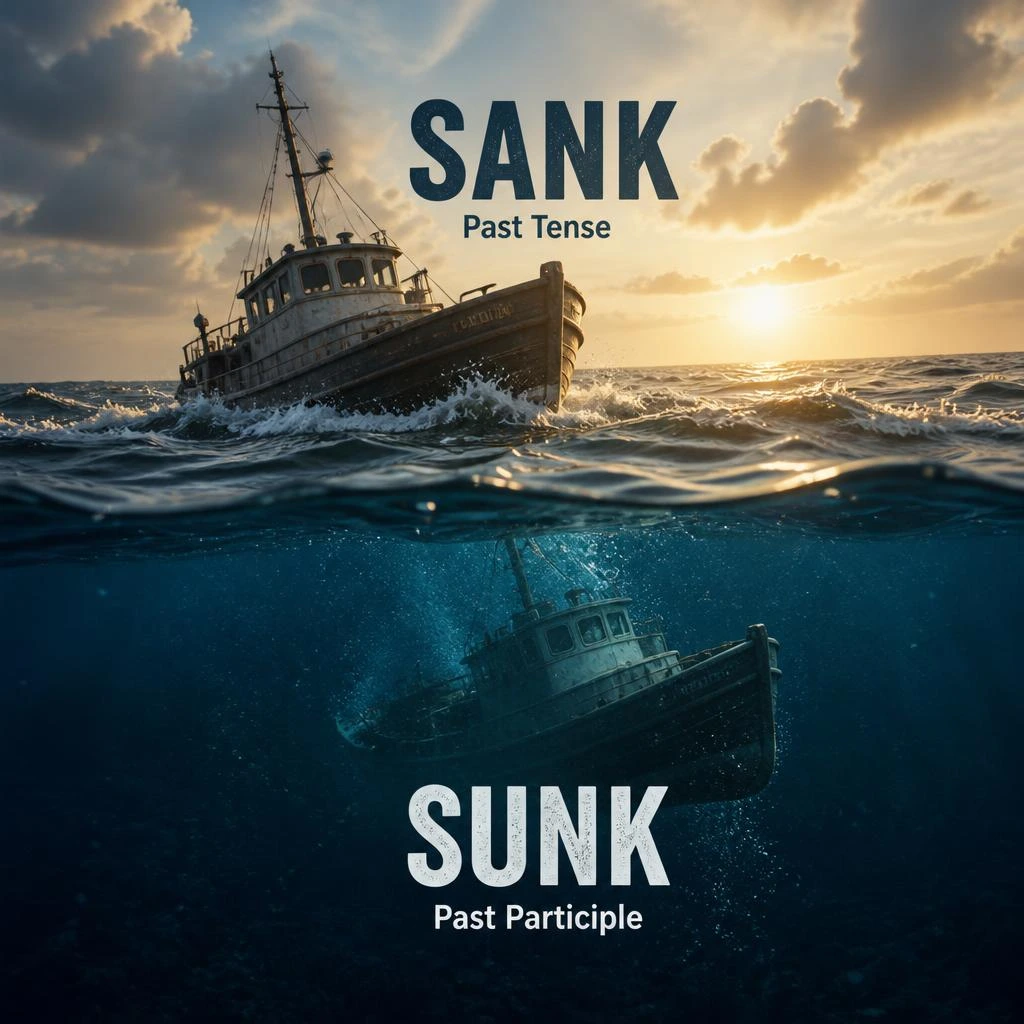
I still remember reading a student’s sentence that said, “The boat has sank in the river.” Something felt wrong right away. The sentence sounded close to correct, but one small word created a grammar mistake.
- Sank and sunk are both correct words, but they are used differently. Sank is the simple past tense of sink, while sunk is usually the past participle used with helping verbs like has, have, or had.
You may have had the same experience. You write a message, a school paper, or a social media post and suddenly stop. Should you write sank or sunk? The words look similar. Both come from the verb sink. Both appear in books and conversations. That is why many people mix them up.
The confusion gets stronger because English does not always follow simple patterns. Some verbs change form in unusual ways. A word that sounds right can still be grammatically wrong.
The good news is that this rule is much easier than many people think. Once you learn when to use sank and when to use sunk, you will spot mistakes instantly. By the end of this guide, you will know the difference, see real examples, and use both words with confidence.
Sank or Sunk: Quick Answer
The rule is simple:
- Sank = simple past tense of sink
- Sunk = past participle of sink
Examples:
Sank
- The ship sank during the storm.
- My phone sank into the mud.
Sunk
- The ship has sunk.
- The phone had sunk into the water.
A quick trick:
If your sentence has has, have, or had, use sunk.
The Origin of Sank or Sunk
The verb sink comes from old Germanic and Old English words that meant “to go down” or “fall below the surface.”
Long ago, English verbs often changed form in different ways. Instead of simply adding “-ed,” some words changed internally.
That is why we have:
- Sink
- Sank
- Sunk
This pattern is similar to:

- Drink → Drank → Drunk
- Sing → Sang → Sung
- Ring → Rang → Rung
People become confused because sank and sunk both sound complete on their own.
Sank or Sunk Explained: Key Differences or Variations
| Term | Meaning | When to Use | Region/Context |
| Sink | Base verb | Present actions | Global English |
| Sank | Simple past tense | Actions completed in the past | Global English |
| Sunk | Past participle | Used with helping verbs | Global English |
Examples:
Sank
- The small boat sank yesterday.
- His mood sank after hearing the news.
Sunk
- The boat has sunk already.
- Their hopes had sunk quickly.
Which Version Should You Use?
For students:
- Use sank when describing a completed past action.
- Use sunk after helping verbs.
For bloggers and writers:
- Double-check sentences with has, have, and had.
professional writing:
- Follow standard grammar rules carefully.
global audiences:
- The same grammar rule works everywhere.
Remember this simple guide:
- Yesterday → sank
- Has/have/had → sunk
Common Mistakes with Sank or Sunk
These mistakes happen often.
Mistake:
- The ship has sank.
Correct:
- The ship has sunk.
Reason:

Helping verbs need the past participle.
Mistake:
- Yesterday the boat sunk.
Correct:
- Yesterday the boat sank.
Reason:
Simple past uses sank.
Mistake:
- My grades have sank recently.
Correct:
- My grades have sunk recently.
Reason:
The sentence includes have.
Mistake:
- The stone had sank.
Correct:
- The stone had sunk.
Reason:
Past perfect needs sunk.
Sank or Sunk in Real-World Examples
Professional Email
“Sales numbers have sunk slightly this month.”

News Headline
“Fishing boat sank during heavy rainstorm.”
Social Media Post
“My mood completely sank after Monday started.”
Formal Report
“Customer satisfaction has sunk over the last quarter.”
Sank or Sunk: Data, Trends & Usage
People search sank or sunk mainly because of grammar confusion.
Common search reasons include:
- Homework help
- Writing improvement
- English learning
- Grammar checking
Countries with high search activity include:
- United States
- United Kingdom
- India
- Canada
- Australia
Search intent is mostly informational.
One interesting trend stands out. More people now check grammar online because emails, social media posts, and content writing have become part of daily life.
Standalone Comparison Table
| Term/Variant | Meaning | Region/Context | Best Used When |
| Sink | Present form | General English | Current action |
| Sank | Past tense | Global English | Completed past action |
| Sunk | Past participle | Global English | With helping verbs |
FAQs
Q: What does sank or sunk mean?
A: Both come from the verb sink. They describe something moving downward or below a surface.
Q: How do you use sank correctly?
A: Use sank for actions completed in the past without helping verbs.
Q: Sank vs sunk: what is the difference?

A: Sank is simple past tense. Sunk is the past participle.
Q: Is sunk acceptable in formal writing?
A: Yes. It is fully correct when used properly.
Q: Which version is correct, sank or sunk?
A: Both are correct. The sentence structure decides which one you need.
Q: Where does sank come from?
A: It comes from older English verb patterns that changed vowel sounds.
Q: Can sunk be used in emotional situations?
A: Yes. People often say feelings or hopes have sunk.
Conclusion
The confusion between sank and sunk becomes much easier once you know the grammar rule. Both words are correct, but they do different jobs in a sentence. Sank works as the simple past tense. Sunk works as the past participle.
Keep these ideas in mind:
- Sank = past action
- Sunk = used with has, have, or had
- Both words come from the verb sink
The next time you pause while writing, use the quick trick. If you see a helping verb, choose sunk. If you are talking about a finished action in the past, choose sank.
Now you know exactly how to use sank or sunk correctly. Bookmark this guide so you never second-guess these words again. Share it with someone who always mixes them up.
Bleed or Bled: Complete Guide to Use the Right Word✅