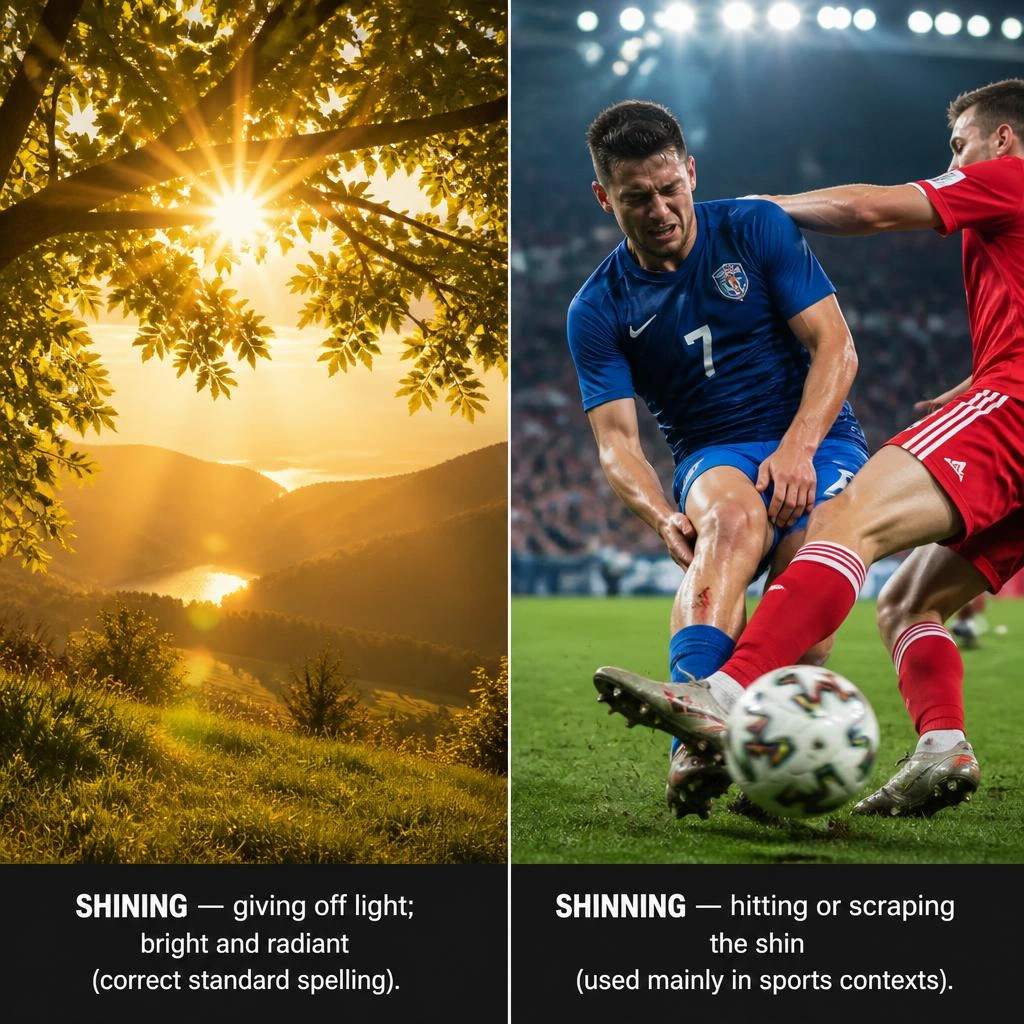
| Term | Meaning | When to Use | Region/Context |
| Shining | Giving light or showing excellence | Light, success, beauty | Global English |
| Shinning | Hitting or scraping the shin | Sports or physical movement | Less common usage |
Shining is the correct and standard English word. Shinning is mainly used in sports and means hitting or scraping your shin against something.
A few years ago, I was editing a blog post for a student who wrote, “The stars were shinning brightly in the night sky.” At first glance, the sentence looked fine. I almost moved on. Then I stopped. Something felt wrong.
Many people make this exact mistake. I have seen it in school work, emails, captions, and even business writing. The reason is simple. Shinning and shining look very close. They sound similar too. Because of that, people often think both words mean the same thing.
The confusion grows because shining is a very common word. You hear it in songs, movies, books, and everyday talk. Then you suddenly see shinning somewhere and start asking, Wait, which one is correct?
The answer is easier than most people think. The two words are real words, but they do not mean the same thing.
By the end of this guide, you will know exactly when to use each one and avoid this mistake for good.
Shinning or Shining: Quick Answer
Shining means giving light or being bright. It can also describe someone doing very well.
Examples:
- The sun is shining today.
- She is a shining example of hard work.
Shinning usually means hurting your shin by hitting it against something.
Examples:
- He kept shinning himself on the table.
- The player was shinning during practice.
For most writing situations, shining is the word you need.
The Origin / Background of Shinning or Shining
The word shine comes from old English words that meant “to give light” or “to glow.”
Over time, shining became the present form used to describe light, success, beauty, or brightness.
Shinning developed differently. It came from the word shin, which is the front part of your lower leg.
That is why the confusion happens.

People see:
- Shine → Shining
- Shin → Shinning
The words look close, but they come from different roots and carry different meanings.
Shinning or Shining Explained: Key Differences or Variations
The difference becomes clear once you see them side by side.
Examples:
Shining
- The moon was shining over the ocean.
- He gave a shining performance.
Shinning
- The child kept shinning his legs on the chair.
Which Version Should You Use?
students:
- Use shining in school work because that is usually the correct word.
writers and bloggers:
- Use shining for descriptions and storytelling.
sports or physical situations:
- Use shinning only when talking about the shin area of the leg.
global use:
- Choose shining because people recognize it instantly.
If you mean light, beauty, success, or glowing objects, choose shining.
Common Mistakes with Shinning or Shining
People often make these errors:
Mistake:

- The stars were shinning tonight.
Correct:
- The stars were shining tonight.
Reason:
People accidentally add an extra “n.”
Mistake:
- Her smile was shinning.
Correct:
- Her smile was shining.
Reason:
The sentence talks about brightness.
Mistake:
- The sun is shinning outside.
Correct:
- The sun is shining outside.
Reason:
The sun gives light.
Shinning or Shining in Real-World Examples
Professional Email
“Your team delivered a shining performance this quarter.”
News Headline
“Young athlete becomes the shining star of the tournament.”
Social Media Post
“The sunset is shining across the beach tonight.”
Formal Report
“The company remains a shining example of customer service.”
Shinning or Shining: Data, Trends & Usage
Search behavior shows a large difference between these words.
Shining receives much higher search activity because people use it every day.
Users search it for:
- Grammar help
- Song names
- Quotes
- General writing
Shinning usually gets searches from:
- People checking spelling
- Sports contexts
- Grammar confusion
Search intent type:
Informational
Interesting insight:
Many searches for shinning happen because users accidentally misspell shining.
Comparison Table
| Term/Variant | Meaning | Region/Context | Best Used When |
| Shining | Bright or glowing | General English | Talking about light or success |
| Shinning | Hitting the shin | Sports or movement | Talking about leg injuries |
| Shine | To give light | General English | Verb form |
| Shin | Front lower leg | Body part | Medical or physical context |
FAQs
Q: What does shinning or shining mean?
A: Shining means giving light or standing out positively. Shinning means hitting or scraping the shin.
Q: How do you use shining correctly?
A: Use shining when talking about light, brightness, or success. Example: The stars are shining.
Q: Shinning vs shining: what is the difference?
A: Shining relates to light. Shinning relates to the shin on your leg.
Q: Is shining acceptable in formal writing?
A: Yes. It is commonly used in professional documents, books, and reports.
Q: Which version is correct: shinning or shining?
A: For most situations, shining is correct.
Q: Where does shining come from?
A: It comes from the old word shine, meaning to give light.
Q: Can shining be used for people?
A: Yes. You can say someone is a shining example or a shining star.
Conclusion
The difference between shinning or shining becomes simple once you understand the meanings behind them. Shining is the common word people use when talking about light, beauty, success, or something bright. Shinning is real too, but it belongs to a very specific meaning connected to the shin on your leg.
Many people use shinning by mistake because they add an extra letter without noticing it. That small change creates a completely different word. Knowing this difference helps you write with more confidence.
Remember these key points:
- Shining = light, brightness, success
- Shinning = hitting the shin
- Shining is correct in most situations
Now you know exactly how to use shinning or shining correctly. Bookmark this guide so you never second-guess the words again.
focussing or focusing: Which Spelling Is Correct?