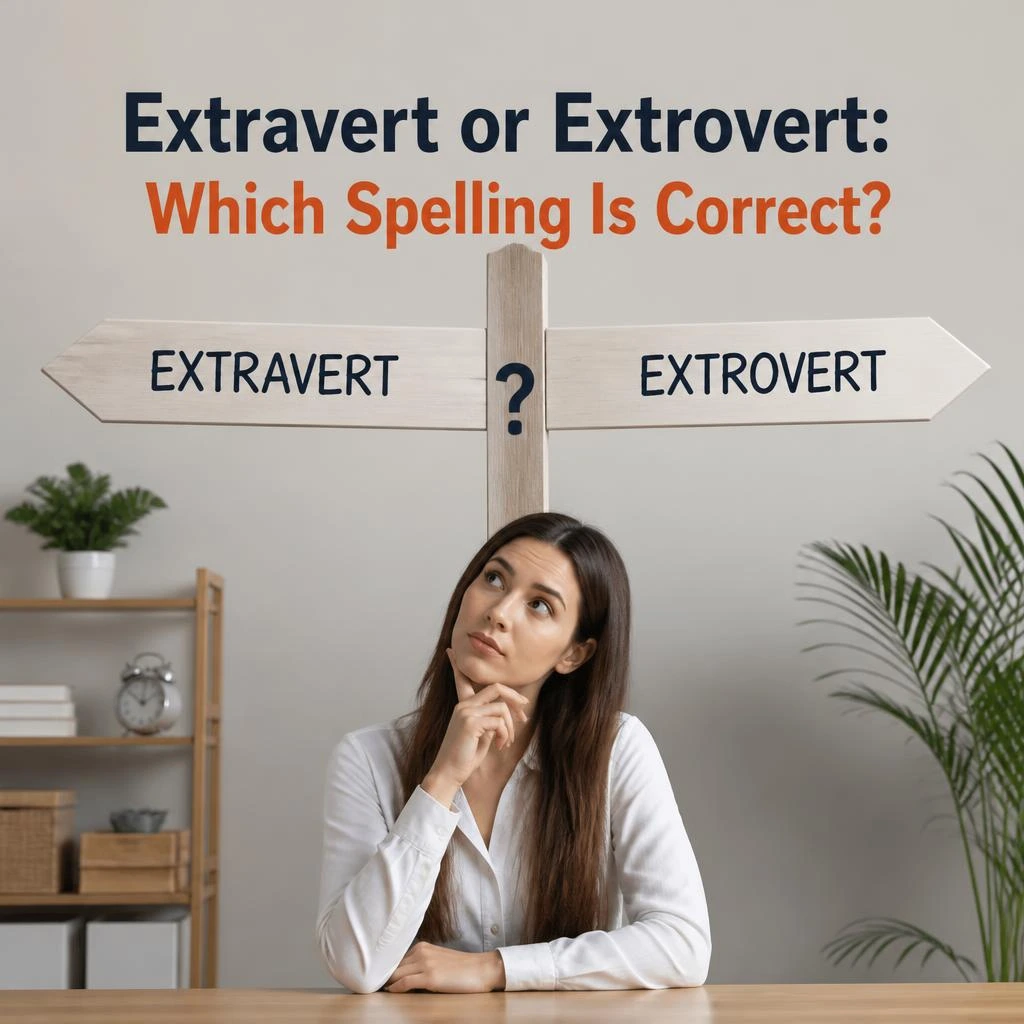
Both extravert and extrovert are correct. Extravert is the original spelling used in psychology, while extrovert is the more common spelling in everyday English. Today, most people use extroverts, but both words describe someone who gains energy from being around other people.
A few years ago, I was editing an article about personality types when I noticed something strange. One book used extravert, while another used extrovert. At first, I thought one of them had to be a spelling mistake. After digging deeper, I discovered that both spellings are correct. They simply have different histories and are used in different contexts.
Many people search for “extravert or extrovert” because they want to know which spelling they should use. Students see both in textbooks. Writers find different spellings in online articles. Even personality tests can switch between the two. That naturally creates confusion.
The good news is that the answer is simple once you understand where each spelling came from. In this guide, you’ll learn the difference between extravert and extrovert, discover why both exist, see when to use each one, and avoid common writing mistakes. By the end, you’ll know exactly which spelling fits your audience and your purpose.
Extravert or Extrovert: Quick Answer
Both extravert and extrovert describe a person who enjoys social interaction and often feels energized by spending time with others.
The difference is mainly spelling, not meaning.
- Extravert is the original form used by many psychologists.
- Extrovert is the spelling most people recognize and use in everyday English.
Examples
- Sarah is an extrovert who enjoys meeting new people.
- According to the personality test, James is an extravert.
Both sentences are correct. The choice depends on your audience and the type of writing.
📔The Origin and Background of Extravert or Extrovert
The story begins with the Swiss psychiatrist Carl Jung, who introduced the personality terms extravert and introvert in the early 1900s.
Jung created the word extravert from the Latin prefix extra-, which means outside. He used it to describe people whose attention and energy naturally move toward the outside world.
As the term became popular, many English speakers began writing extrovert instead. This spelling felt more natural because many English words start with extro-, and people found it easier to pronounce and remember.
Over time, dictionaries accepted both spellings because they were widely used.

Today:
- Psychology books often prefer extravert.
- News articles, blogs, and everyday writing usually use extrovert.
- Major dictionaries recognize both as correct.
That is why you still see both spellings today. They represent the same personality trait, but different traditions have kept each version alive.
Next, we’ll compare extravert and extrovert side by side, explain which spelling is better for different audiences, and show common mistakes to avoid.
Extravert Explained: Key Differences and Variations
The biggest surprise is that there is no difference in meaning between extravert and extrovert. They both describe someone who enjoys social interaction, likes meeting people, and often gains energy from being around others.
The real difference is where and how each spelling is used.
| Term | Meaning | When to Use | Region/Context |
| Extravert | A person who gains energy from social interaction | Psychology papers, academic writing, personality research | Academic and psychological contexts worldwide |
| Extrovert | A person who gains energy from social interaction | Everyday conversations, blogs, websites, business writing | General English, especially American and British English |
Why Do Both Spellings Exist?
English changes over time. As more people used extrovert, dictionaries accepted it alongside extravert.
Today:
- Extravert is closer to the word’s original form.
- Extrovert is the spelling most readers expect.
- Neither spelling is wrong.
Simple Examples
Extravert
- The study focused on extraverts and introverts.
- She scored as an extravert on the personality assessment.
Extrovert
- My brother is an extrovert who enjoys large parties.
- She is an extrovert, so making friends comes easily.
Which Version Should You Use?
The best choice depends on who will read your writing.

If you’re a student
Use extravert if your psychology textbook or professor prefers it. Staying consistent is important in academic work.
If you’re a blogger or content writer
Use extrovert because it is the spelling most readers search for and recognize online. It also matches common dictionary usage.
If you’re writing for business
Choose extrovert in emails, presentations, and workplace documents. It feels more familiar to a general audience.
If you’re writing research papers
Use extravert, especially when discussing personality theories or referencing psychological studies.
For global readers
Extrovert is usually the safest choice because it is the most widely recognized spelling.
Recommendation: For most websites and SEO articles, extrovert is the better primary keyword. Mention extravert early in the article so readers know both spellings are correct.
⚠️Common Mistakes with Extravert or Extrovert
Many writers make small mistakes because both spellings look so similar.
| Mistake | Correct Form | Why It Happens |
| Extrovert is the only correct spelling. | Both are correct. | People rarely see extravert outside psychology. |
| Extravert and extrovert have different meanings. | They mean the same thing. | The spelling difference causes confusion. |
| Switching spellings throughout one article. | Pick one main spelling and stay consistent. | Consistency improves readability and SEO. |
| Calling every friendly person an extrovert. | Personality is more than being talkative. | People confuse behavior with personality traits. |
| Writing extraverted and extroverted randomly together. | Choose one style and keep it throughout. | Mixed spelling looks unprofessional. |
Extravert or Extrovert in Real,World Examples
Professional Email
“We are looking for an extrovert who enjoys working closely with clients and building strong relationships.”
News Headline
“Extroverts May Find Networking Events Easier Than Introverts, New Study Suggests”
Social Media Post
“I’m definitely an extrovert. Meeting new people gives me energy!”
Formal Report
“Participants identified as extraverts showed higher levels of social engagement during group activities.”
These examples show why both spellings continue to appear in different types of writing. The meaning stays the same, but the preferred spelling changes with the audience.
Read more: Develop or Develope: Which Spelling Is Correct?
Standalone Comparison Table
| Term/Variant | Meaning | Region/Context | Best Used When |
| Extravert | Person energized by social interaction | Psychology, academic writing | Research papers, textbooks, personality theory |
| Extrovert | Person energized by social interaction | Everyday English, media, blogs | Websites, articles, business writing, general audiences |
Extravert or Extrovert: Data, Trends & Usage
The spelling extrovert is searched far more often than extravert. Most people learn the word through school, books, or everyday conversation, so extrovert has become the familiar choice.
Where is this topic most searched?
- English-speaking countries, especially the United States, United Kingdom, Canada, and Australia
- Students studying psychology or personality types
- Writers checking the correct spelling
- People taking personality quizzes
Search Intent
Primary search intent: Informational
People usually want to know:
- Which spelling is correct
- Whether the words have different meanings
- Which spelling they should use
- Why dictionaries list both versions
Why This Matters Today
Personality tests, career assessments, and self-improvement content are more popular than ever. As a result, more people come across both extravert and extrovert and wonder if one is wrong. Knowing the difference helps you write with confidence and choose the spelling that best fits your audience.
Frequently Asked Questions
Q: What does extravert or extrovert mean?
A: Both words describe a person who gains energy from spending time with other people. They often enjoy conversations, teamwork, and social activities.
Q: Which spelling is correct: extravert or extrovert?
A: Both spellings are correct. Extravert is the original form used in psychology, while extrovert is the more common spelling in everyday English.
Q: Is there any difference between extravert and extrovert
A: No. They have the same meaning. The only difference is the spelling and the context in which each is more commonly used.
Q: Should I use extravert in formal writing?
A: Yes. If you’re writing about psychology or following an academic style guide, extravert is often the preferred choice.
Q: Which spelling is better for blogs and websites?
A: Extrovert is usually the better choice because it is more familiar to readers and commonly used in online content.
Q: Where did the word extravert come from?
A: The word was introduced by psychologist Carl Jung. He formed it from the Latin prefix extra-, meaning “outside,” to describe people whose attention is directed outward.
Q: Can I use both spellings in the same article?
A: You can mention both when explaining the difference. However, it’s best to choose one spelling for the rest of the article to keep your writing clear and consistent.
🎯Conclusion
Choosing between extravert and extrovert is easier than it first appears. Both spellings are correct, and both describe someone who feels energized by social interaction. The main difference is their usage. Extravert is the original spelling and is still common in psychology and academic writing. Extrovert is the spelling most people recognize in everyday English.
If you’re writing for a general audience, extrovert is usually the best choice because it is more familiar and easier for readers to recognize. If you’re writing a psychology paper or discussing personality theory, extravert may be the better fit.
The most important rule is to stay consistent. Pick one spelling and use it throughout your writing.
Now you know exactly when to use extravert or extrovert with confidence. Bookmark this guide so you never second-guess the spelling again and share it with anyone who’s been confused by these two words.
Read more: Plow or Plough: The Complete Guide to Correct Usage

Passionate about language and clear communication, I explore the subtle differences between words and expressions through well-researched, practical content. My goal is to help readers write with greater clarity, confidence, and precision by making complex language concepts easy to understand.