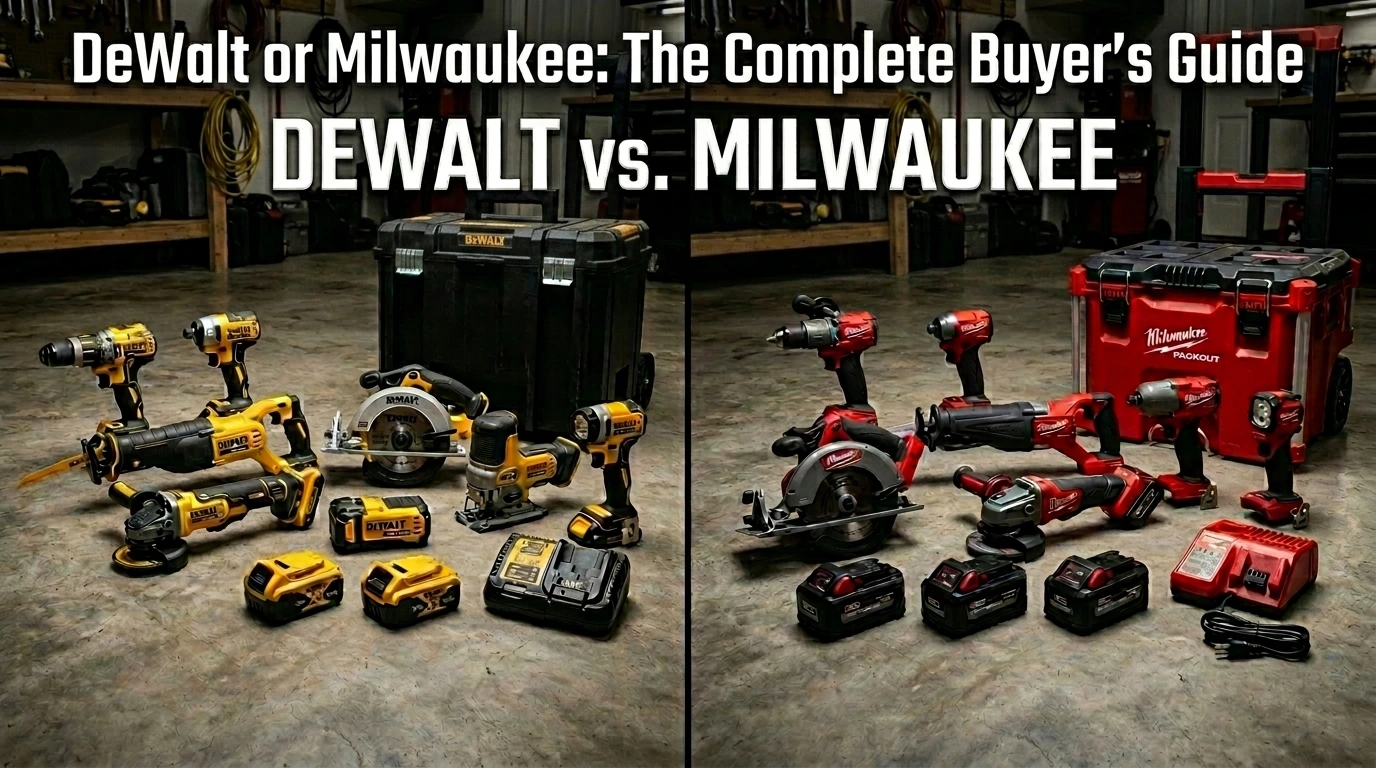
DeWalt is a great choice for reliable performance and value, while Milwaukee stands out for innovation, power, and a larger range of professional-grade tools. The right choice depends on your work, budget, and tool needs.
A few years ago, I helped a friend renovate his first home. We stood in a hardware store looking at two shelves full of power tools. One side had bright yellow DeWalt tools. The other had bold red Milwaukee tools. He looked at me and asked, “Which one is actually better?”
It sounded like a simple question. It wasn’t.
I have used both brands on home projects and job sites. Each has strengths. Each has loyal fans. Yet many buyers still struggle to decide because online reviews often favor one brand without explaining why.
The truth is that the best choice depends on how you work. A professional contractor may need something very different from a weekend DIY user.
This guide will help you understand the real differences between DeWalt and Milwaukee. You will learn about their history, tool quality, battery systems, pricing, warranties, and who each brand suits best. By the end, you’ll know exactly which one deserves a place in your toolbox.
DeWalt or Milwaukee: Quick Answer✍🏻
If you want dependable tools at a competitive price, DeWalt is an excellent option.
If you need cutting-edge features, higher performance, and one of the largest cordless tool systems available, Milwaukee is often the better choice.
Simple examples
- A homeowner building a deck may be perfectly happy with DeWalt.
- An electrician who uses cordless tools every day may prefer Milwaukee because of its specialized tool lineup.
There is no universal winner. The right brand depends on how often you use your tools and what jobs you do.
📔The Background of DeWalt or Milwaukee
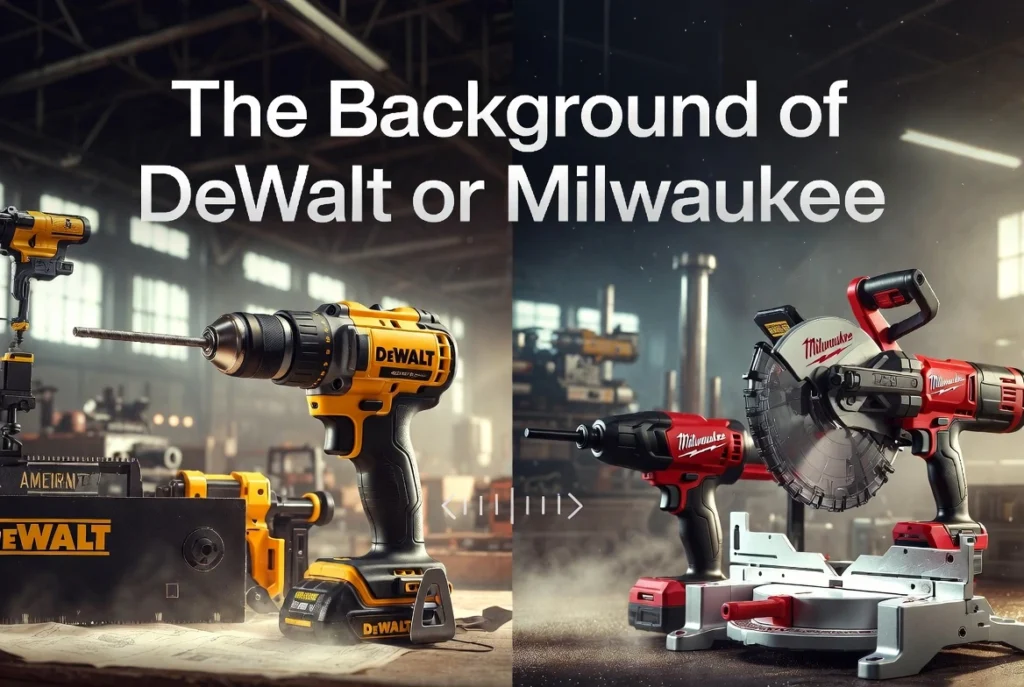
Both companies have built strong reputations over many decades.
DeWalt
DeWalt was founded in 1924 after Raymond DeWalt invented the radial arm saw. Today, the brand is known for durable power tools, woodworking equipment, outdoor tools, and construction products.
Its familiar yellow-and-black colors have become a symbol of reliability on job sites around the world.
Milwaukee
Milwaukee Tool began in 1924 in Wisconsin, USA. The company quickly earned respect for making heavy-duty tools for professional tradespeople.
Over the years, Milwaukee invested heavily in cordless technology. Today, it offers one of the largest collections of battery-powered tools for electricians, plumbers, mechanics, HVAC technicians, and contractors.
Why do people compare them?
Both brands target similar buyers.
They compete in categories like:
- Cordless drills
- Impact drivers
- Circular saws
- Angle grinders
- Hammer drills
- Outdoor equipment
- Batteries and chargers
Because their products often sit side by side in stores, buyers naturally compare them before spending their money.
DeWalt or Milwaukee Explained: Key Differences📑
Although both brands make excellent tools, they focus on different priorities.
| Feature | DeWalt | Milwaukee |
| Best for | DIY users and professionals | Professional trades |
| Price | Usually more affordable | Often more expensive |
| Tool Performance | Strong and reliable | Very high performance |
| Battery Platform | 20V MAX and FLEXVOLT | M12 and M18 systems |
| Innovation | Good | Excellent |
| Specialized Tools | Moderate selection | Huge selection |
| Weight | Often lighter | Sometimes heavier but more powerful |
| Value | Excellent | Excellent for professionals |
Build Quality
Both brands build durable tools.
DeWalt tools often balance strength with comfortable handling.
Milwaukee tools usually feel more rugged and are designed for heavy daily use.
Battery Systems
Battery systems matter because they affect every future tool purchase.
DeWalt
- 20V MAX platform
- FLEXVOLT batteries work with high-power tools
- Wide compatibility across many products
Milwaukee
- M12 platform for compact tools
- M18 platform for professional cordless tools
- Excellent battery technology and runtime
If you plan to build a large cordless collection, choosing the right battery ecosystem is almost as important as choosing the tools themselves.
Performance
For demanding work, Milwaukee often delivers slightly more power.
Many professionals appreciate its faster cutting speeds and stronger fastening performance.
DeWalt remains highly capable and handles most construction and woodworking tasks with ease.
Tool Variety
This is where Milwaukee shines.
The company offers hundreds of specialized cordless tools designed for specific trades.
Examples include:
- Copper pipe cutters
- Inspection cameras
- Cable pullers
- Plumbing tools
- Electrical installation tools
- Automotive repair equipment
DeWalt has an impressive lineup too, but Milwaukee generally offers more niche products.
Warranty
Both companies provide competitive warranties, although coverage varies by product and region.
Always check the warranty details before purchasing because terms may differ depending on where you live.
Key Takeaways So Far
After using both brands, I don’t see this as a battle with one clear winner.
Instead, I think of them as tools built for different people.
Choose DeWalt if you want:
- Great value
- Reliable performance
- Comfortable tools
- A balanced product lineup
Choose Milwaukee if you want:
- Maximum cordless innovation
- Professional-grade performance
- The largest selection of specialized tools
- Premium features for daily heavy use
In the next section, we’ll compare both brands in real-world situations, show common buying mistakes, look at search trends, and help you decide which brand fits your budget and work style best.
Which Brand Should You Choose? ✅
Now comes the most important question.
Should you buy DeWalt or Milwaukee?
The answer depends on how you plan to use your tools. Think about the jobs you do today and the tools you may buy in the future.
For DIY Homeowners
Choose DeWalt if you:
- Build furniture at home
- Hang shelves and cabinets
- Repair fences
- Complete weekend projects
- Want great quality without spending too much
DeWalt offers excellent performance for most home projects. Its tools are easy to use, reliable, and often cost less than similar Milwaukee models.
Example: If you are building a backyard deck or replacing kitchen cabinets, a DeWalt drill and impact driver combo can handle the job with ease.
For Professional Contractors
Choose Milwaukee if you:
- Use power tools every day
- Work long hours on job sites
- Need maximum power
- Depend on cordless tools all day
Milwaukee designs many of its tools for professionals who need high performance and long battery life.
Many contractors also appreciate the wide range of specialty tools that work with the same battery system.
For Woodworkers
Both brands perform well.
Choose DeWalt if you:
- Focus on woodworking
- Need reliable saws
- Want excellent value
- Prefer comfortable handling
Choose Milwaukee if your workshop also includes construction or remodeling projects that require heavy-duty cordless tools.
For Mechanics
Milwaukee is usually the better choice.
The company makes many automotive tools, including:
- High-torque impact wrenches
- Compact ratchets
- Inspection lights
- Grease guns
- Specialty repair tools
Many mechanics already use the Milwaukee M12 and M18 battery systems because of their large product range.
For Electricians and Plumbers
Milwaukee has a clear advantage.
It offers many trade-specific tools such as:
- Cable cutters
- Press tools
- Pipe threaders
- Copper tubing cutters
- Knockout tools
These specialty products save time on professional jobs.
For Buyers on a Budget
If price matters most, DeWalt usually offers better value.
You can often find:
- Lower-priced starter kits
- Combo tool deals
- Seasonal discounts
- Affordable battery bundles
You still receive excellent quality without paying premium prices.
Read more:Carrys or Carries: Easy Guide to Use the Correct Spelling
⚠️Common Mistakes When Choosing DeWalt or Milwaukee
Many buyers spend more money than necessary because they focus on the wrong things.
Avoid these common mistakes.
| Mistake | Better Choice | Why It Matters |
| Buying only because of the brand name | Compare the tool you actually need | Every brand has stronger and weaker products. |
| Ignoring the battery platform | Pick a battery system first | Batteries become a long-term investment. |
| Paying for power you never use | Match the tool to your projects | More power often costs more money. |
| Buying the cheapest kit available | Compare features and warranty | A better kit may save money later. |
| Mixing battery systems | Stay with one ecosystem | One charger and battery set is easier and cheaper. |
Why do these mistakes happen?
Many people watch online comparison videos that focus only on speed tests.
Real life is different.
Comfort, battery life, durability, warranty, and available accessories often matter more than saving two or three seconds on a task.
🌍DeWalt or Milwaukee in Real, World Examples
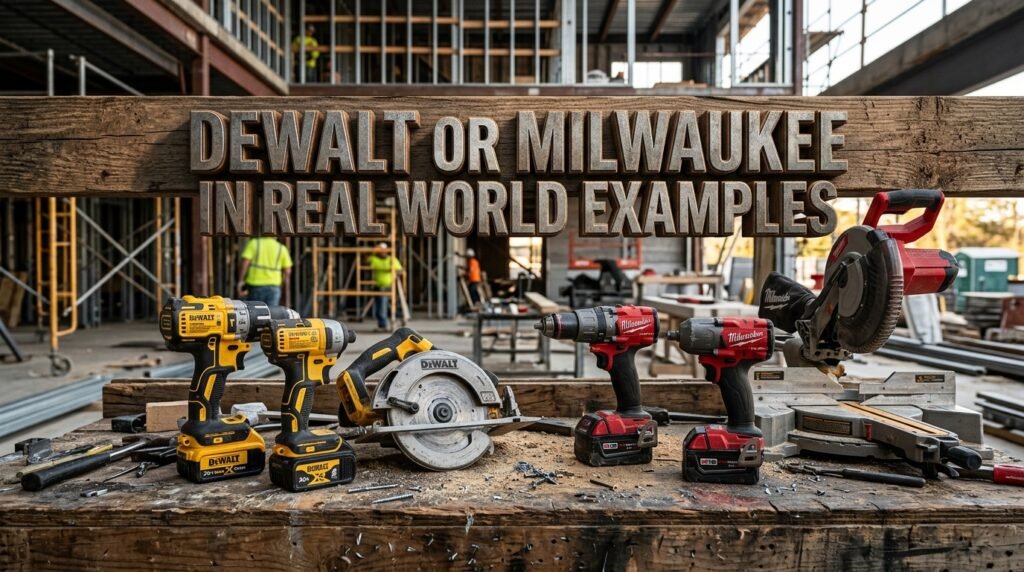
Here is how these brands naturally appear in everyday situations.
Professional Email
“Our construction team has decided to purchase Milwaukee cordless tools because they offer the specialty equipment needed for commercial projects.”
News Headline
“DeWalt launches a new cordless outdoor equipment lineup for homeowners and professionals.
Social Media Post
“Finally upgraded to a Milwaukee impact driver today. It feels powerful and the battery lasted all afternoon.”
Formal Report
“The maintenance department recommends DeWalt tools due to their competitive pricing and dependable performance across routine repair tasks.”
DeWalt or Milwaukee: Data, Trends & Usage
Both brands are searched millions of times each year by people looking for power tools.
People who search this topic include:
- DIY homeowners
- Contractors
- Electricians
- Plumbers
- Mechanics
- Carpenters
- Woodworkers
- Construction companies
Search Intent
Most searches fall into these categories:
- Commercial Investigation – comparing products before buying
- Informational – learning the differences
- Transactional – ready to purchase
- Product Research – reading reviews
Why is this comparison so popular?
Cordless tools are becoming the first choice for professionals and homeowners.
Once someone buys into one battery platform, they often continue buying compatible tools from the same brand for many years.
That makes the first purchase one of the most important buying decisions.
DeWalt vs Milwaukee Comparison Table
| Brand | Best For | Price | Power | Battery System | Tool Variety | Best Used When |
| DeWalt | DIY users and professionals | $$ | Excellent | 20V MAX, FLEXVOLT | Large | You want dependable tools at a good price. |
| Milwaukee | Professional trades | $$$ | Outstanding | M12, M18 | Very Large | You need maximum performance and specialty tools. |
Quick Summary
Choose DeWalt if you want:
- Better overall value
- Reliable everyday performance
- Comfortable tools
- Affordable starter kits
Choose Milwaukee if you want:
- Premium performance
- Advanced cordless technology
- Specialized trade tools
- A larger professional ecosystem
There is no wrong choice. The best brand is the one that matches your work, your budget, and your future tool collection.
Frequently Asked Questions

Q1: Is DeWalt or Milwaukee better overall?
Answer: Neither brand is better for everyone. DeWalt offers excellent value, durability, and reliable performance for both DIY users and professionals. Milwaukee stands out with more advanced technology, greater power, and a larger selection of specialty tools for trade professionals.
Q2: Is DeWalt cheaper than Milwaukee?
Answer: In many cases, yes. DeWalt tools and combo kits are often priced slightly lower than comparable Milwaukee products. However, prices vary depending on the model, features, and current promotions.
Q3: Which brand lasts longer?
Answer: Both brands are built to last when used and maintained properly. Their tools are designed for demanding work, and many professionals use either brand for years without major issues. Proper care, battery maintenance, and correct usage have a bigger impact on lifespan than the brand itself.
Q4: Can I use DeWalt batteries on Milwaukee tools?
Answer: No. DeWalt and Milwaukee use different battery platforms. Their batteries are not directly compatible because each brand has its own design and connection system. While third-party adapters exist, they are generally not recommended since they may affect safety, performance, or warranty coverage.
Q5: Which brand has the better battery system?
Answer: Both battery systems are excellent. DeWalt’s 20V MAX and FLEXVOLT platforms provide impressive versatility, while Milwaukee’s M12 and M18 systems offer a wider range of compatible tools, especially for professional trades.
Q6: Which brand is better for beginners?
Answer: DeWalt is often the better starting point for beginners. It offers dependable performance, user-friendly tools, and excellent value for money. If your projects become more demanding later, you can continue expanding within the same battery system.
Q7: Which professionals usually choose Milwaukee?
Answer: Many electricians, plumbers, mechanics, HVAC technicians, and commercial contractors prefer Milwaukee because of its extensive lineup of trade-specific cordless tools and high-performance battery technology.
🎯Conclusion
Choosing between DeWalt and Milwaukee is less about finding the “best” brand and more about finding the right brand for your work.
If you want dependable tools, great value, and a strong all-around lineup, DeWalt is an excellent choice. It performs well for homeowners, woodworkers, and many professionals while keeping costs reasonable.
If you rely on your tools every day, need maximum cordless performance, or work in a specialized trade, Milwaukee is hard to beat. Its innovative battery systems, professional-grade performance, and extensive range of specialty tools make it a favorite on many job sites.
Before you buy, think beyond today’s project. Consider the battery platform, future tool purchases, your budget, and the type of work you do most often. Building a complete tool ecosystem around the right brand can save you money and improve productivity for years to come.
Now that you know the real differences between DeWalt and Milwaukee, you can shop with confidence. Bookmark this guide for future reference and share it with anyone trying to decide between these two trusted tool brands.
Read more: Bitting or Biting: Explained with Examples (2026)

Passionate about language and clear communication, I explore the subtle differences between words and expressions through well-researched, practical content. My goal is to help readers write with greater clarity, confidence, and precision by making complex language concepts easy to understand.