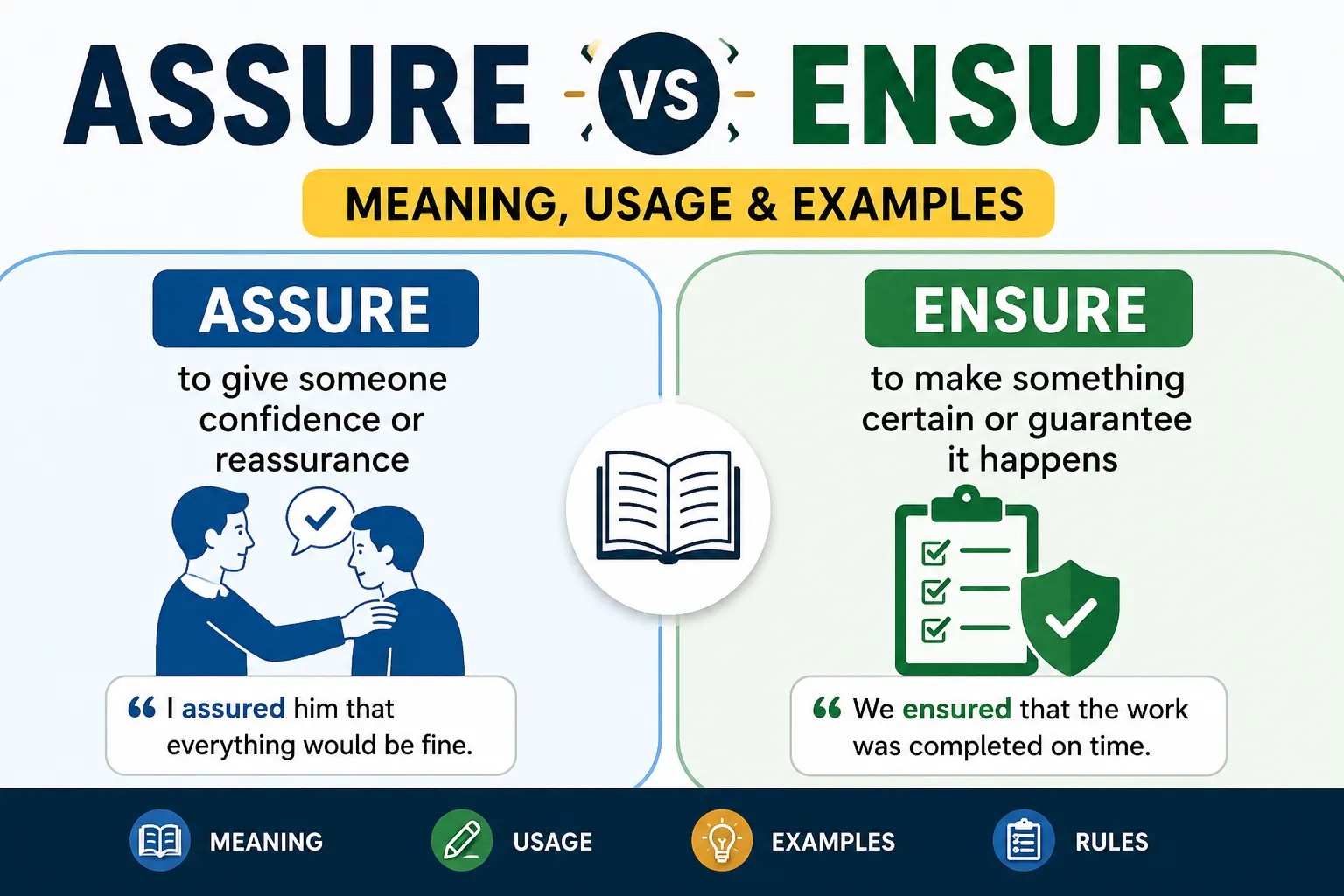
The main difference between assure and ensure is that assure means to give confidence to a person, while ensure means to make certain that something happens.
Many people confuse assure and ensure because the words look and sound similar. They are commonly used in emails, assignments, news, and everyday conversations. A simple spelling mistake can change the meaning of a sentence and make your writing less clear.
People search for assure vs ensure because they want to know which word is correct. Should you assure someone or ensure something? The answer is easy once you understand the difference. Assure means to give confidence or remove someone’s doubt. Ensure means to make certain that something happens.
This guide explains the meaning, usage, and examples of assure and ensure. It also compares British and American English and answers common questions. By the end, you will know exactly when to use assure and ensure in any type of writing.
Assure vs Ensure Quick Answer
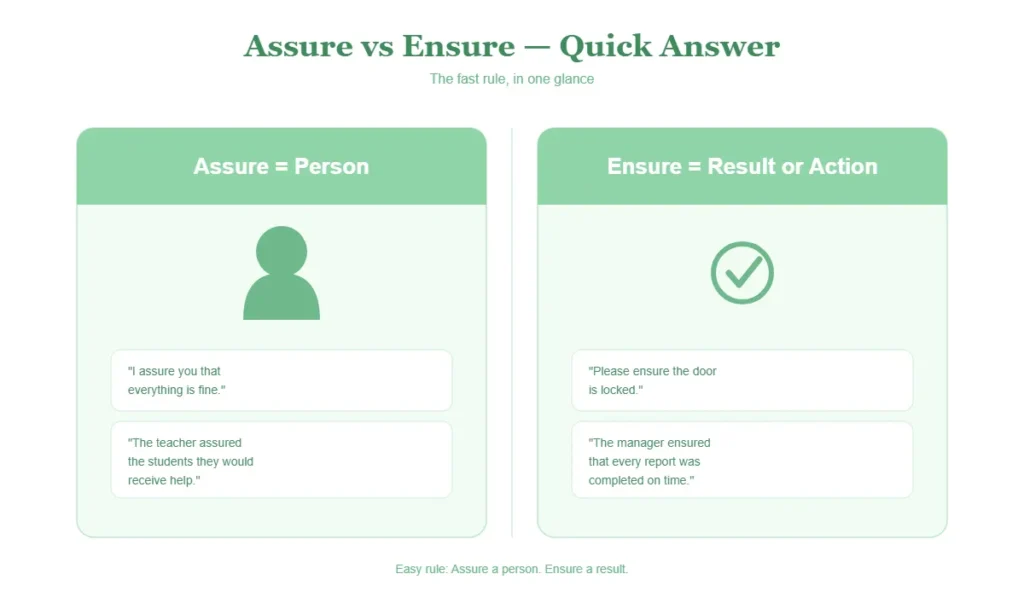
Quick Answer: Use assure when talking to a person. Use ensure when talking about making something certain.
Examples
- I assure you that everything is fine.
- Please ensure the door is locked.
- The teacher assured the students they would receive help.
- The manager ensured that every report was completed on time.
Easy Rule
- Assure = Person
- Ensure = Result or Action
The Origin of Assure vs Ensure
Both words come from the Latin word securus, meaning “safe” or “secure.”
- Assure came into English through Old French and means to give someone confidence.
- Ensure developed later and came to mean making certain that an event or action happens.
Although they share similar roots, their meanings became different over time.
British English vs American English Spelling
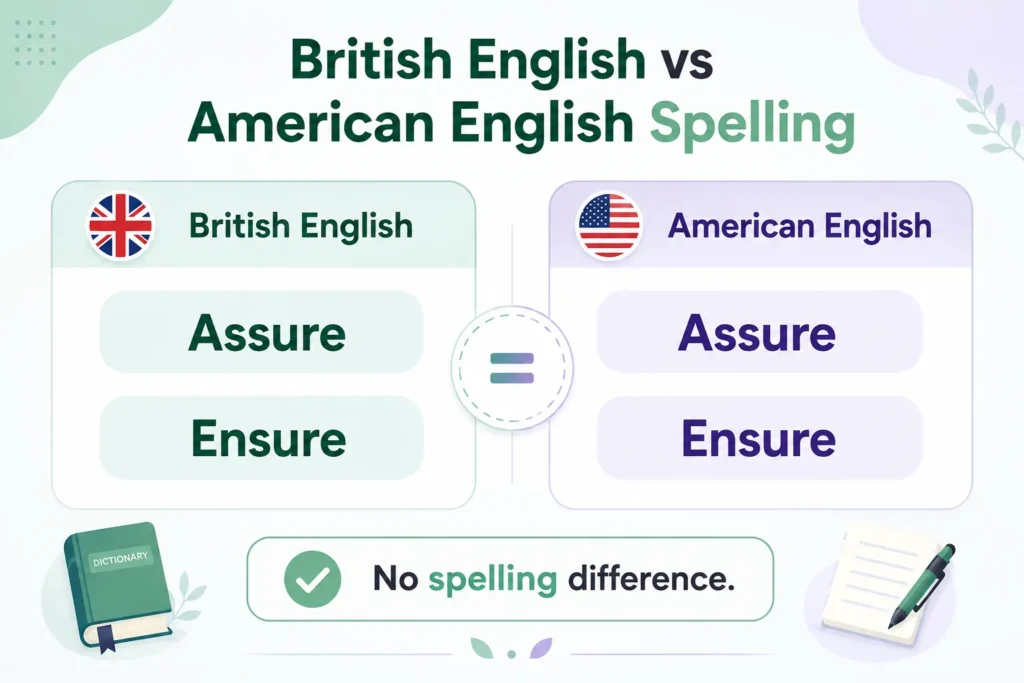
Both assure and ensure are spelled the same in British English and American English. There is no spelling difference between the two varieties.
| Meaning | British English | American English |
| Give confidence to a person | Assure | Assure |
| Make something certain | Ensure | Ensure |
Examples
| Sentence | Correct Word |
| I can _____ you that we will help. | Assure |
| Please _____ all files are saved. | Ensure |
| She _____ me everything was okay. | Assured |
| They _____ safety before opening. | Ensured |
Which Spelling Should You Use?
There is no regional spelling difference. The correct word depends on the meaning.
If you are writing for work, school, or an international audience, follow the simple rule:
- Assure people.
- Ensure results.
Read more 👉:Scarred vs Scared: Meaning & Difference
Common Mistakes with Assure vs Ensure
Many writers use these words interchangeably, but they are not always synonyms.
Many writers use these words interchangeably, but they are not always synonyms.
| Incorrect | Correct |
| Please assure the door is locked. | Please ensure the door is locked. |
| I ensure you everything is fine. | I assure you everything is fine. |
| The company assured quality control. | The company ensured quality control. |
| She ensured me that it was safe. | She assured me that it was safe. |
Memory Tip
- Assure → Someone
- Ensure → Something
Assure vs Ensure in Everyday Examples
Emails
- I assure you that your order is being processed.
- Please ensure all documents are attached before sending.
News
- Officials ensured public safety during the event.
- The spokesperson assured citizens that supplies were available.
Social Media
- I can assure everyone that I’m doing well.
- Always ensure your password is strong.
Formal Writing
- The policy ensures compliance with regulations.
- The director assured employees that no jobs would be lost.
Assure vs Ensure Google Trends & Usage Data
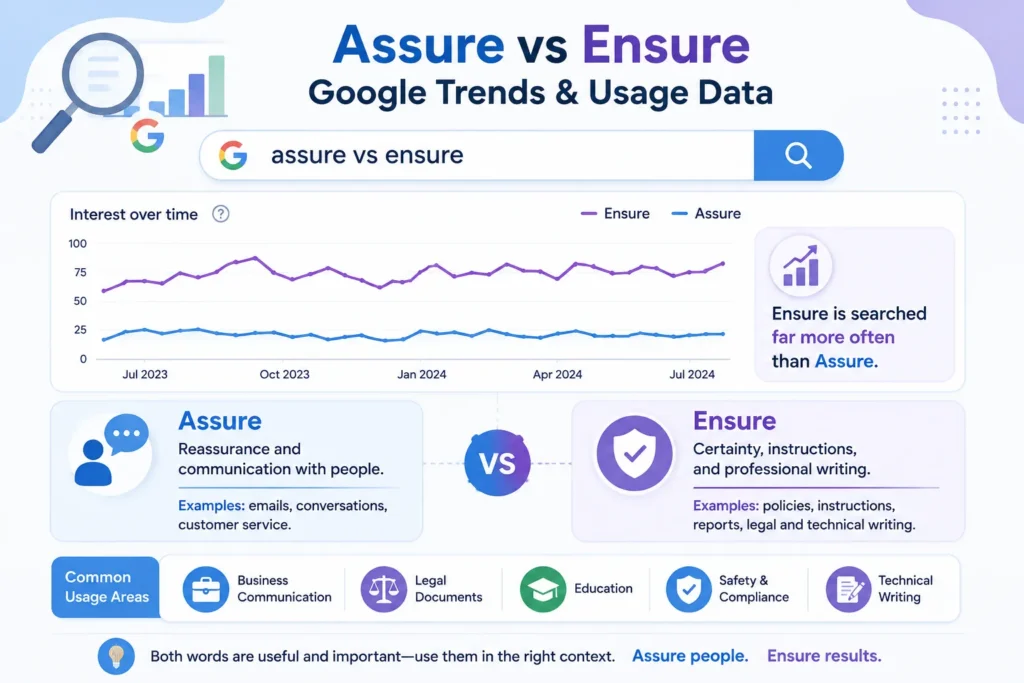
Many people search for assure vs ensure because the two words are confusing.
Usage patterns show that:
- Assure is mainly used when giving confidence to people.
- Ensure is used when making something certain.
- People in many English-speaking countries search for this grammar difference.
Comparison Table
| Feature | Assure | Ensure |
| Meaning | Give confidence | Make certain |
| Used With | People | Actions or results |
| Part of Speech | Verb | Verb |
| Example | I assure you. | Ensure the task is complete. |
| Common Context | Conversation, customer service | Safety, business, instructions |
Frequently Asked Questions
1. What is the difference between assure and ensure?
Assure means to give confidence to someone. Ensure means to make certain that something happens.
2. Is it assure or ensure success?
Use ensure success because success is a result.
3. Can I say “I ensure you”?
In most cases, no. The correct phrase is I assure you.
4. Is there a spelling difference between British and American English?
No. Both countries use the same spellings.
5. Which word is used in business writing?
Both are used. Assure is used to make people feel confident, while ensure is used to make sure something happens.
6. Is ensure more formal than assure?
Not necessarily. They simply have different meanings and are used in different situations.
7. How can I remember the difference?
Remember this rule:
- Assure = A person.
- Ensure = An event or result.
Conclusion
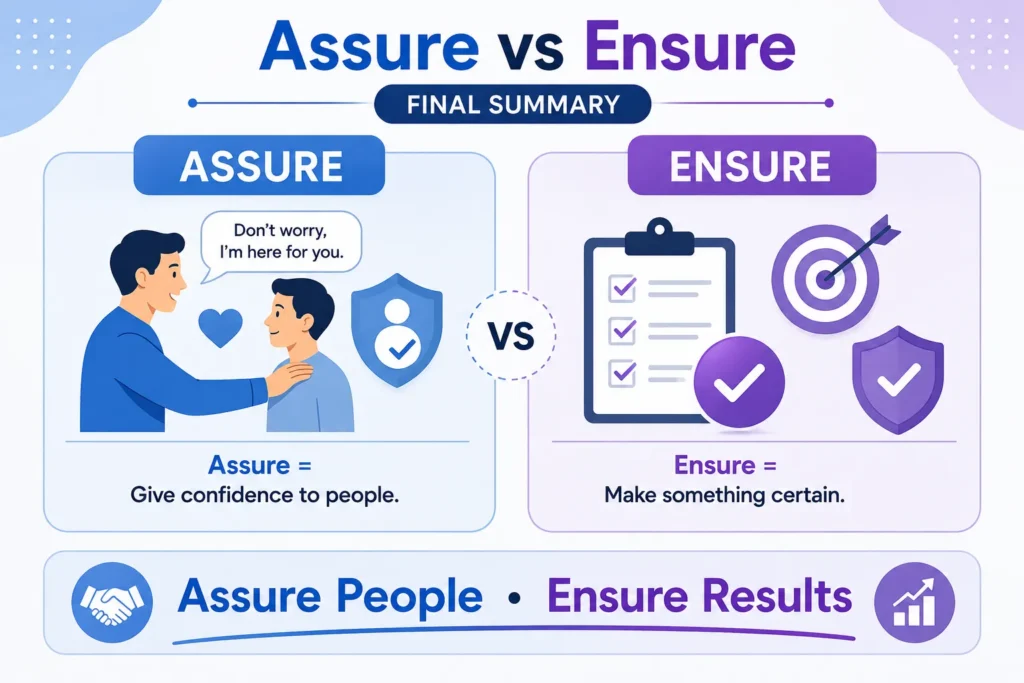
The difference between assure and ensure is simple once you know who or what the sentence is about. Use assure when you are giving confidence to a person or removing their doubts. Use ensure when you want to make certain that something happens or that a condition is met.
There is no spelling difference between British English and American English. The same rules apply everywhere. Using the correct word helps make your writing clear and easy to understand.
A helpful way to remember is this: assure people, ensure results. This simple rule works in almost every situation. Using the right word helps you avoid mistakes and express your ideas clearly.

Hi, I’m Sehrish Iqbal, and I enjoy writing about the English language and the little differences between words that often cause confusion. I create simple and easy-to-understand articles about grammar, spelling, commonly confused words, and correct word usage. My goal is to make English easier to understand and help students, writers, and English learners use the right words with confidence.