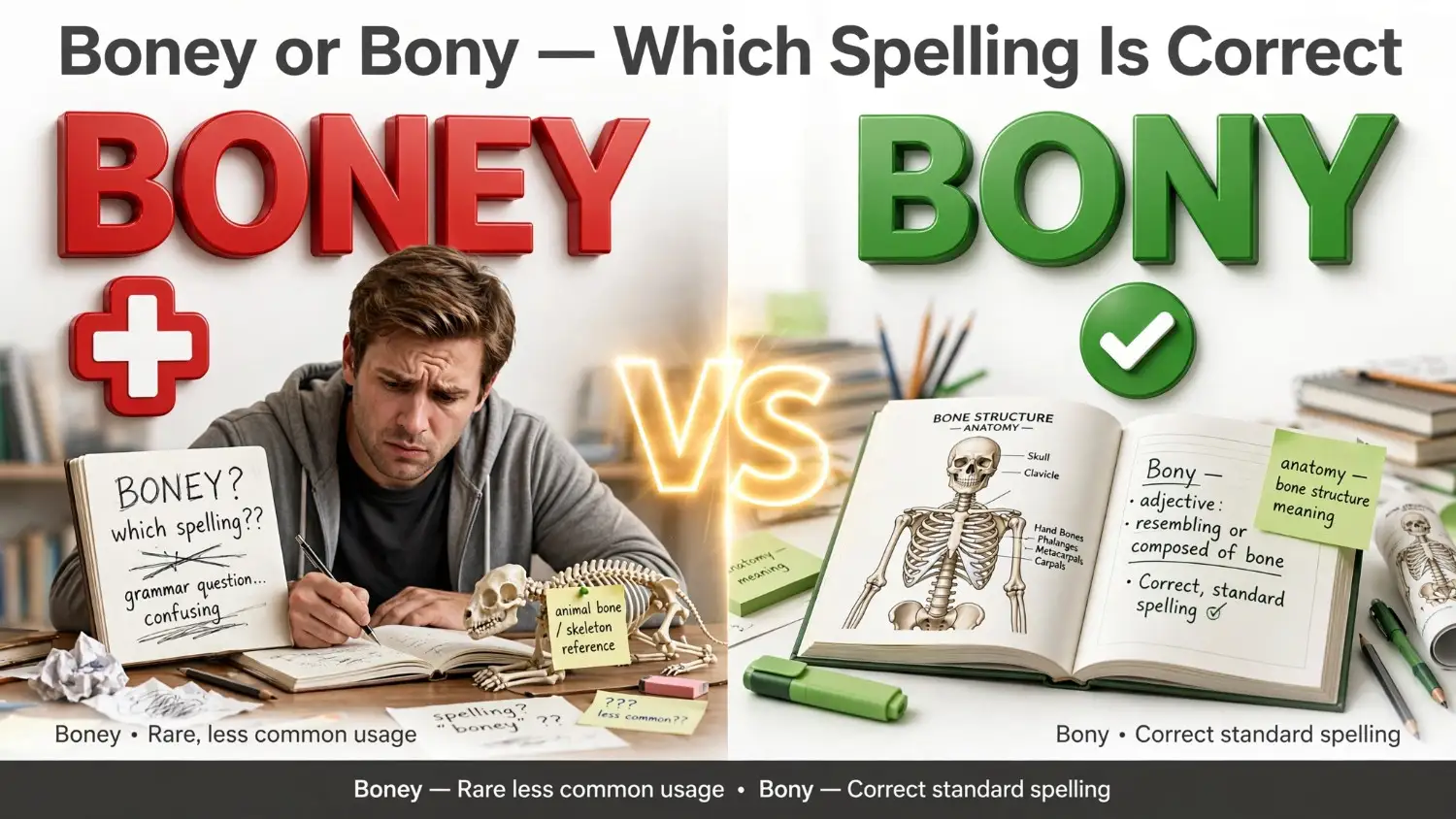
Bony is the correct spelling when describing something thin, skeletal, or related to bones, while Boney is usually a name or an uncommon variant.
Have you ever stopped while writing and wondered whether you should use boney or bony? The two spellings look very similar. They also sound the same when spoken. This makes the choice confusing for many English learners and even some native speakers.
The quick answer is that bony is the standard and correct spelling in most writing. It describes something related to bones, filled with bones, or thin enough for the bones to be easy to see. For example, you may describe someone as having bony fingers or say that a certain type of fish is very bony.
The spelling boney does appear in rare cases. It may be used as a surname, nickname, brand name, or less common spelling variant. However, it is not the best choice when you are using the normal adjective.
This guide explains the difference between boney or bony, their meanings, spelling history, regional use, common mistakes, and everyday examples. By the end, you will know which spelling to use in personal, academic, medical, and professional writing.
Boney or Bony – Quick Answer
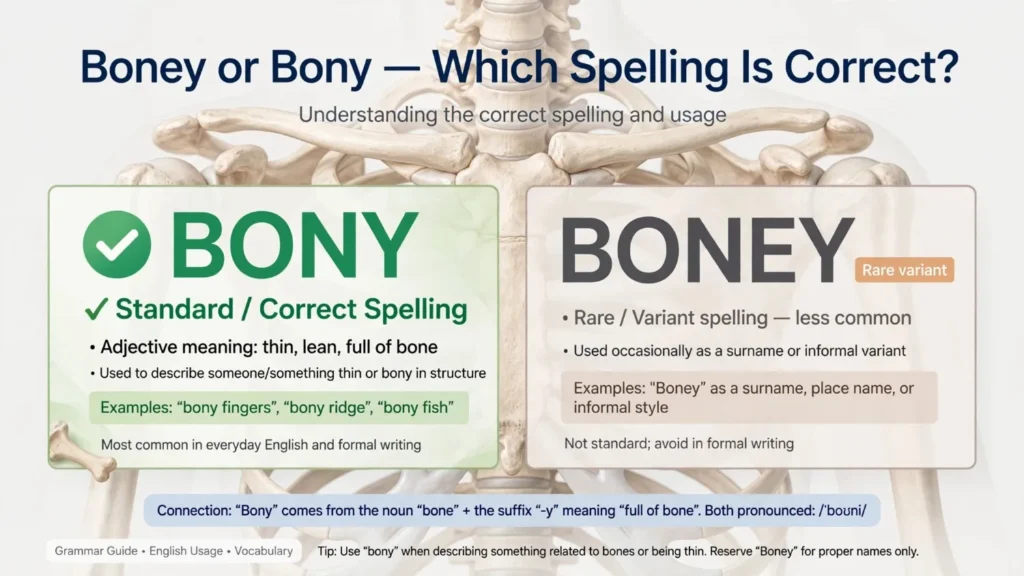
Bony is the standard spelling when you mean:
- Made of bone
- Related to bones
- Full of bones
- Very thin, with visible bones
Major English dictionaries list bony as the main adjective. Merriam-Webster, Cambridge, and Collins all use it for things that contain bone, look like bone, or have clear or noticeable bones.
Correct examples:
- He has long, bony fingers.
- The doctor checked the bony structure of her foot.
- This fish is too bony for young children.
- The old dog looked weak and bony.
Boney is uncommon as an adjective. Merriam-Webster notes it as an occasional medical variant, but bony remains the main spelling.
The best rule is simple:
Use bony for the normal adjective. Use Boney only when it is part of a person’s name, title, place, or brand.
The Origin of Boney or Bony
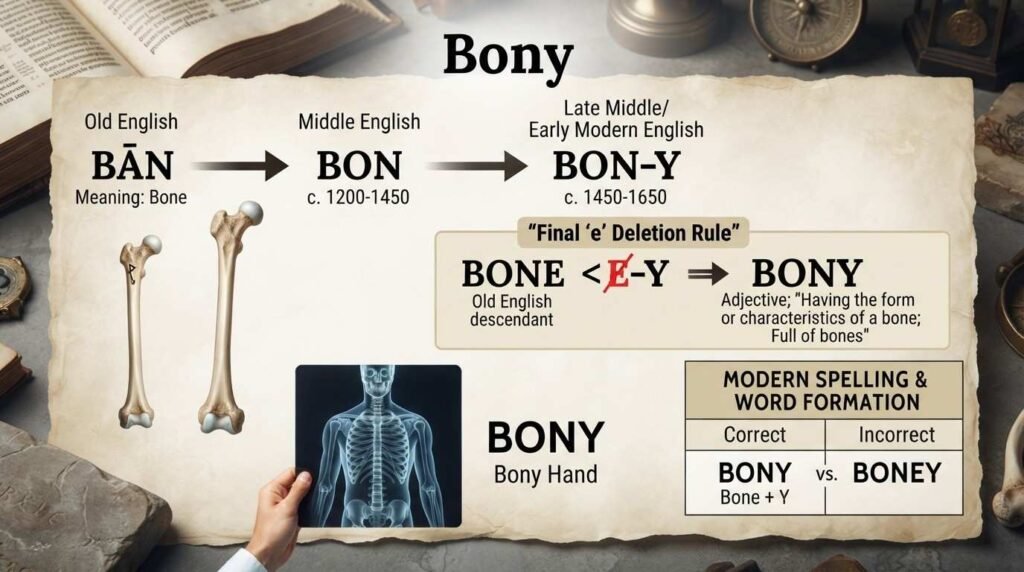
The word bony comes from the noun bone and the adjective ending -y. This ending can mean “having,” “full of,” or “related to.”
The Oxford English Dictionary explains that bony was formed in English from bone and the suffix -y. Its earliest known use comes from the Middle English period.
Dictionary.com also traces the word to the Middle English form boni, recorded around 1350–1400.
The spelling developed like this:
Bone + -y = bony
The final e in bone is removed before the adjective ending is added. A similar change appears in:
| Noun | Adjective |
| Bone | Bony |
| Stone | Stony |
| Ice | Icy |
| Noise | Noisy |
This is why bony may look strange at first. People know that the base word is bone, so they may keep the letter e and write boney.
However, the older and standard adjective is bony.
The spelling Boney is still found in names and titles. It has also been used as a nickname connected with Napoleon Bonaparte. Therefore, some online results for Boney may refer to people, characters, music, or places instead of the adjective.
British English vs American English Spelling
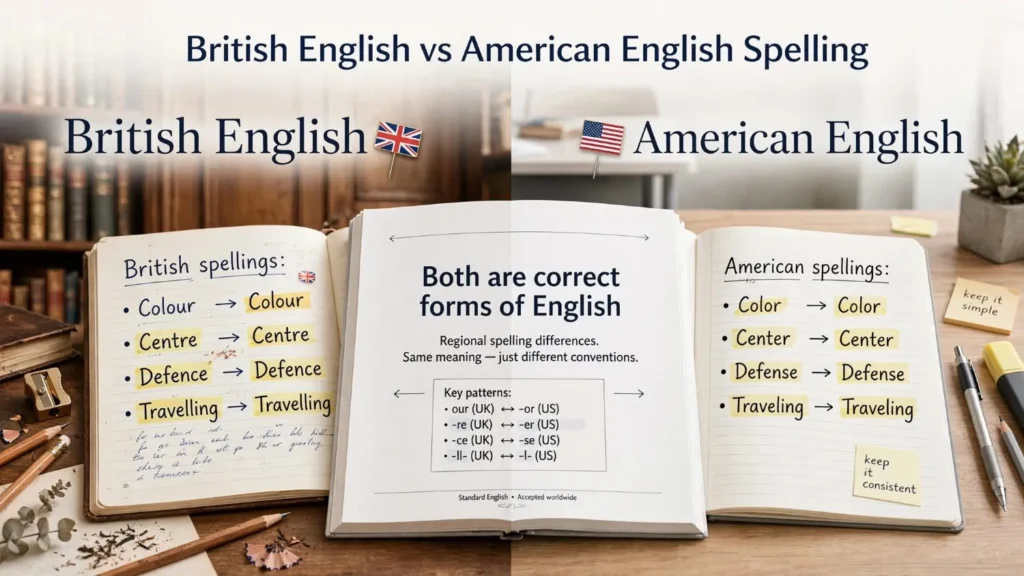
There is no major British and American spelling difference for boney or bony.
Both British English and American English use bony as the standard adjective. Collins lists the same spelling for both forms of English.
This is different from words such as:
- Colour in British English and color in American English
- Centre in British English and center in American English
- Favourite in British English and favorite in American English
For bony, the spelling stays the same.
| Meaning or Use | British English | American English |
| Related to bone | Bony | Bony |
| Having many bones | Bony | Bony |
| Very thin | Bony | Bony |
| Comparative form | Bonier | Bonier |
| Superlative form | Boniest | Boniest |
| Boney as normal adjective | Rare or nonstandard | Rare or variant |
| Boney as a name | Possible | Possible |
British English Example
- The fish was tasty but very bony.
American English Example
- The doctor examined the bony part of his shoulder.
The word may sound slightly different because British and American accents differ. However, the written form remains bony.
Which Spelling Should You Use?
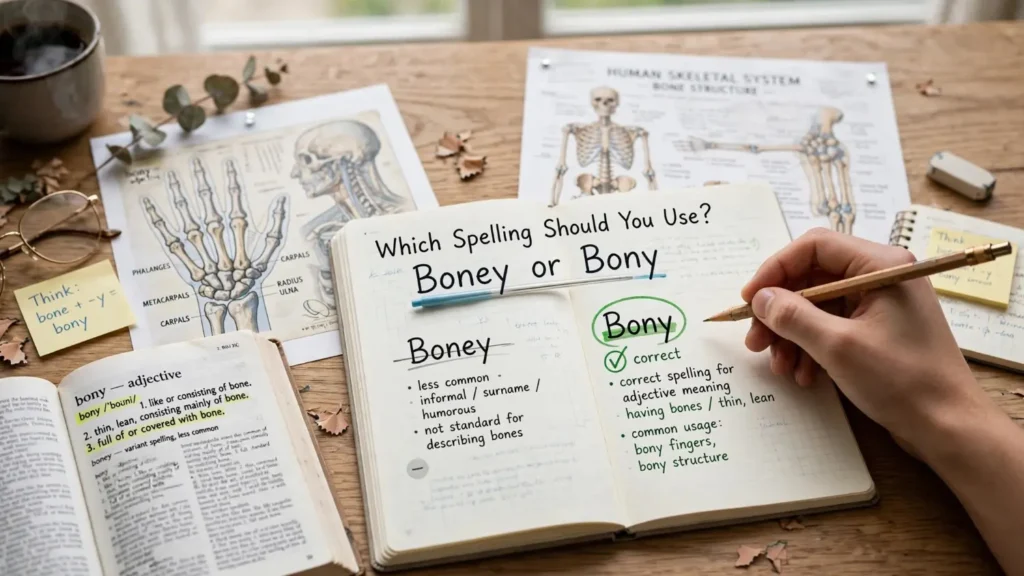
The correct choice depends more on meaning than location.
For American Readers
Use bony in articles, emails, schoolwork, medical content, news reports, and social posts.
Example:
- The X-ray showed a small bony growth.
For British Readers
Use bony as well. It is the standard British spelling listed by major dictionaries.
Example:
- The bird has a long, bony beak.
For Commonwealth Readers
Writers in Canada, Australia, New Zealand, Pakistan, India, and other Commonwealth countries should also use bony for the adjective.
Example:
- He hurt the bony part of his elbow.
For a Global Audience
Use bony because it is clear in both British and American English. It is also the best choice for educational, medical, scientific, and professional content.
When Can You Use Boney?
Use Boney when it is an official name, such as:
- A surname
- A first name
- A nickname
- A fictional character
- A band or business name
- A place name
Do not “correct” a person’s name from Boney to Bony. Names keep their official spelling.
Common Mistakes with Boney or Bony
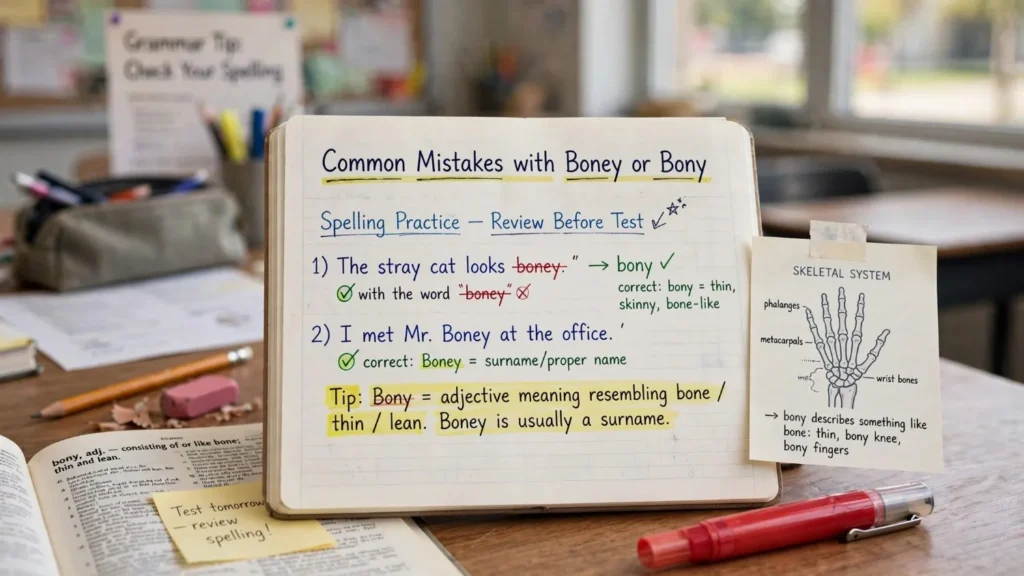
The confusion between boney or bony often comes from the base word bone. Here are the most common errors.
Mistake 1: Keeping the E from Bone
Incorrect:
- She has boney hands.
Correct:
- She has bony hands.
The adjective normally drops the final e.
Mistake 2: Using Boney for Food
Incorrect:
- This chicken is very boney.
Correct:
- This chicken is very bony.
When food contains many bones, use bony.
Mistake 3: Using Bony for Every Thin Person
The word bony can sound negative or unkind when used for a person. Cambridge defines it as very thin, with bones showing under the skin.
Instead of saying:
- She looks very bony.
You may say:
- She has a slim build.
- She looks thinner than before.
- She has a narrow face.
Use respectful wording, especially when discussing someone’s body.
Mistake 4: Writing More Bony
The comparative form is bonier, not more bony in most normal sentences.
Correct:
- His face looked bonier after the illness.
The superlative form is boniest.
Correct:
- That was the boniest fish on the plate.
Mistake 5: Changing a Proper Name
Incorrect:
- Bony M. performed the song.
Correct:
- Boney M. performed the song.
A proper name must keep its official spelling.
Mistake 6: Confusing Bony with Bonny
Bonny is a different word. It can mean attractive, healthy, or pleasant, mainly in British or Scottish use.
- Bony means related to bones or very thin.
- Bonny means pretty, cheerful, or healthy-looking.
- Boney is usually a name or rare spelling variant.
Boney or Bony Comparison Table
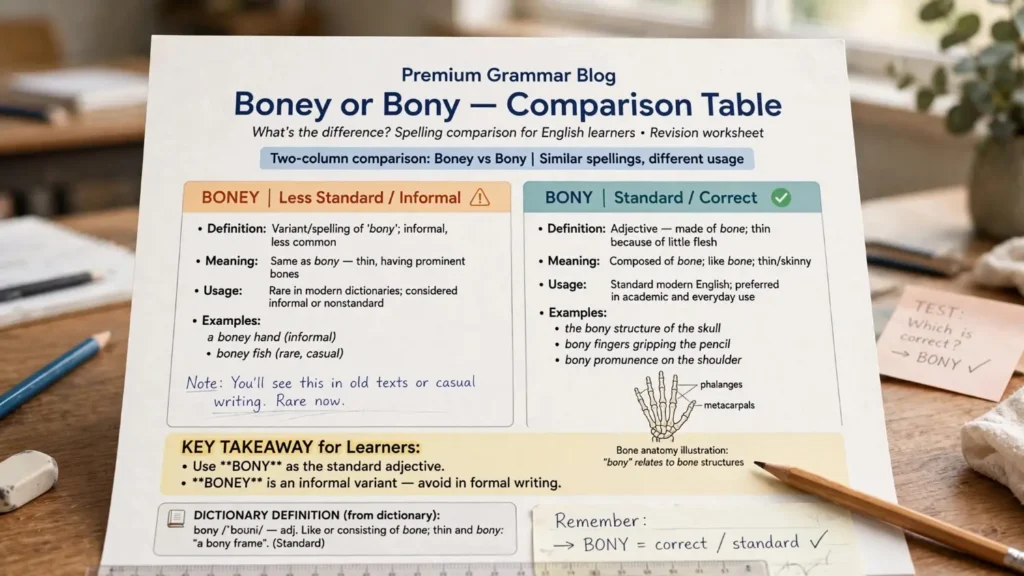
| Word | Main Meaning | Standard Adjective? | Example |
| Bony | Made of bone | Yes | A bony plate |
| Bony | Full of bones | Yes | A bony fish |
| Bony | Having visible bones | Yes | Bony fingers |
| Boney | Rare spelling variant | Usually no | Found in limited contexts |
| Boney | Person’s name | Yes, as a proper name | Mr. Boney |
| Bonny | Pretty or healthy-looking | Yes, but different meaning | A bonny child |
| Bonier | Comparative form of bony | Yes | His face looked bonier |
| Boniest | Superlative form of bony | Yes | The boniest piece of fish |
| Boniness | Noun form | Yes | The boniness of the fish |
Boney or Bony in Everyday Examples
Understanding boney or bony becomes easier when you see the words in real situations.
In Emails
- The package was damaged by a hard, bony object inside.
- The doctor found no unusual bony growth.
- Please remove the bony pieces before serving the fish.
In News Writing
- Experts discovered a bony structure near the damaged joint.
- The animal was weak and bony when rescuers found it.
- The fossil had several clear bony plates.
On Social Media
- This fish tastes good, but it is too bony.
- My dog was so bony when we rescued him.
- I hit the bony part of my elbow on the table.
In Medical Writing
- The patient reported pain near a bony area.
- The scan showed a small bony change.
- The surgeon examined the bony tissue.
Merriam-Webster includes medical uses such as structures that consist of or look like bone.
In Formal Writing
- The skeleton contains several important bony structures.
- Some fish have hard, bony scales.
- The object had a smooth but bony surface.
When Boney Is a Name
- Mr. Boney signed the document.
- Boney is her family name.
- We listened to a song by Boney M.
In these cases, Boney is not describing bones. It is a proper name.
Boney or Bony – Google Trends and Usage Data

Google Trends does not show exact search totals. It measures relative interest based on a selected location and time range. Results are placed on a scale from 0 to 100, with 100 marking the highest relative interest in that comparison.
Google also explains that regional interest is relative to all searches made in that place. Two countries can show similar interest scores while having very different total search volumes.
For the boney or bony topic, search data must be read carefully.
The term bony usually has clear adjective-based intent. People may search for:
- Bony meaning
- Bony fingers
- Bony fish
- Bony structure
- Bony growth
- Bony or boney
The term Boney can produce mixed results because it may refer to surnames, musicians, fictional characters, nicknames, businesses, or locations.
This means the two terms do not always represent the same search purpose.
Country differences are also less important for this word because British and American dictionaries both accept bony as the standard adjective.
For website content, bony should be the main target spelling. The phrase boney or bony can still be used in titles and headings because it matches the question people type when checking their spelling.
Professional Search Advice
Use these phrases naturally:
- Boney or bony
- Is boney a word?
- Bony meaning
- How to spell bony
- Bony or boney spelling
- Bony person meaning
- Bony fish meaning
Do not repeat the keyword in every sentence. Clear answers and useful examples are more valuable than forced repetition.
Read More: Openned or Opened: The Correct Spelling Explained
Frequently Asked Questions
Is It Boney or Bony?
Bony is the standard adjective. Use it for something made of bone, containing many bones, or having clear and visible bones.
Is Boney a Real Word?
Boney can appear as a rare spelling variant, but it is more commonly found as a name, nickname, title, or surname. Use bony in normal descriptive writing.
Why Is Bony Spelled Without an E?
The word is formed from bone and the adjective ending -y. The final e is removed, giving us bony.
Is Bony British or American English?
It is both. British and American English use bony as the standard spelling.
What Does Bony Mean?
It can mean made of bone, like bone, full of bones, or very thin with clear or visible bones.
Can You Call a Person Bony?
You can, but it may sound rude or hurtful. It suggests that the person is very thin and that their bones are easy to see. Use more respectful words when possible.
Is It Bony Fish or Boney Fish?
The correct phrase is bony fish.
Example:
- I avoid this type of fish because it is very bony.
What Are the Comparative and Superlative Forms?
The comparative form is bonier.
- This fish is bonier than the last one.
The superlative form is boniest.
- This is the boniest fish I have ever eaten.
What Is the Noun Form of Bony?
The noun form is boniness.
Example:
- The boniness of the fish made it hard to eat.
What Is the Difference Between Bony and Bonny?
Bony relates to bones or thinness. Bonny usually means attractive, pleasant, or healthy-looking. They have different spellings and meanings.
Conclusion
The difference between boney or bony is easier to understand once you know how each spelling is used. Bony is the standard adjective in both British and American English. It can describe something made of bone, filled with bones, or thin enough for the bones to be easy to see.
Use phrases such as bony fingers, bony fish, bony structure, and bony growth. The comparative form is bonier, while the superlative form is boniest.
The spelling Boney is not the normal choice for the adjective. However, it may be correct when it is part of a person’s name, nickname, business, place, character, or music group. Proper names should always keep their official spelling.
For schoolwork, articles, emails, medical writing, and professional content, choose bony. It is accepted across the United States, the United Kingdom, and other English-speaking countries.
Remember this simple rule: when you are describing bones, use bony. When you are writing someone’s official name, check whether it is spelled Boney.

Hi, I’m Shafqat Rehman. With several years of experience in English grammar, spelling, word usage, and professional writing, I create simple and practical guides. My goal is to make confusing language rules easy to understand and help readers write with greater confidence and accuracy.