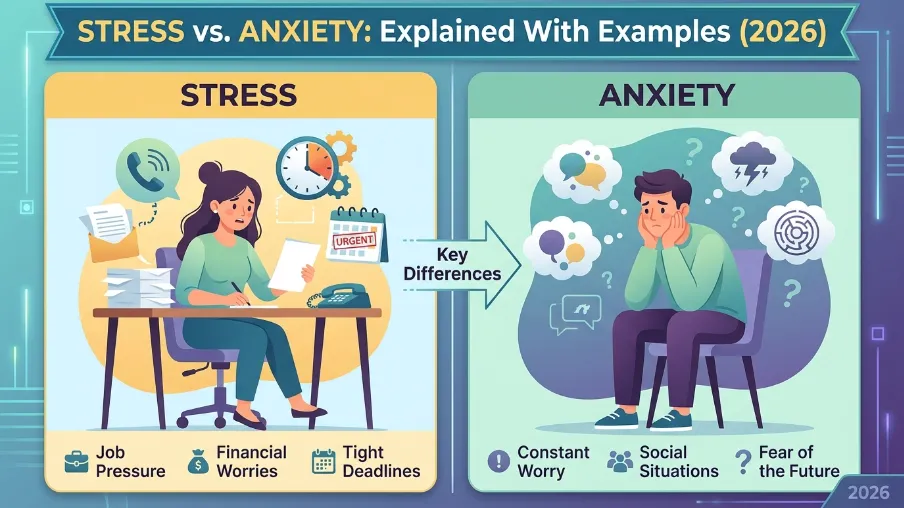
Stress usually comes from outside pressure, while anxiety is ongoing worry that can continue even without a clear reason.
You wake up in the morning and immediately start thinking about work deadlines, school assignments, bills, and unfinished tasks. Your phone keeps buzzing, your mind feels crowded, and suddenly your chest feels tight. You stop and wonder: Am I stressed, or is this anxiety?
Many people ask this exact question every day. The reason is simple. Stress and anxiety can feel very similar. Both can make someone feel overwhelmed, worried, tired, restless, and emotionally drained. They can affect sleep, concentration, mood, and daily life. Because of these similarities, people often use the two words as if they mean the same thing.
However, stress and anxiety are not exactly identical. Stress is commonly linked to outside situations like work pressure, money problems, deadlines, family responsibilities, or major life changes. Anxiety can sometimes continue even when the stressful situation ends.
Understanding the difference matters because using the correct word creates better communication and helps people understand what they are experiencing. In this guide, you’ll learn the differences between anxiety and stress, examples, common mistakes, comparison tables, and practical explanations in simple language.
Anxiety or Stress – Quick Answer
Stress = A response to pressure or demands
Anxiety = Ongoing worry, fear, or nervous feelings that may continue even without a clear trigger
Examples:
- I’m stressed because my exam is tomorrow. ✅
- I feel anxious even though nothing specific happened today. ✅
Simple rule:
Pressure with a clear cause = Stress
Ongoing worry = Anxiety
The Origin of Anxiety or Stress
Origin of Stress
The word “stress” originally referred to pressure, force, or physical strain. Over time people started using it for emotional pressure as well.
Examples:
- Work stress
- Family stress
- Financial stress
- School stress
Origin of Anxiety
The word “anxiety” developed from words connected with worry, fear, and uneasiness.
Examples:
- Anxiety before speaking publicly
- Anxiety about uncertain situations
- Anxiety about future events
Over time, both words became part of everyday language.
British English vs American English Usage
There is no significant difference between British and American English here.
| Feature | Anxiety | Stress |
|---|---|---|
| US spelling | Anxiety | Stress |
| UK spelling | Anxiety | Stress |
| Meaning | Same | Same |
| Usage | Same | Same |
✔ Same usage worldwide

Which One Should You Use?
Use stress when discussing pressure caused by something specific.
Examples:
- Work deadlines
- Exams
- Busy schedules
- Financial responsibilities
Use anxiety when discussing ongoing feelings of worry.
Examples:
- Constant nervous thoughts
- Ongoing fear
- Repeated worrying
Simple rule:
Situation causing pressure = Stress
Continuing worry = Anxiety
Common Mistakes with Anxiety or Stress
Mistake 1
❌ Stress and anxiety mean exactly the same thing
✔ They can overlap, but they are different experiences
Mistake 2
❌ Anxiety always comes from stress
✔ Anxiety can happen with or without an obvious stressor
Mistake 3
❌ Stress is always harmful
✔ Short-term stress can sometimes help people focus and perform tasks
Mistake 4
❌ Anxiety only means nervousness
✔ Anxiety can involve thoughts, emotions, and physical feelings
Anxiety or Stress in Everyday Examples
At Work
Stress:
“I have three meetings and two deadlines today.”

Anxiety:
“I keep worrying that something will go wrong even when everything looks fine.”
At School
Stress:
“I’m stressed because of tomorrow’s test.”
Anxiety:
“I keep worrying about failing even after studying.”
Social Media
Stress:
“Today has been stressful “
Anxiety:
“My mind will not stop overthinking.”
Daily Life
Stress:
“Traffic made me late today.”
Anxiety:
“I keep thinking something bad might happen.”
Anxiety or Stress – Google Trends & Usage Data
Search patterns show that both terms are searched heavily around:
- Exam seasons
- Workplace topics
- Health discussions
- Wellness topics
- Personal development content
Common searches include:
- anxiety vs stress
- stress symptoms
- anxiety symptoms
- stress management tips
Key insight:
People often search these terms because symptoms can feel similar.
Comparison Table: Anxiety vs Stress
| Feature | Anxiety | Stress |
|---|---|---|
| Cause | May be unclear | Usually specific |
| Duration | Can continue longer | Often temporary |
| Trigger | May not be obvious | Usually exists |
| Feelings | Worry and fear | Pressure and tension |
| Ends after event | Not always | Often yes |
Anxiety vs Stress in Professional Life
People commonly experience both in workplaces.
Stress examples:
- Too many projects
- Deadlines
- Workload pressure
Anxiety examples:
- Constant fear of making mistakes
- Worry about performance
- Persistent nervous thoughts
Stress often becomes smaller after finishing tasks.
Anxiety may sometimes continue longer.
Anxiety vs Stress in Students
Students regularly experience both.
Stress:
- Homework
- Exams
- Presentations
Anxiety:
- Constant fear of poor grades
- Worry about future plans
- Overthinking outcomes
Signs People Commonly Associate with Anxiety or Stress
Stress:
- Feeling overwhelmed
- Frustration
- Irritability
- Trouble relaxing
Anxiety:
- Excessive worry
- Restlessness
- Nervous feelings
- Racing thoughts
Experiences vary from person to person.
Simple Trick to Remember the Difference
Easy memory rule:
Stress = Situation
Anxiety = Worry
Think of it this way:
Stress says:
“I have too much to do.”
Anxiety says:
“What if something goes wrong?”
FAQs
1. What is the difference between anxiety and stress?
Stress usually relates to pressure, while anxiety often involves ongoing worry.
2. Can stress lead to anxiety?
Stress and anxiety can be connected and sometimes influence each other.
3. Is stress temporary?
Stress often reduces after a situation changes.
4. Does anxiety always have a cause?
No. Anxiety may happen even without a clear reason.
5. Which is more common?
Both are commonly discussed and experienced.
6. Can someone experience both together?
Yes. Some people experience stress and anxiety at the same time.
7. How can I remember the difference?
Stress usually starts with pressure, while anxiety often involves ongoing worry.
Conclusion
The confusion between anxiety and stress happens because both can create similar feelings such as tension, worry, and emotional discomfort. At first they may look almost identical, but there are important differences.
Stress is usually connected to a situation or outside pressure. Deadlines, exams, money problems, and responsibilities can all create stress. Anxiety, however, may sometimes continue even when no immediate pressure exists.
Understanding the difference helps create clearer communication and better understanding. Stress often asks, “How will I handle this situation?” Anxiety often asks, “What if something goes wrong?”
The easiest way to remember is simple:
Stress = pressure from a situation
Anxiety = ongoing worry
Knowing this difference can help people use the right word and understand these experiences more clearly.
Meta Description (20 words):
Related in this set: Anxiety or Stress: Condition or Response? (Key-differences angle: anxiety as a condition vs stress as a response, no repeated general definition). Each guide in this set covers a different angle, so use the one that matches your question.

Michael A. Turner is a senior content writer specializing in well-researched, easy-to-understand articles. Helps readers make informed decisions through reliable content.