Anxiety or Stress: Key Differences Explained (2026)

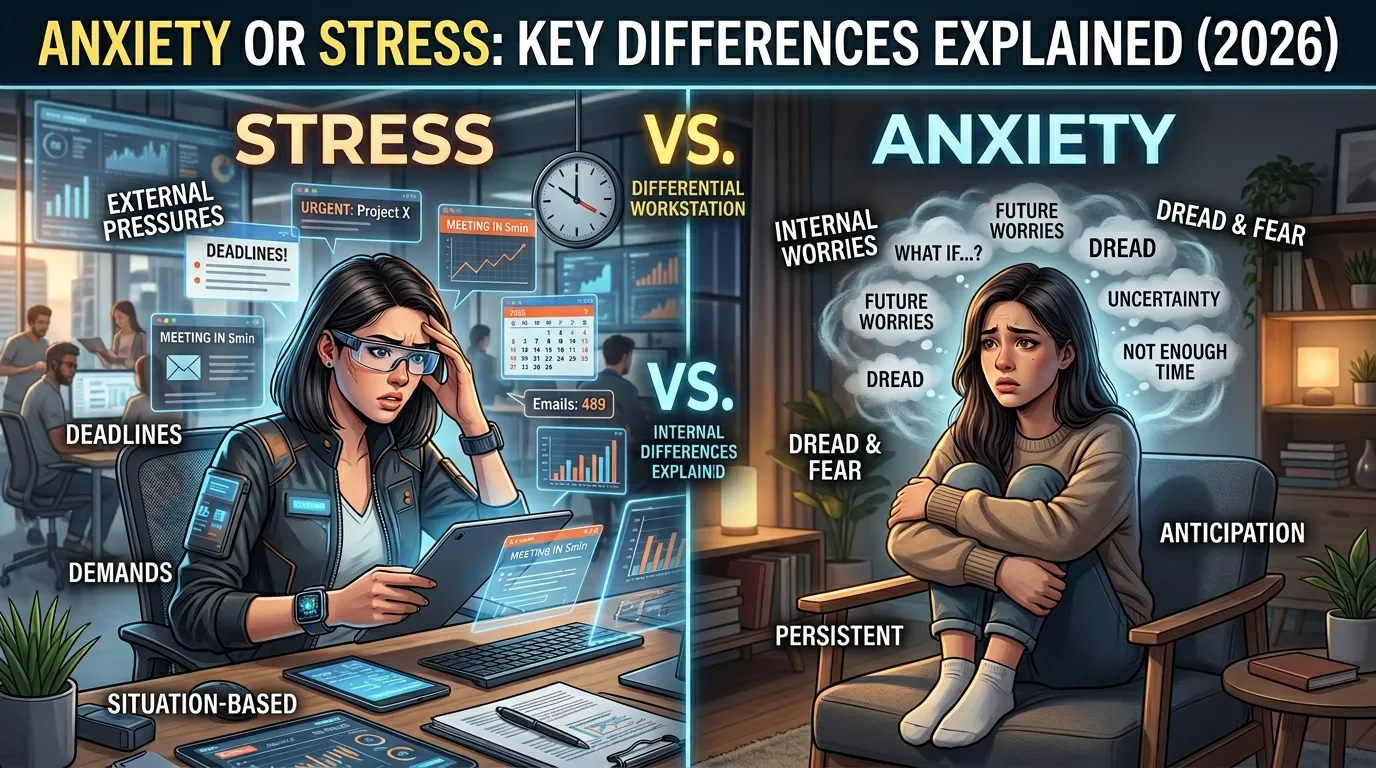
Stress usually comes from outside pressure, while anxiety is ongoing worry that may continue even without a clear reason.


You wake up in the morning already thinking about deadlines, bills, messages, and unfinished tasks. Your chest feels tight, your thoughts race, and you suddenly wonder: Am I dealing with stress… or anxiety?

Many people ask this question because the feelings can seem very similar at first. Both stress and anxiety can affect sleep, mood, concentration, energy, and daily life. They can make someone feel overwhelmed, restless, nervous, or emotionally exhausted. Because of these similarities, people often use the words interchangeably.

However, anxiety and stress are not exactly the same thing. Stress is usually linked to a specific situation or outside pressure, such as work problems, exams, money issues, or family responsibilities. Anxiety can continue even after the stressful situation ends and may sometimes appear without an obvious cause.

People search for “anxiety or stress” because they want a simple explanation that helps them understand what they are experiencing. The good news is that the difference becomes much easier once you focus on the cause, duration, and emotional patterns behind each one.

In this guide, you’ll learn the meanings, origins, examples, common mistakes, comparison tables, and practical differences between anxiety and stress in simple everyday English.


Anxiety or Stress – Quick Answer

👉 Stress = A response to pressure or demands

👉 Anxiety = Ongoing worry, fear, or nervousness that may continue without a clear trigger

Examples:

  • I’m stressed because my exam is tomorrow. ✅
  • I feel anxious even though nothing bad happened today. ✅

Simple Rule:

👉 Situation causing pressure = Stress

👉 Ongoing worry = Anxiety


The Origin of Anxiety or Stress

Origin of “Stress”

The word stress originally referred to:

  • pressure
  • force
  • strain

Over time, people began using it for emotional and mental pressure.

See also  People or Persons: Which Word Should You Use and When

Examples:

  • work stress
  • financial stress
  • school stress

Origin of “Anxiety”

The word anxiety developed from older words connected to:

  • fear
  • worry
  • emotional uneasiness

Examples:

  • anxiety about the future
  • anxiety before public speaking
  • anxiety during uncertain situations

Both words gradually became common in modern everyday language.


Anxiety vs Stress – Meaning Explained

What Does “Stress” Mean?

Stress is usually:
👉 a reaction to outside pressure

It often happens because of:

  • deadlines
  • exams
  • responsibilities
  • conflicts
  • busy schedules

Examples:

  • I’m stressed about work.
  • The deadline caused stress.
  • Traffic stressed me out.

Stress often reduces after the situation improves.


What Does “Anxiety” Mean?

Anxiety usually involves:
👉 ongoing worry or nervousness

It may continue even when:

  • problems are solved
  • nothing dangerous is happening
  • no obvious trigger exists

Examples:

  • I feel anxious all the time.
  • Anxiety kept him awake.
  • She worries constantly.

British English vs American English Usage

There is no major spelling difference here.

Both British and American English use:

  • anxiety
  • stress

Comparison Table

FeatureAnxietyStress
UK spellingAnxietyStress
US spellingAnxietyStress
Meaning changeNoNo
UsageWorldwideWorldwide

✔ Same usage globally


Which Word Should You Use?

Use “Stress” When Talking About:

  • pressure from situations
  • deadlines
  • work overload
  • temporary tension

Use “Anxiety” When Talking About:

  • ongoing fear
  • constant worry
  • nervous thoughts
  • emotional uneasiness

Simple Rule:

👉 Pressure from outside events = Stress

👉 Continuing worry inside the mind = Anxiety


Common Mistakes with Anxiety or Stress

Mistake 1

❌ Stress and anxiety mean exactly the same thing

✔ They can overlap, but they are different experiences


Mistake 2

❌ Anxiety always has a clear cause

✔ Anxiety may happen without an obvious trigger


Mistake 3

❌ Stress is always harmful

✔ Short-term stress can sometimes improve focus or motivation


Mistake 4

❌ Anxiety only means nervousness

See also  Venmo or Cash App: Which Payment App Is Better?

✔ Anxiety may include emotional, mental, and physical experiences


Anxiety or Stress in Everyday Examples

At Work

Stress:

  • I have too many deadlines this week.

Anxiety:

  • I keep worrying something will go wrong even when everything is fine.

At School

Stress:

  • Exams are stressing me out.

Anxiety:

  • I’m constantly worried about failing.

Social Media

Stress:

  • “Today was so stressful 😩”

Anxiety:

  • “My brain won’t stop overthinking.”

Daily Life

Stress:

  • Traffic made me late today.

Anxiety:

  • I keep imagining bad situations.

Anxiety or Stress – Google Trends & Usage Data

Search patterns show both terms are highly searched worldwide.

Popular searches include:

  • anxiety vs stress
  • stress symptoms
  • anxiety symptoms
  • how to reduce stress
  • causes of anxiety

Key Insight:

👉 Most people search these words because symptoms can feel similar.


Comparison Table: Anxiety vs Stress

FeatureAnxietyStress
Main causeSometimes unclearUsually specific
DurationCan continue longerOften temporary
TriggerMay not existUsually exists
FeelingsWorry and fearPressure and tension
Ends after eventNot alwaysOften yes

Anxiety vs Stress in Professional Life

Many employees experience both.

Stress Examples:

  • tight deadlines
  • workload pressure
  • meetings and responsibilities

Anxiety Examples:

  • constant fear of failure
  • ongoing nervous thinking
  • worrying even after work ends

Stress often decreases after tasks are completed.

Anxiety may continue longer.


Anxiety vs Stress in Students

Students commonly experience:

  • exam pressure
  • assignment stress
  • future-related anxiety

Stress Example:

  • studying for tomorrow’s exam

Anxiety Example:

  • worrying constantly about future success

Physical Feelings Often Linked to Anxiety or Stress

Stress May Include:

  • tension
  • frustration
  • headaches
  • feeling overwhelmed

Anxiety May Include:

  • racing thoughts
  • nervous feelings
  • restlessness
  • excessive worry

Experiences vary from person to person.


Why People Confuse Anxiety and Stress

The confusion happens because both may involve:

  • emotional pressure
  • nervousness
  • difficulty relaxing
  • tiredness
  • overthinking
See also  Stem or Steam :Explained With Examples (2026)

However, the biggest difference is usually:
👉 cause and duration

Stress often starts from a situation.

Anxiety may continue beyond the situation.


Simple Trick to Remember the Difference

Easy Memory Rule

👉 Stress = situation pressure

👉 Anxiety = ongoing worry

Quick Reminder

Stress says:
👉 “I have too much to do.”

Anxiety says:
👉 “What if something goes wrong?”


FAQs

1. What is the difference between anxiety and stress?

Stress usually comes from pressure, while anxiety often involves ongoing worry.

2. Can stress cause anxiety?

Stress and anxiety can be connected and sometimes influence each other.

3. Is stress temporary?

Stress often reduces after the situation changes.

4. Can anxiety happen without a reason?

Yes. Anxiety may occur without an obvious trigger.

5. Which is more common?

Both are very commonly discussed experiences.

6. Can someone experience both together?

Yes. Many people experience stress and anxiety at the same time.

7. What is the easiest way to remember the difference?

Stress usually starts with pressure, while anxiety often continues as worry.


Conclusion

The confusion between anxiety or stress happens because both experiences can feel emotionally overwhelming and share similar symptoms. However, understanding the difference becomes easier when you focus on the source and duration of the feelings.

Stress is commonly linked to outside situations like deadlines, work pressure, school responsibilities, or financial challenges. It often improves once the stressful event passes. Anxiety, however, may continue even after problems are solved and can sometimes appear without a clear cause.

The simplest way to remember the difference is:

👉 Stress = pressure from a situation

👉 Anxiety = ongoing worry or fear

Understanding these differences can help improve communication and make it easier to describe emotional experiences accurately in everyday conversations and writing.


Leave a Comment