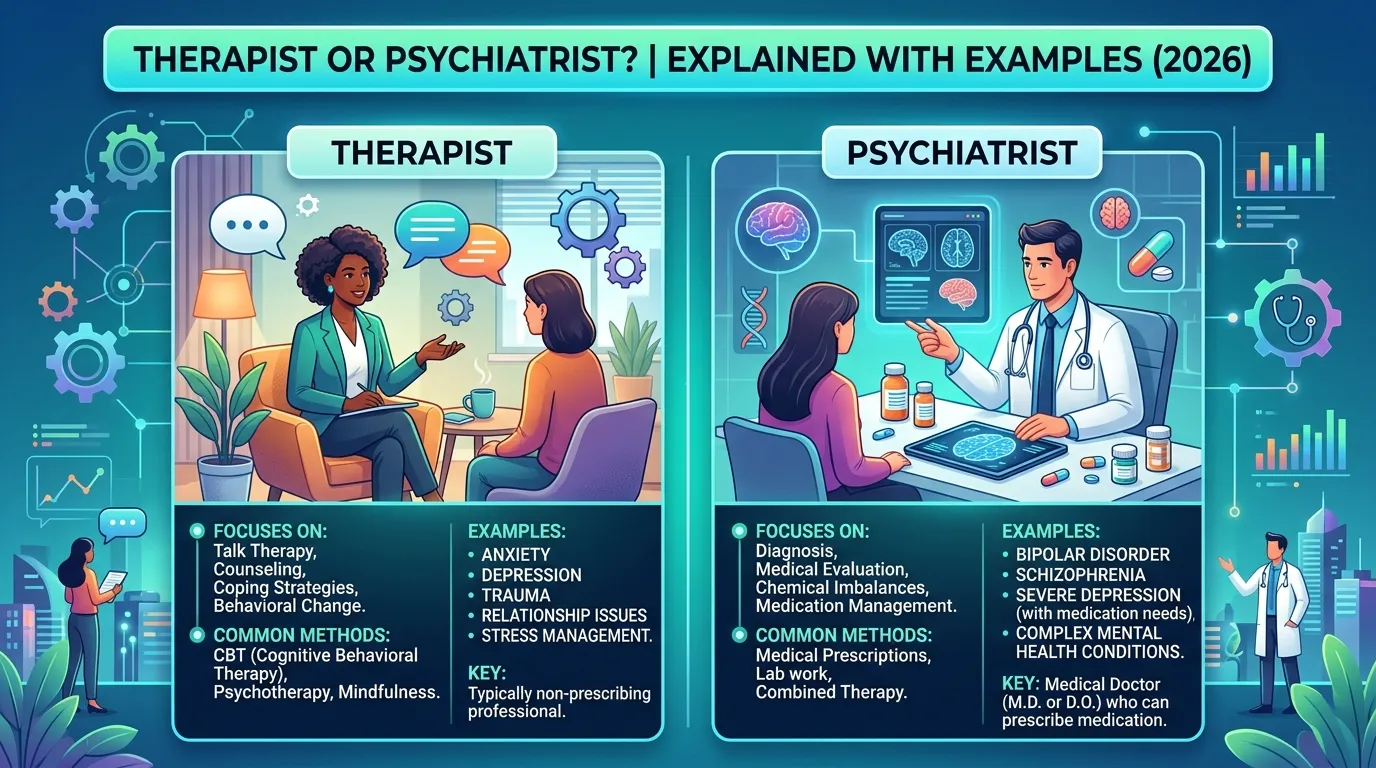
Snippet: A therapist mainly provides talk therapy and emotional support, while a psychiatrist is a medical doctor who can diagnose conditions and prescribe medication.
You finally decide to get help for emotional stress, anxiety, or mental health struggles. Then a new question appears: Should I see a therapist or a psychiatrist?
This confusion is extremely common because both professionals help people with mental and emotional challenges. They may even work together in some situations. Because their services overlap, many people assume they do exactly the same job.
People search for “therapist or psychiatrist” because they want to understand:
- who helps with emotional problems
- who can prescribe medication
- which professional is right for their situation
- how mental health support actually works
The terms also appear often in:
- healthcare discussions
- social media
- movies and TV shows
- self-help content
- workplace wellness conversations
The biggest difference is simple:
👉 a psychiatrist is a medical doctor
👉 a therapist mainly focuses on counseling and talk therapy
However, there are many important details that make the distinction clearer. In this guide, you’ll learn the meanings, origins, examples, comparison tables, common misunderstandings, and practical differences between therapists and psychiatrists in simple everyday English.
Therapist or Psychiatrist – Quick Answer
👉 Therapist = Provides talk therapy and emotional support
👉 Psychiatrist = Medical doctor specializing in mental health who can prescribe medication
Examples:
- I talk to my therapist every week. ✅
- My psychiatrist prescribed medication. ✅
Simple Rule:
👉 Talking and emotional guidance = Therapist
👉 Medical diagnosis and medication = Psychiatrist
The Origin of Therapist or Psychiatrist
Origin of “Therapist”
The word therapist comes from words related to:
- healing
- treatment
- emotional support
Over time, it became connected with:

- counseling
- mental wellness
- behavioral support
Today, therapists may specialize in:
- relationships
- anxiety
- trauma
- family counseling
Origin of “Psychiatrist”
The word psychiatrist developed from terms related to:
- the mind
- medical healing
Psychiatrists became recognized as:
👉 medical doctors focused on mental health treatment
They combine:
- medical knowledge
- diagnosis
- medication management
- mental health care
Therapist vs Psychiatrist – Meaning Explained
What Does “Therapist” Mean?
A therapist usually helps people through:
- conversations
- coping strategies
- emotional support
- behavioral guidance
Common Areas:
- stress
- anxiety
- relationships
- grief
- emotional struggles
Examples:
- She sees a therapist for anxiety.
- Therapy helped him manage stress.
What Does “Psychiatrist” Mean?
A psychiatrist is:
👉 a licensed medical doctor specializing in mental health
Psychiatrists can:
- diagnose mental health conditions
- prescribe medication
- monitor treatment medically
Examples:
- The psychiatrist adjusted her medication.
- He visited a psychiatrist for evaluation.
British English vs American English Usage
Both British and American English use:
- therapist
- psychiatrist
Comparison Table
| Word | UK Usage | US Usage |
|---|---|---|
| Therapist | Same | Same |
| Psychiatrist | Same | Same |
✔ Same terminology worldwide
Which One Should You Use?
Choose a Therapist When:
- you want emotional support
- you need talk therapy
- you want coping strategies
- you need relationship counseling
Choose a Psychiatrist When:
- medication may be needed
- medical evaluation is required
- symptoms feel severe
- diagnosis is necessary
Sometimes People Use Both
Many people:
- talk with a therapist regularly
- see a psychiatrist for medication management
Common Mistakes with Therapist or Psychiatrist

Mistake 1
❌ Thinking they are exactly the same
✔ Their roles overlap, but they are different professions
Mistake 2
❌ Assuming therapists prescribe medication
✔ Most therapists cannot prescribe medication
Mistake 3
❌ Believing psychiatrists only prescribe pills
✔ Psychiatrists also evaluate mental health conditions carefully
Mistake 4
❌ Thinking therapy is only for serious problems
✔ Many people use therapy for everyday emotional support
Therapist or Psychiatrist in Everyday Examples
Workplace Stress
- She talks to a therapist about burnout.
- A psychiatrist helped manage severe anxiety symptoms.
Relationships
- Couples often visit therapists together.
- Emotional communication skills may improve through therapy.
Student Life
- Students may see therapists for stress management.
- Some students also consult psychiatrists for medical evaluation.
Social Media
- “Therapy helped me understand myself better.”
- “Mental health support matters.”
Therapist or Psychiatrist – Google Trends & Usage Data
Search patterns show increasing interest in:
- online therapy
- anxiety support
- psychiatrist vs therapist
- emotional wellness
- counseling services
Key Insight:
👉 More people are seeking mental health information and support than ever before.
Comparison Table: Therapist vs Psychiatrist
| Feature | Therapist | Psychiatrist |
|---|---|---|
| Medical doctor | No | Yes |
| Talk therapy | Yes | Sometimes |
| Prescribes medication | Usually no | Yes |
| Focus | Emotional support | Medical mental health care |
| Common sessions | Counseling | Diagnosis/treatment |
Therapist vs Psychiatrist in Mental Health Support
Therapists Often Focus On:
- emotional growth
- coping skills
- behavior patterns
- communication
Psychiatrists Often Focus On:
- diagnosis
- medication
- medical treatment plans
- symptom management
In many situations, both professionals may work together.
Why People Confuse These Terms
The confusion happens because:
- both help mental health
- both involve emotional discussions
- both may treat similar challenges
- media often mixes the terms
However, the medical training difference is important.
Therapist vs Psychiatrist in Movies and TV
Movies often show:
- therapy sessions
- emotional conversations
- psychiatric evaluations
Unfortunately, entertainment sometimes oversimplifies the differences between these professions.
Simple Trick to Remember the Difference
Easy Memory Rule
👉 Therapist = talking therapy 🗣️
👉 Psychiatrist = medical treatment 💊
Quick Reminder
If medication is involved:
👉 psychiatrist
If emotional conversation and coping support are involved:
👉 therapist
FAQs
1. What is the difference between a therapist and a psychiatrist?
A therapist mainly provides counseling, while a psychiatrist is a medical doctor who can prescribe medication.
2. Can therapists prescribe medication?
Most therapists cannot prescribe medication.
3. Do psychiatrists provide therapy?
Some do, but many mainly focus on diagnosis and medication management.
4. Which one should I see first?
It depends on your needs and situation.
5. Are psychiatrists medical doctors?
Yes. Psychiatrists complete medical training.
6. Is therapy only for serious mental illness?
No. Many people use therapy for stress, relationships, and emotional support.
7. Can someone see both a therapist and psychiatrist?
Yes. Many people work with both professionals together.
Conclusion
The confusion between therapist or psychiatrist happens because both professionals support mental health and emotional wellbeing. However, their training and responsibilities are different.
A therapist mainly focuses on:
- talk therapy
- emotional support
- coping skills
- behavioral guidance
A psychiatrist is a medical doctor who can:
- diagnose mental health conditions
- prescribe medication
- provide medical treatment plans
Many people benefit from one type of support, while others may use both depending on their needs.
The easiest way to remember is simple:
👉 Therapist = emotional support and therapy 🗣️
👉 Psychiatrist = medical mental health treatment 💊
Understanding the difference helps people make more informed choices when looking for mental health support and emotional care.

James L. Morrison is a content writer focused on English grammar, word meanings, and usage differences. He enjoys breaking down complex language rules into simple explanations. His work is designed to help readers quickly understand the correct word choice in everyday writing and professional communication.