| Word | Meaning | Pronunciation | Used In |
| Tire | Rubber wheel covering | TY-er | American English |
| Tyre | Rubber wheel covering | TY-er | British English and Commonwealth countries |
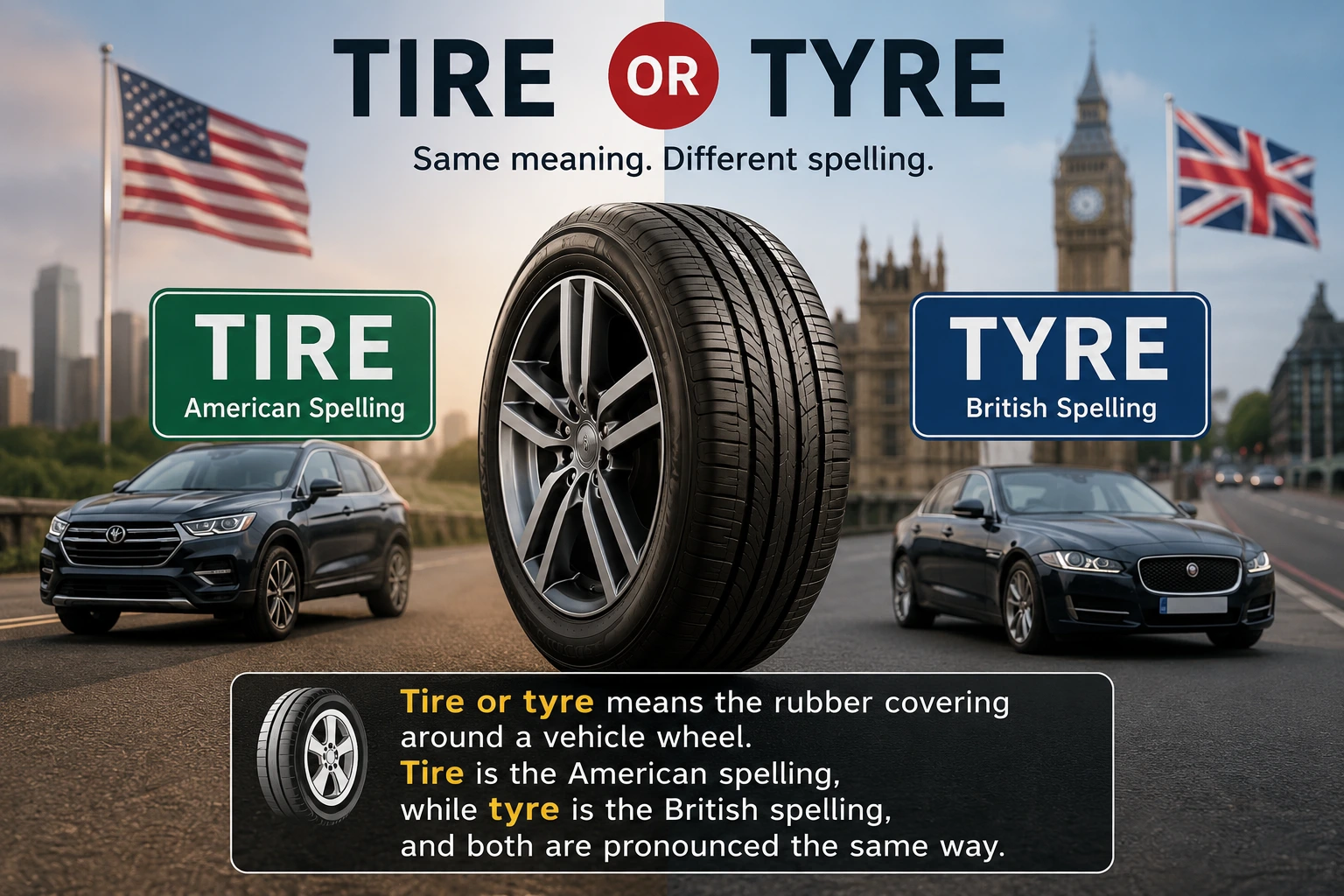
Tire or tyre means the rubber covering around a vehicle wheel. Tire is the American spelling, while tyre is the British spelling, and both are pronounced the same way. ________________________________________________________________________________________________
I remember helping a student edit a car review article. Everything looked good until I noticed something strange. The first paragraph said, “I changed my car tyres yesterday.” Later in the article, it said, “The new tires improved performance.”
I stopped and laughed because I had seen this many times before.
Maybe you have too.
You search online for car parts. You watch YouTube videos from different countries. One website says tire, while another says tyre. Then a simple question appears in your mind:
Which one is correct?
The answer surprises many people because both spellings are correct. The challenge is understanding where to use them and why both exist.
By the end of this guide, you will know the meaning, pronunciation, differences, examples, and the correct choice for your audience.
Let’s roll forward.
Tire or Tyre: Quick Answer
Tire and tyre refer to the same thing.
Both words mean the rubber covering around a vehicle wheel.
Examples:
- American English: I bought new tires.
- British English: I bought new tyres.
The object does not change.
Only the spelling changes.
The Origin and Background of Tire or Tyre
The history behind these words is interesting.
The word tire existed in English long before cars became common. Later, as vehicles developed, spelling styles started changing between regions.
American English kept tire.
British English adopted tyre specifically for vehicle wheels.
This created two accepted spellings.
That is why people become confused today. The internet brings readers from many countries together.
You may read a British article in the morning and an American blog at night.
Tire vs Tyre: Meaning and Pronunciation
Many people think these words sound different.
They do not.
Both words have exactly the same pronunciation.
Pronunciation
Tire → TY-er
Tyre → TY-er
Meaning
A tire/tyre is:
A rubber covering fitted around a wheel to improve grip, movement, and safety.
Quick Comparison Table
Examples:
American:
“My front tires need replacement.”
British:
“My front tyres need replacement.”
Tire or Tyre Explained: Key Differences or Variations
The meaning stays exactly the same.
The spelling changes according to region.
| Term | Meaning | When to Use | Region/Context |
| Tire | Vehicle wheel covering | American writing | United States |
| Tyre | Vehicle wheel covering | British writing | UK, Australia, Pakistan and many Commonwealth countries |
Real examples:
American:
“Winter tires improve road safety.”
British:
“Winter tyres improve road safety.”
Which Version Should You Use?
Your audience matters.
- For American readers → use tire
- For British readers → use tyre
- For students → follow your school’s language style
- For websites with global readers → choose one version and keep it consistent
One important rule:
Never mix tire and tyre in the same article.
Fulfillment or Fulfilment? Which Spelling Is Correct? (2026)
Common Mistakes with Tire or Tyre
People often make similar mistakes.
| Mistake | Correction |
| Mixing tire and tyre together | Choose one spelling |
| Using tyre for American content | Use tire |
| Using tire for British content | Use tyre |
| Changing styles halfway through an article | Stay consistent |
Why does this happen?
People consume global content
Readers watch videos and read websites from different countries.
Auto-correct changes spelling
Phones and computers sometimes switch language settings.
Writers copy from different sources
Mixed content creates confusion.
Tire or Tyre in Real-World Examples
Professional Email
Subject: Vehicle Service Update
“The front tires require replacement before the trip.”
British version:
“The front tyres require replacement before the trip.”
News Headline
“Winter tyres become more popular during cold weather.”
Social Media Post
“Finally changed all four tires today.”
Formal Report
“Vehicle inspection identified damage on two tyres.”
Tire or Tyre: Data, Trends & Usage
People usually search tire or tyre because they want:
- Correct spelling
- Pronunciation help
- Regional differences
- Car-related writing guidance
Search intent:
Informational
Popular regions searching this topic:
- United States
- United Kingdom
- Australia
- Pakistan
- Canada
- India
Interesting insight:
People consume content globally now. That means spelling differences create more confusion than before.
Comparison Table
| Term/Variant | Meaning | Region/Context | Best Used When |
| Tire | Wheel covering | American English | Writing for US readers |
| Tyre | Wheel covering | British English | Writing for UK readers |
| Tires | Multiple tire units | American English | US content |
| Tyres | Multiple tyre units | British English | UK and Commonwealth content |
Frequently Asked Questions
Q: What does tire or tyre mean?
A: Both words refer to the rubber covering around a vehicle wheel.
Q: How do you use tire or tyre correctly?
A: Match the spelling to your audience. Use tire for American English and tyre for British English.
Q: Tire vs tyre: what is the difference?
A: The difference is only spelling and region. The meaning remains the same.
Q: Do tire and tyre have different pronunciations?
A: No. Both words are pronounced the same way: TY-er.
Q: Is tire or tyre acceptable in formal writing?
A: Yes. Both are correct if they match the writing style being used.
Q: Which version is correct: tire or tyre?
A: Both are correct. The right choice depends on location and audience.
Q: Can tire or tyre be used in vehicle reports?
A: Yes. Both words are commonly used in reports, manuals, and technical documents.
Conclusion
The confusion around tire or tyre is easier to understand now.
Remember these points:
- Tire belongs to American English
- Tyre belongs to British English
- Both words mean exactly the same thing
- Both words share the same pronunciation
- Stay consistent in your writing
The spelling changes, but the object stays exactly the same.
Now you know exactly how to use tire or tyre. Bookmark this guide so you never second-guess the spelling again, and share it with someone who still gets confused.
Centre or Center: Which Spelling Should You Use in 2026?