Senpai is the correct spelling, while sempai is a common pronunciation-based spelling or misspelling.
Have you ever wondered if you should write sempai or senpai? If you watch anime, read manga, or are learning Japanese, you may have seen both spellings online. This can be confusing because, when spoken, senpai sometimes sounds like sempai. That is why many people think both spellings are correct.
The answer is simple: senpai is the correct spelling in English and Japanese. Once you know this, it is easy to use the right spelling in blogs, social media posts, and when talking about Japanese culture.
This guide shows the difference between sempai and senpai. You will learn which sempai is a common misspelling or an alternative phonetic spelling based on pronunciation. ng is correct, where the word comes from, how to pronounce it, and how people use it in British and American English. You will also see common mistakes, easy examples, and why most people use the spelling senpai. By the end, you will know which spelling to use with confidence.
Sempai or Senpai: Quick Answer
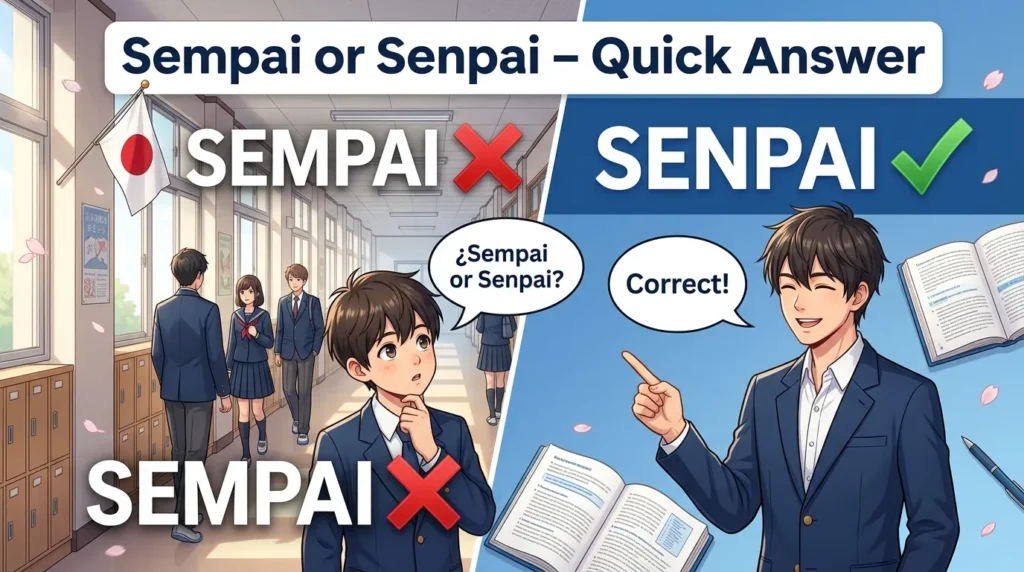
Correct spelling: ✅ Senpai
Alternative spelling: ⚠️ Sempai (based on pronunciation, but not standard)
Senpai is the accepted spelling in dictionaries, Japanese language textbooks, and standard romanization.
Examples
- ✅ She is my senpai at school.
- ✅ He respects his senpai at work.
- ❌ She is my sempai. (Common online spelling but not standard.)
Quick Tip:
Use senpai in all formal and general writing.
The Origin of Sempai or Senpai

The word senpai (先輩) comes from Japanese.
It is made of two characters:
- 先 (sen) = Earlier, ahead, previous
- 輩 (pai) = Companion, colleague, or group member
Together, senpai means someone who is older or has more experience in a school, workplace, club, or group.
So why do some people write sempai?
In Japanese pronunciation, the N sound before P changes slightly and sounds like M. This is called assimilation.
For example:
- Written: Senpai
- Spoken: Sounds close to Sempai
Even though the pronunciation changes, the correct spelling remains senpai.
See also: Nineth or Ninth? The Correct Spelling Explained
British English vs American English Spelling
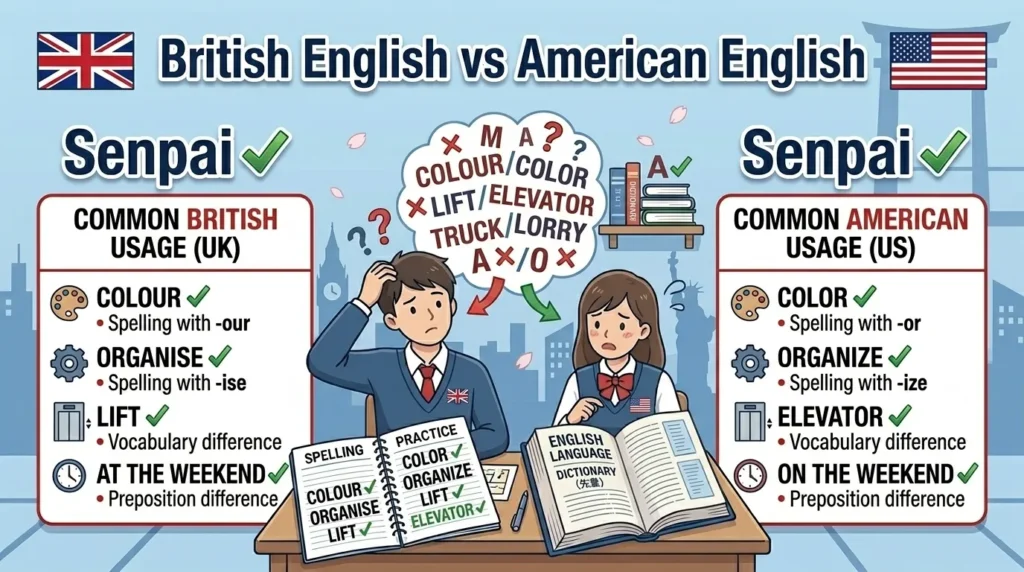
There is no spelling difference between British English and American English.
Both use senpai.
| Feature | British English | American English |
| Correct spelling | Senpai | Senpai |
| Alternative spelling | Sempai (rare) | Sempai (rare) |
| Standard usage | Senpai | Senpai |
Examples
British English
- The anime features a respected senpai.
American English
- She looks up to her senpai at school.
Which Spelling Should You Use?
Always use senpai unless you are intentionally reflecting pronunciation.
If your audience is in the United States
Use senpai.
If your audience is in the United Kingdom
Use senpai.
If your audience is in Canada, Australia, or New Zealand
Use senpai.
If your audience is global
Choose senpai, as it is recognized worldwide.
Common Mistakes with Sempai or Senpai
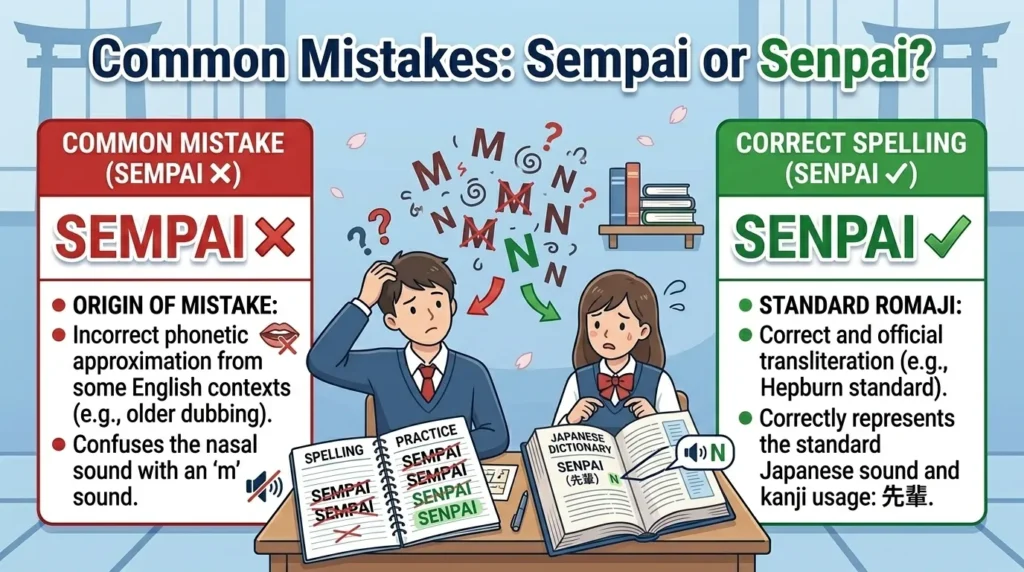
Many people confuse pronunciation with spelling.
| Incorrect | Correct |
| Sempai | Senpai |
| My sempai | My senpai |
| Anime sempai | Anime senpai |
| School sempai | School senpai |
Why does this happen?
The N sound before P is naturally pronounced like M, making senpai sound like sempai.
However, the official spelling does not change.
Sempai or Senpai in Everyday Examples
My senpai helped me during my first week.
News
The martial arts club honored its senior senpai.
Social Media
Thanks, senpai, for all your support!
Formal Writing
In Japanese culture, a senpai guides less experienced members.
Anime Discussion
The main character admires their senpai throughout the series.
Sempai or Senpai: Google Trends & Usage Data
Many people search for “sempai or senpai” because they hear the word before they see it written.
General trends include:
- Senpai is overwhelmingly more popular in dictionaries, educational materials, and official translations.
- Sempai appears mostly in fan communities, memes, and spelling mistakes.
- Anime and manga fans often search both spellings.
- Japanese language learners quickly learn that senpai is the standard spelling.
Online dictionaries and language guides consistently recognize senpai as the correct form.
Comparison Table
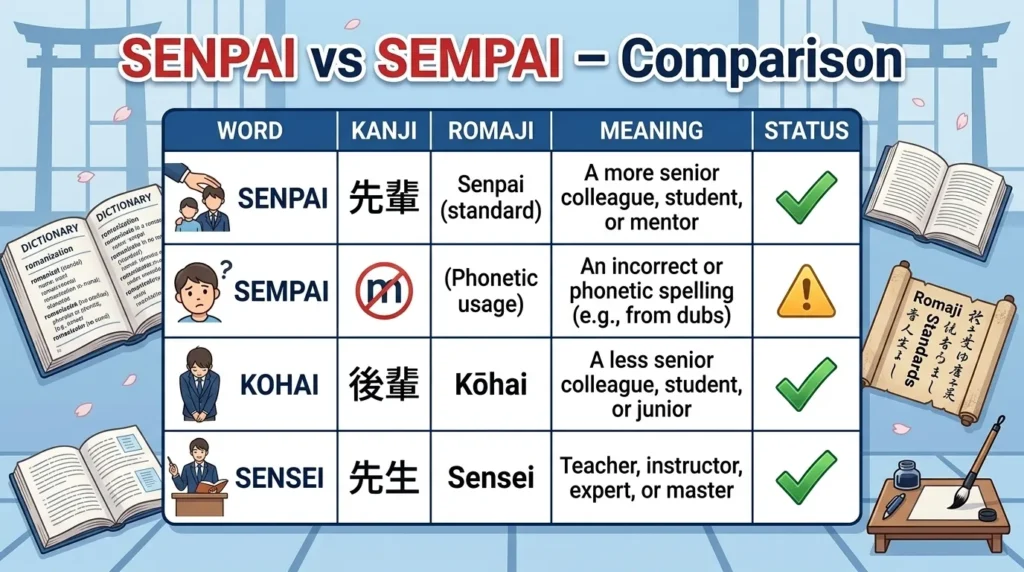
| Word | Correct? | Meaning |
| Senpai | ✅ Yes | Senior or experienced person in Japanese culture |
| Sempai | ⚠️ Non-standard | Phonetic spelling based on pronunciation |
| Kohai | ✅ Yes | Junior or less experienced member |
| Sensei | ✅ Yes | Teacher or master |
FAQs
Is “sempai” correct?
Not in standard spelling. Senpai is the accepted form in Japanese romanization.
Why do people say “sempai”?
Because the N sound before P is pronounced similarly to M in Japanese speech.
Is “senpai” an English word?
It is a Japanese loanword that is widely used in English.
What does “senpai” mean?
It means a senior, mentor, or someone with more experience in a school, workplace, club, or group.
Is there a British or American spelling difference?
No. Both use senpai.
Can I write “sempai” in social media posts?
You can, but senpai is the correct and preferred spelling.
What is the opposite of “senpai”?
The opposite is kohai, which means a junior or less experienced member.
Conclusion
It is easy to understand the difference between sempai and senpai. The correct spelling is senpai. It is the spelling used in Japanese, dictionaries, textbooks, and English writing. Some people hear the word as sempai because the n sound changes a little before the letter p when spoken. However, this does not change the spelling. That is why sempai is only a different way of hearing the word, not the correct spelling.
There is no difference between British English and American English. Both use the spelling senpai. If you write about anime, manga, martial arts, or Japanese culture, always spell the word senpai.. Using the correct spelling makes your writing clear, correct, and more professional.
A simple rule to remember is this: it may sound like sempai, but it is always spelled senpai.

Passionate about language and clear communication, I explore the subtle differences between words and expressions through well-researched, practical content. My goal is to help readers write with greater clarity, confidence, and precision by making complex language concepts easy to understand.