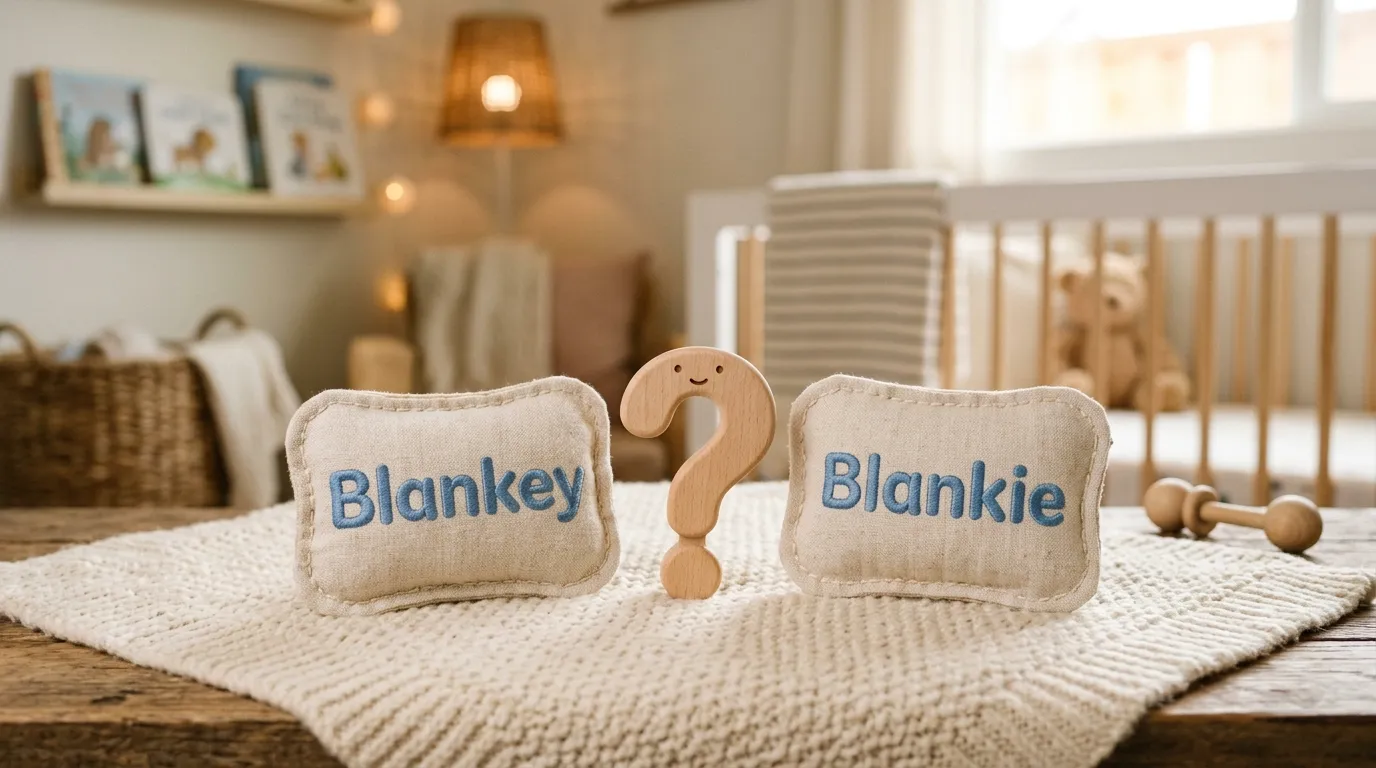
Blankie is the more common informal spelling for a small or favorite blanket, especially when talking to or about children. Blankey is also used, but it is less common. For standard writing, simply use blanket.
Blankey vs. Blankie: Quick Comparison
| Word | Meaning | Usage | Example |
| Blankie | A blanket, usually used as a cute or informal term | More common informal form | The baby is holding her blankie. |
| Blankey | A cute or informal name for a blanket | Less common variant | The child took his blankey to bed. |
| Blanket | The standard word | Standard English | I need a warm blanket. |
Have you ever heard someone call a blanket a blankie or blankey? These words are common in conversations with children, family settings, and casual online writing. But if you want to write the word correctly, you may wonder which spelling is better.
The confusion comes from the fact that neither blankie nor blankey is the normal formal English word for a blanket. The standard word is simply blanket.
Both blankie and blankey can be used as informal, affectionate versions of blanket. However, blankie is the more commonly recognized spelling.
You will often see blankie when talking about a child’s favorite blanket, comfort object, or bedtime blanket.
For example:
The baby won’t sleep without her blankie.
This sounds natural in a casual or affectionate context.
Let’s look at the difference between blankey and blankie in more detail.
What Does Blankie Mean?
Blankie is an informal or affectionate word for a blanket.
It is especially common when speaking to children or describing something associated with a child.
For example:
Where is your blankie?
This means:
Where is your blanket?
The word can also refer to a person’s favorite comfort blanket, even when that person is older.
Examples of Blankie
My daughter sleeps with her favorite blankie.
The baby carries her blankie everywhere.
He cannot fall asleep without his old blankie.
The puppy is sleeping on its blankie.
In these sentences, blankie gives the ordinary word blanket a cute, affectionate, or childlike tone.
What Does Blankey Mean?
Blankey is another informal spelling used for blanket.
It has the same basic meaning as blankie. The main difference is that blankey is less common.
For example:
The little boy took his blankey to bed.
The meaning is clear. He took his blanket to bed.
You may encounter blankey in family conversations, social media posts, children’s speech, or informal writing.
However, if you are choosing between blankie and blankey, blankie is generally the more familiar informal spelling.
Blankie or Blankey: Full Comparison
| Feature | Blankie | Blankey |
| Meaning | Informal term for a blanket | Informal term for a blanket |
| Standard formal word | Blanket | Blanket |
| Tone | Cute, affectionate, childlike | Cute, affectionate, childlike |
| Commonness | More common | Less common |
| Formal writing | Avoid | Avoid |
| Casual conversation | Common | Possible |
| Children’s language | Very common | Sometimes used |
| Example | Bring your blankie. | Bring your blankey. |
The key point is that blankie and blankey are informal forms, not different objects.
Why Do People Say Blankie?
English speakers often change ordinary words when speaking affectionately to children.
Words can receive endings such as -ie or -y to make them sound smaller, friendlier, or more affectionate.
For example:
- dog → doggie
- horse → horsie
- aunt → auntie
- sweet → sweetie
- blanket → blankie
The ending makes the word sound softer and more playful.
This is why blankie is strongly associated with children and comfort.
Blankie and Childhood Comfort
A blankie can be more than just a piece of bedding.
Children sometimes become attached to a particular blanket because it provides comfort and familiarity. They may carry it around, sleep with it, or become upset when it is missing.
For example:
Her favorite blankie has been with her since she was a baby.
Here, blankie has an affectionate meaning. The speaker is not simply talking about an ordinary household blanket.
The word can therefore carry an emotional or sentimental feeling.
Blankie in Everyday Sentences
Here are some natural examples:
Where is my blankie?
The baby wants her blankie.
Don’t forget your blankie before bedtime.
His favorite blankie is very soft.
She took her blankie on the trip.
The child hugged his blankie while watching TV.
These examples are informal. In formal writing, blanket would normally be more appropriate.
Blankey in Everyday Sentences
Although less common, blankey can also appear in casual sentences.
The baby is holding her blankey.
He brought his blankey with him.
She washed the child’s favorite blankey.
The puppy is sleeping beside the blankey.
These sentences are understandable and informal.
However, blankie is generally the more familiar spelling when this cute form is intended.
Blankie vs. Blanket
It is important to understand that blankie is not a replacement for blanket in every situation.
Use blanket when you are writing normally or formally.
Example:
The hotel provided a warm blanket.
Use blankie when you intentionally want a cute, informal, or affectionate tone.
Example:
The baby cuddled her blankie.
The second sentence sounds warmer and more childlike.
Is Blankie a Real Word?
Blankie is used as an informal English word, especially in family and child-related contexts. It is not normally used in formal writing.
Dictionaries and informal language references may treat words like blankie as informal or colloquial forms.
This means you should consider the situation before using it.
For a formal report, school assignment, business document, or professional article, use:
blanket
For a casual message to a family member, child, or friend, blankie can be perfectly natural.
Is Blankey a Real Word?
Blankey is also encountered as an informal variant, but it is less common than blankie.
Because spelling can vary in affectionate and child-directed language, people may create slightly different forms of the same word.
If your goal is to use the more recognizable informal spelling, blankie is usually the better choice.
If your goal is formal standard English, use blanket.
Common Mistakes
Mistake 1: Using Blankie in Formal Writing
Blankie is informal.
For example, this would sound too casual in a formal report:
The patient was given a blankie.
A more appropriate sentence would be:
The patient was given a blanket.
Mistake 2: Assuming Blankey and Blankie Are Different Things
They normally refer to the same thing.
The difference is mainly spelling and usage preference.
Mistake 3: Thinking Blankie Is the Standard Spelling
The standard English word is blanket.
Blankie is an informal or affectionate form.
Mistake 4: Using Blankey When You Want the More Common Informal Form
If you want a cute version of blanket, blankie is generally more familiar than blankey.
Blankie or Blankey for a Baby?
If you are writing a casual message about a baby, blankie is a natural choice.
For example:
She loves her little blankie.
Don’t forget the baby’s blankie.
The spelling gives the sentence a warm and affectionate tone.
Blankey can also work:
Don’t forget the baby’s blankey.
But blankie is generally the more recognizable form.
Blankie or Blankey for Adults?
Adults can also use blankie as a playful or affectionate word.
For example:
I brought my favorite blankie for the movie night.
This sounds intentionally cute or humorous.
An adult might also call a childhood blanket their blankie because of its sentimental value.
I still have my childhood blankie.
Here, the informal word highlights the emotional connection to the object.
Which Spelling Should You Use?
The best choice depends on the context.
Use Blanket When:
- You are writing formally.
- You are writing a school assignment.
- You are writing a professional document.
- You are describing bedding in a standard way.
- You want neutral English.
Example:
The hotel provided an extra blanket.
Use Blankie When:
- You are talking to a child.
- You want a cute tone.
- You are discussing a child’s favorite blanket.
- You are writing an affectionate family message.
- You want playful language.
Example:
The baby won’t sleep without her blankie.
Use Blankey When:
You may use blankey in very casual contexts if that is the spelling someone prefers, but it is less common than blankie.
An Easy Memory Trick
Remember:
Blankie = the more common cute form
Think of the -ie ending as a familiar affectionate ending:
blankie
It works like other informal forms such as doggie and auntie.
If you are unsure about both forms, there is an even easier answer:
Formal = blanket
Cute/informal = blankie
Frequently Asked Questions
Is blankie or blankey correct?
Both can be used as informal forms of blanket, but blankie is the more common spelling. Blanket is the standard word.
Is blankie a real word?
Yes. Blankie is an informal and affectionate term for a blanket, especially a child’s favorite blanket.
Is blankey a word?
Blankey is used as an informal variant of blankie, but it is less common.
What is the correct spelling, blankie or blankey?
If you want the more common informal spelling, use blankie. If you want standard formal English, use blanket.
Can adults say blankie?
Yes. Adults can use blankie in playful, affectionate, or sentimental situations.
Is blankie a slang word?
It is better described as an informal or affectionate term rather than ordinary formal English.
Should I use blankie in formal writing?
No. In formal writing, blanket is the better choice.
Conclusion
Blankie and blankey are informal ways of referring to a blanket, especially in cute, affectionate, or child-related language.
Between the two, blankie is the more common and recognizable spelling. Blankey is also used, but it is less common.
Neither should normally replace blanket in formal writing. If you are writing a report, assignment, professional message, or other standard English text, simply use blanket.
For casual family conversations, children’s language, social media, or affectionate messages, blankie can sound warm and natural.
The easiest rule is:
Blanket = standard English
Blankie = common cute or informal form
Blankey = less common informal variant
So, if you are choosing between blankey and blankie, blankie is generally the more familiar informal choice.
Fiber or Fibre: Which Spelling Should You Use? 🌾

I’m an experienced article writer who creates clear, engaging, and SEO-friendly content that helps readers find the information they need. I specialize in writing well-researched articles, blog posts, guides, and informative content on a wide range of topics.
My writing focuses on simple language, strong structure, accurate information, and search intent. I aim to make every article easy to read while also helping websites improve their visibility on search engines.
I enjoy turning complex topics into useful, reader-friendly content that informs, answers questions, and keeps readers engaged. Whether you need an SEO article, blog post, educational guide, or website content, I can create content tailored to your audience and goals.