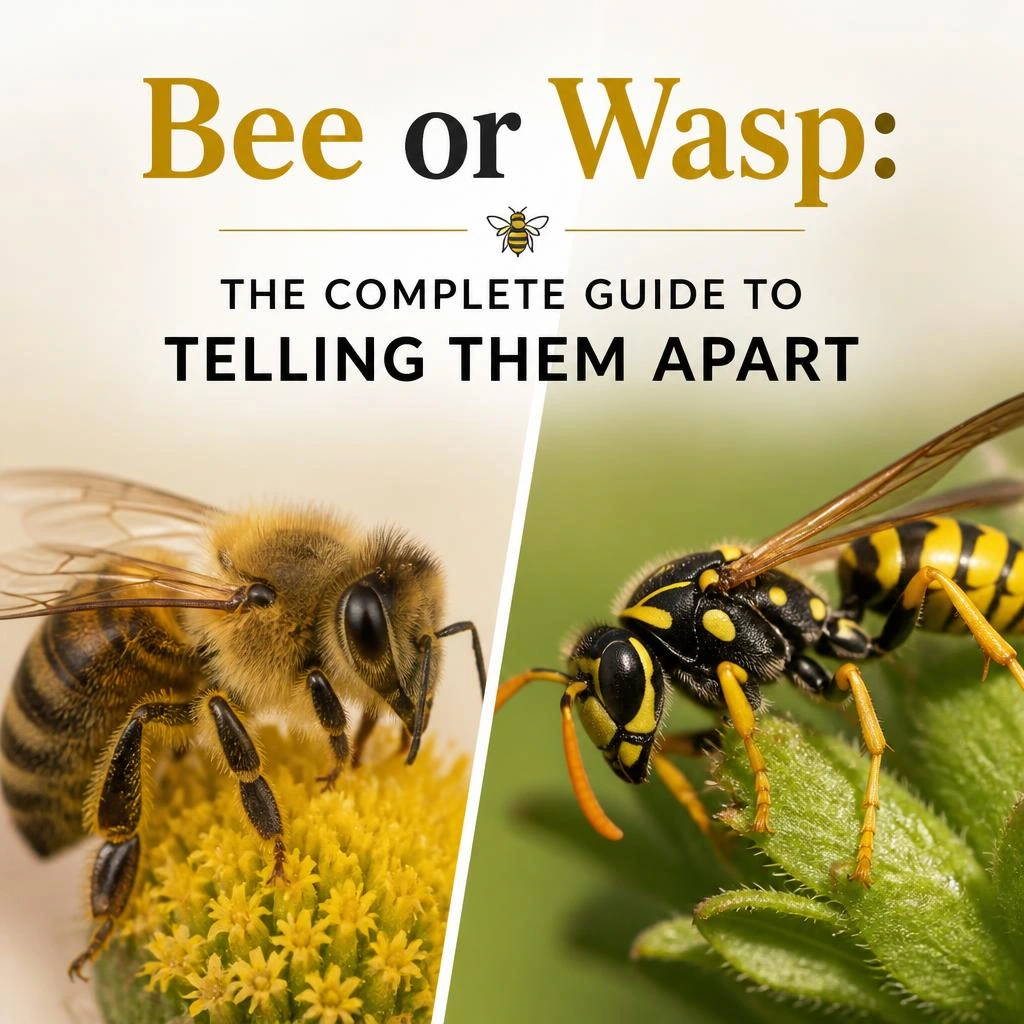
A bee is a fuzzy, pollen-collecting insect that stings only when threatened. A wasp is slender, smooth, and far more aggressive.
The easiest way to tell them apart? Look at the waist wasps have a pinched, narrow one. Bees don’t.
I’ll be honest — the first time I got stung, I had no idea what hit me. I was just standing near a trash can at a summer barbecue, minding my own business. I blamed a bee. Turns out it was a yellowjacket wasp. Classic mistake.
Most people can’t tell a bee from a wasp. And that’s not their fault. Both are small, both fly, and both sting. But they’re actually very different creatures with different behaviors, different body shapes, and very different threat levels.
Here’s the thing: if you can’t tell them apart, you might accidentally swat at the wrong one, disturb the wrong nest, or miss a sign that your garden is in trouble.
This guide fixes all of that. By the end, you’ll know exactly what you’re looking at whether it’s buzzing around your flower bed or hovering over your soda can.
Bee or Wasp: Quick Answer✍🏻
Bees are plump and covered in tiny hairs. They collect pollen and nectar. They’re generally calm and sting only when they feel cornered.
Wasps are slim, smooth, and shiny. They eat other insects and sugary foods. They’re quicker to sting — and they can do it multiple times.
Real-world examples:
- You see a fuzzy yellow-black insect on a sunflower → likely a bee
- You see a shiny, slim insect hovering near your lemonade → almost certainly a wasp
📚The Origin and Background of the Bee vs. Wasp Confusion
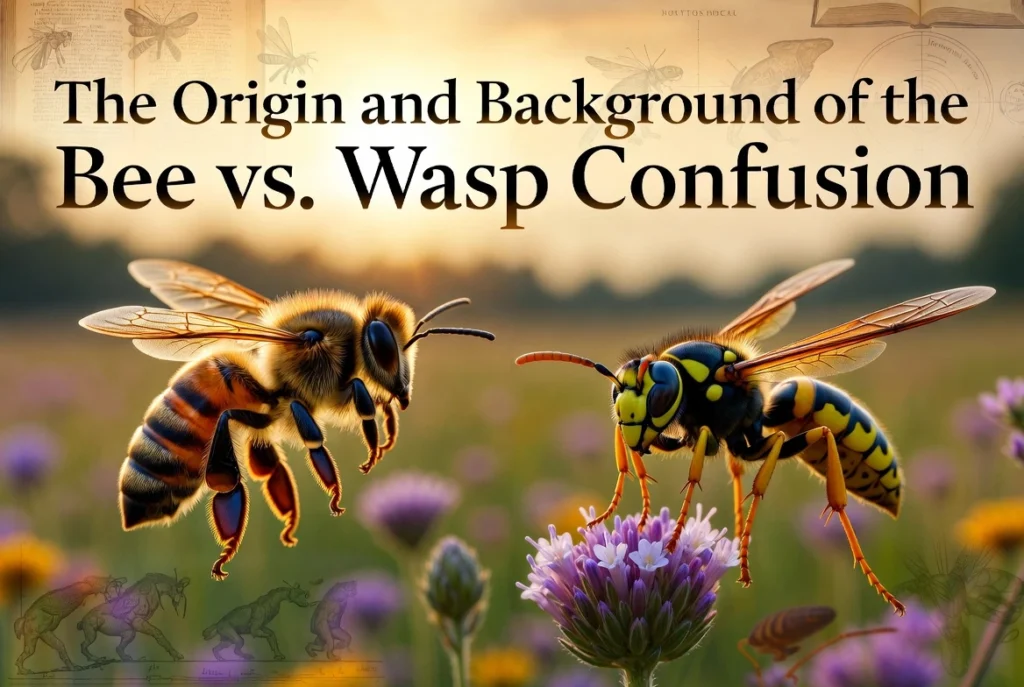
Bees and wasps both belong to the order Hymenoptera the same insect family. They evolved from a common ancestor millions of years ago. Wasps came first. Bees actually evolved from wasps, becoming more specialized for plant pollination.
Both share similar color patterns often yellow and black as a warning to predators. This is called aposematism, a fancy word for “I’m dangerous, back off.”
That shared color palette is what confuses most people. Nature didn’t give us a simple color-coded system. Instead, you have to look closer.
The confusion also comes from casual conversation. People say “bee” when they mean “wasp” all the time. It’s an honest mistake but one worth correcting.
Bee or Wasp Explained: Key Differences📖
Here’s where it gets interesting. These two insects are actually quite different once you know what to look for.
Body Shape
- Bees are rounder and stockier. Think of a small flying teddy bear.
- Wasps are long and lean with a dramatically narrow waist called a petiole.
Body Surface
- Bees have tiny, branched hairs that trap pollen. They often look fuzzy.
- Wasps have smooth, shiny bodies with very few hairs.
Legs
- Bees often carry pollen in small sacs on their hind legs (called corbiculae).
- Wasps have thin, dangling legs that hang down when they fly.
Diet
- Bees eat pollen and nectar. They’re vegetarians.
- Wasps are omnivores. They eat insects, spiders, and sugary foods.
Behavior
- Bees are generally docile. They sting once and die (in the case of honeybees).
- Wasps are more aggressive and can sting repeatedly without dying.
Nests
- Bee nests are made of wax and often found in hollow trees or hives.
- Wasp nests are papery, made from chewed wood pulp, and often found under eaves or
- in the ground.
Comparison Table: Bee vs. Wasp
| Feature | Bee | Wasp |
| Body shape | Round, stocky | Slim, pinched waist |
| Body surface | Fuzzy / hairy | Smooth and shiny |
| Color | Yellow-black, sometimes brown | Yellow-black or metallic |
| Legs | Thick, pollen sacs visible | Thin, dangle when flying |
| Diet | Pollen and nectar | Insects, spiders, sugary food |
| Sting | Once (honeybee dies after) | Multiple times |
| Aggression | Low stings when threatened | Higher can sting unprovoked |
| Nest material | Wax (honeybees) or soil | Chewed wood pulp (paper-like) |
| Role in nature | Pollinator | Predator / pest controller |
| Common species | Honeybee, bumblebee | Yellowjacket, paper wasp, hornet |
Read more:Cite or Site? Difference Explained With Examples
Which One Should You Worry About?😒
The honest answer? Both deserve respect. But they’re not equally dangerous.
If you’re near a bee: Stay calm. Don’t swat. Bees are pollinators they’re not interested in you. They sting only when they feel threatened. If one lands on you, gently blow or shake it away.
If you’re near a wasp: Be cautious. Wasps are more territorial and more easily provoked. Avoid fast movements. Don’t swat this signals danger to the wasp and can trigger an attack.
For homeowners: If you find a nest near your home:
- A bee nest consider calling a local beekeeper. They’ll often relocate it for free. Bees are protected in many areas.
- A wasp nest contact pest control, especially if it’s large. Don’t attempt removal yourself.
For gardeners: Bees are your best friends. Wasps actually help too they eat aphids and caterpillars. Try to live alongside both if you can.
⚠️Common Mistakes People Make
Mistake 1: Calling every stinging insect a “bee” Most outdoor stings are actually from wasps. Yellowjackets are the #1 culprit at picnics and barbecues. They’re wasps not bees.
→ Fix: Look at the waist. Narrow pinch = wasp.
Mistake 2: Swatting at them Swatting triggers defensive behavior in both species. It signals “threat” and makes a sting more likely.
→ Fix: Stay still or move away slowly.
Mistake 3: Assuming all bees die after stinging Only honeybees die after stinging (because their barbed stinger gets stuck). Bumblebees and wasps can sting you multiple times.
→ Fix: Don’t assume you’re safe because it stung you once.
Mistake 4: Destroying bee nests out of fear Bee populations are declining. Destroying a nest can do serious harm to local ecosystems.
→ Fix: Call a beekeeper first. Many will remove the nest safely and rehome the colony.
Mistake 5: Thinking a smooth, shiny insect is a bee Bees are hairy. If you see a smooth, shiny, yellow-black insect it’s almost certainly a wasp.
→ Fix: Fuzzy = bee. Shiny = wasp. Simple.
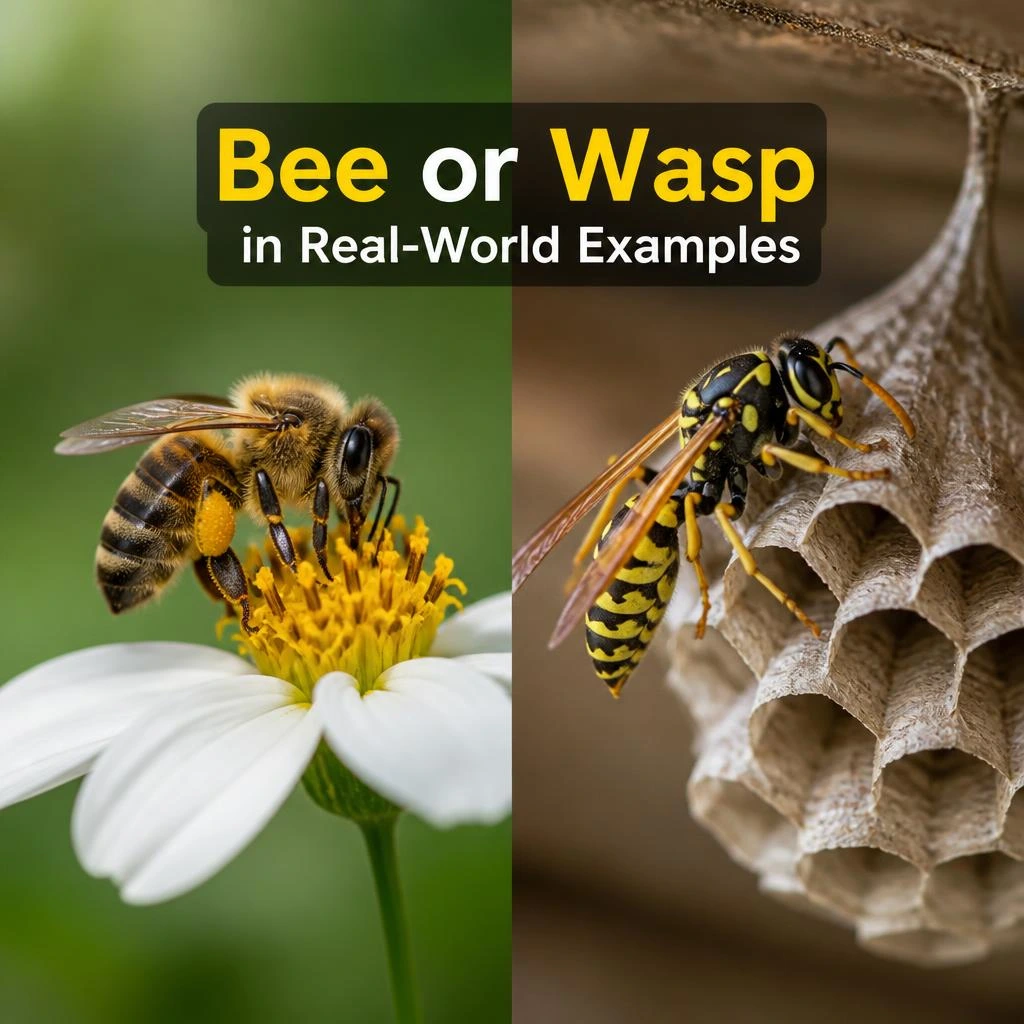
🌍Bee or Wasp in Real-World Examples
In a professional email:
“Our facilities team noticed a wasp nest forming under the north entrance canopy. We recommend contacting pest control before the weekend event.”
In a news headline:
“Bee or Wasp? Scientists Warn of Mistaken Identity as Wasp Populations Surge in Urban Areas”
On social media:
“Just got stung in my backyard 😤 Is this a bee or a wasp?? Asking because I need to know if I should be mad or feel bad 🐝”
In a garden guide:
“To attract bees, plant lavender, sunflowers, and wildflowers. To deter wasps near dining areas, avoid leaving sweet drinks uncovered and seal outdoor bins.”
Bee or Wasp : Data, Trends & Usage
Search interest in “bee or wasp” spikes every summer, particularly in the Northern Hemisphere between June and September when both species are most active and people spend more time outdoors.
- The term is most searched in the United States, UK, Australia, and Canada
- Search intent is primarily informational people want to identify what just stung them or what’s flying near their home
- Related searches include: wasp vs bee sting, how to get rid of wasps, bee identification, are wasps dangerous
Why this matters now: Bee populations globally are under threat from habitat loss, pesticides, and climate change. Misidentifying bees as wasps and killing them makes the problem worse. Getting this right isn’t just curiosity. It’s important.
Full Comparison Table: Bee vs. Wasp at a Glance
| Term/Variant | Meaning | Region/Context | Best Used When |
| Honeybee | Common bee; produces honey; dies after stinging | Worldwide | Identifying hive-based colonies |
| Bumblebee | Large, fuzzy bee; can sting multiple times | Northern hemisphere | Garden pollination discussions |
| Yellowjacket | Aggressive wasp; common at picnics | North America | Outdoor pest situations |
| Paper wasp | Slender wasp; builds open-celled papery nest | Worldwide | Nest identification near homes |
| Hornet | Large wasp; highly aggressive when disturbed | Europe, Asia, N. America | Describing large wasp nests |
| Solitary bee | Non-hive bee; rarely stings; great pollinator | Worldwide | Garden and farming contexts |
FAQ: Bee or Wasp
Q: What is the easiest way to tell a bee from a wasp?
A: Look at the waist. Wasps have a narrow, pinched waist between the thorax and abdomen. Bees are rounder and more uniform in shape. Also check the surface bees look fuzzy, wasps look smooth and shiny.
Q: Are wasps more dangerous than bees?
A: Generally, yes. Wasps are more aggressive and can sting multiple times. Honeybees die after one sting, which actually makes them less of a repeated threat. That said, both can cause serious allergic reactions in some people.
Q: Can a bee sting you more than once?
A: It depends on the species. Honeybees can only sting once their barbed stinger gets stuck, and they die after. Bumblebees and most other bees can sting multiple times. So can all wasps.
Q: Why do wasps sting for no reason?
A: Wasps don’t actually sting for no reason it just feels that way. They’re highly sensitive to movement and perceived threats. Wearing bright floral patterns, being near food or sweet drinks, or moving quickly near their nest can all trigger a sting.
Q: Is it okay to kill wasps?
A: Wasps actually play a useful role they control insect populations and help with pollination. But if a nest poses a real danger near your home, it’s reasonable to have it removed. Avoid killing individual wasps unnecessarily.
Q: What should I do if I get stung by a bee or wasp?
A: Remove the stinger if visible (bees only), wash the area with soap and water, and apply a cold pack to reduce swelling. Take an antihistamine if needed. Seek emergency help immediately if you experience difficulty breathing, swelling of the throat, or signs of anaphylaxis.
Q: Do bees and wasps ever nest in the same place?
A: Rarely, and not intentionally. They’re actually competitors. However, wasps will sometimes invade and take over abandoned bee nests. If you see activity around an old hive, it might now be home to wasps.
🎯Conclusion
Here’s what you now know: bees are fuzzy, round, and peaceful. Wasps are slim, smooth, and more aggressive. The waist is your fastest tell narrow pinch means wasp, no pinch means bee.
A few final takeaways to lock this in:✅
- Fuzzy body + pollen sacs = bee. Treat with care and respect.
- Shiny body + narrow waist = wasp. Keep your distance and don’t swat.
- Both play important roles in nature neither should be killed out of panic.
- Most outdoor stings come from wasps, not bees.
Next time you see somethingflying toward your lemonade, you’ll know exactly what it is and exactly what to do.
Bookmark this guide and share it with someone who panics every time a flying insect gets close. You might just save them from an unnecessary sting.
Read more:Rhythm or Rythm? Correct Spelling Explained (2026)

Passionate about language and clear communication, I explore the subtle differences between words and expressions through well-researched, practical content. My goal is to help readers write with greater clarity, confidence, and precision by making complex language concepts easy to understand.