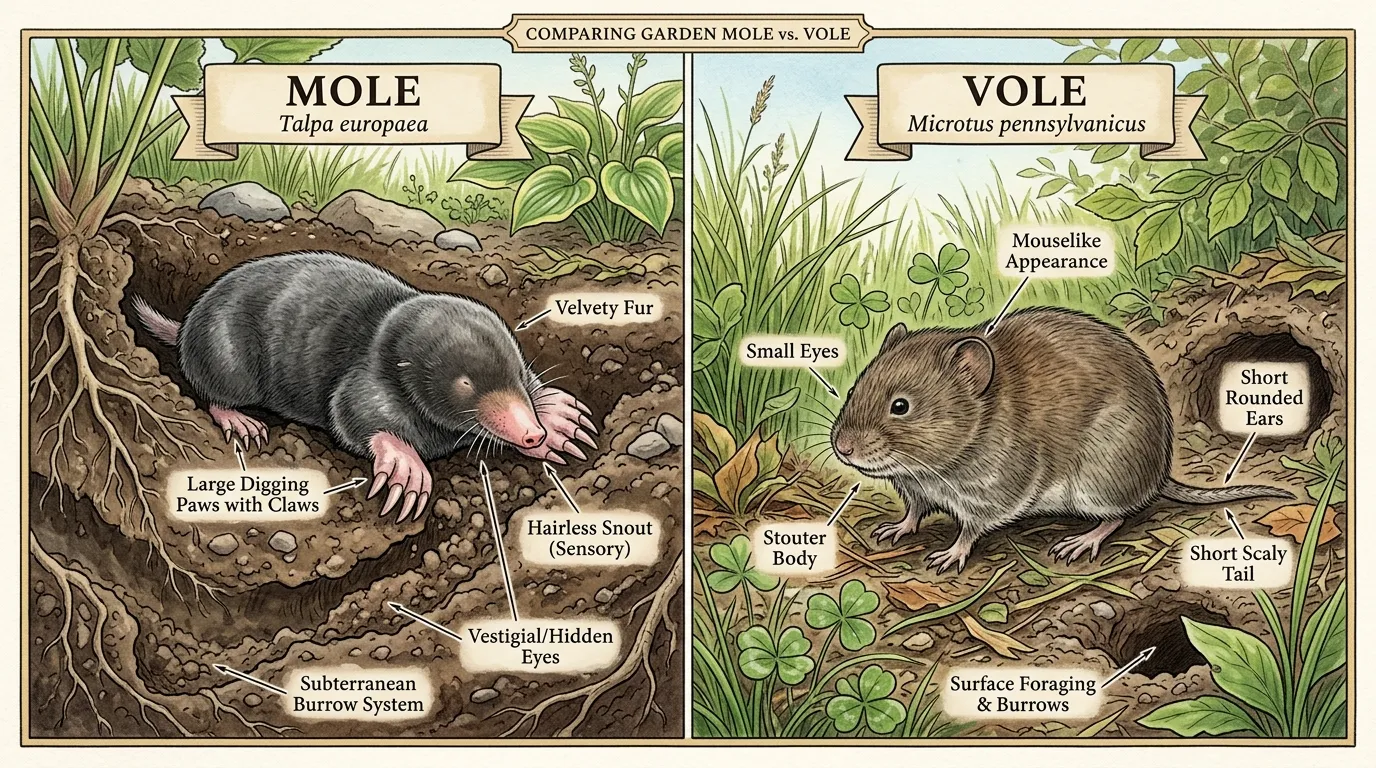
| Feature | Mole | Vole |
|---|---|---|
| Animal group | Insect-eating mammal | Rodent |
| Appearance | Pointed nose and large digging feet | Mouse-like body |
| Main food | Earthworms, insects, grubs | Grass, roots, plants, seeds |
| Lifestyle | Mostly underground | Mostly above ground or in shallow tunnels |
| Eyes | Very small | Small but visible |
| Ears | Tiny and hard to see | Small, rounded ears |
| Tail | Short | Short |
| Main skill | Digging | Running, hiding, and burrowing |
| Garden damage | Raised tunnels and soil mounds | Plant and root damage |
A mole and a vole are different animals. A mole lives mostly underground and is known for digging. A vole is a small rodent that looks like a mouse and usually lives above ground or in shallow tunnels.
Have you ever seen small holes or tunnels in your garden and wondered what animal made them? You may have heard the words mole and vole and thought they meant the same thing. They do not.
Although moles and voles are both small animals that can appear in gardens, they are very different. A mole is a mammal that spends much of its life underground. It has powerful front feet made for digging and a long, pointed nose. A vole, on the other hand, is a small rodent. It has a round body, short legs, small ears, and a face that can look a little like a mouse.
Knowing the difference between a mole and a vole can help you understand what is happening in your yard and identify the animal correctly.
Mole vs. Vole: Quick Comparison
What Is a Mole?
A mole is a small mammal specially adapted for life underground. Moles spend much of their time digging through soil in search of food.
Their bodies are long and compact. They have very small eyes and ears, a pointed snout, and large front feet with strong claws. These features help them move through soil quickly.
Moles mainly eat small animals found in the soil, especially earthworms and other invertebrates. They do not normally eat your plants.
Mole Example
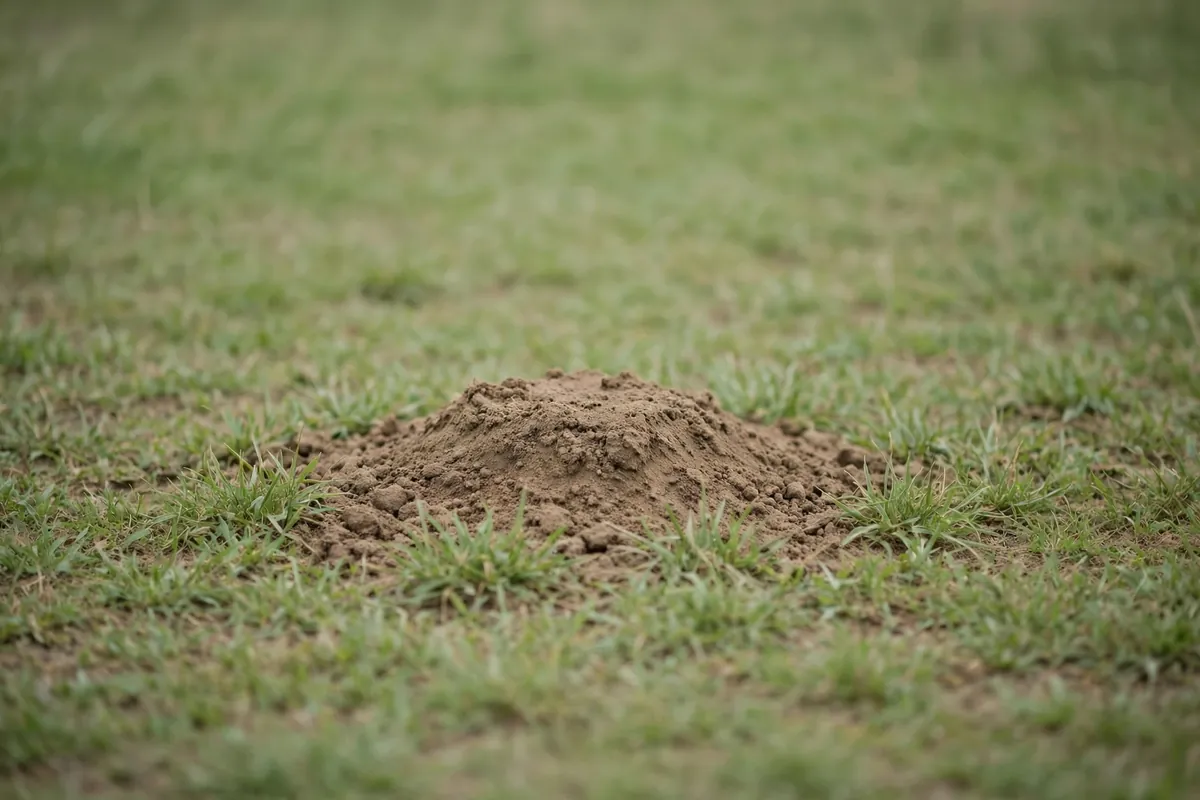
You may notice a raised line running across your lawn. This can be a sign of a mole tunnel.
Example:
The gardener found a fresh molehill near the flower bed.
Here, mole refers to the animal that created the underground tunnel and mound.
What Is a Vole?
A vole is a small rodent. It is related to mice, although it usually has a rounder body, shorter tail, and smaller ears.
Voles often live in grassy areas, gardens, fields, and places with plenty of vegetation. They can create shallow tunnels through grass and soil.
Unlike moles, voles eat plants. They may feed on grass, roots, bulbs, seeds, bark, and other plant material.
Vole Example
If a young plant suddenly becomes weak because its roots have been damaged, a vole may be responsible.
Example:
The vole damaged the roots of several plants in the garden.
In this sentence, vole refers to the small rodent that feeds on vegetation.
Mole and Vole Appearance
One of the easiest ways to tell a mole from a vole is to look at its body.
A mole has a pointed nose, tiny eyes, and powerful front feet. Its body is designed for digging.
A vole looks more like a small mouse. It has a rounded body, short legs, small ears, and a short tail.
Mole
Think of a mole as a digging animal.
Its front feet are broad and strong. Its claws help it push through soil and create underground tunnels.
Vole
Think of a vole as a small plant-eating rodent.
Its body is better suited to moving through grass and shallow tunnels than digging deep underground.
Mole vs. Vole: Food
Their diets are another major difference.
What Do Moles Eat?
Moles mainly eat small creatures found in soil. Their diet can include:
- Earthworms
- Insects
- Grubs
- Other small soil invertebrates
Moles are not usually responsible for eating the roots of your garden plants.
What Do Voles Eat?
Voles are herbivores. Their diet commonly includes plant material such as:
- Grass
- Roots
- Bulbs
- Seeds
- Leaves
- Bark
This is why voles can sometimes cause direct damage to plants.
Mole vs. Vole: Garden Damage
Moles and voles can both be unwanted visitors in a garden, but they cause different types of damage.

Mole Damage
Moles are famous for creating underground tunnels. Their digging can leave:
- Raised ridges in lawns
- Molehills
- Loose soil
- Disturbed flower beds
The damage is often caused by their digging rather than by eating plants.
Vole Damage
Voles can damage plants by feeding on roots and other plant parts. They may also create shallow runways through grass.
Signs of voles can include:
- Chewed roots
- Damaged bulbs
- Gnaw marks on plants
- Small pathways through grass
- Missing vegetation
How to Remember Mole and Vole
A simple memory trick can help.
Mole = Makes tunnels
Think of the M in Mole as standing for Makes tunnels.
Vole = Vegetation
Think of the V in Vole as standing for Vegetation, because voles often eat plants.
So remember:
Mole = digging
Vole = vegetation
This simple trick can make the difference easier to remember.
Mole or Vole: Which Word Should You Use?
Use mole when you are talking about the underground-dwelling mammal known for digging.
Example:
There is a mole under the lawn.
Use vole when you are talking about the small rodent that often feeds on plants.

Example:
A vole has been eating the roots of my flowers.
The words are not interchangeable because they describe different animals.
Common Mistakes With Mole and Vole
Mistake 1: Using Mole for a Mouse-Like Animal
A vole may look somewhat like a mouse, but it is not a mole.
Incorrect idea:
The small mouse-like animal is a mole.
Better:
The small mouse-like animal may be a vole.
Mistake 2: Assuming Moles Eat Plant Roots
Moles are often blamed for damaged plants because their tunnels can disturb soil. However, moles mainly search for food in the soil rather than feeding on plant roots.
Mistake 3: Thinking Voles Live Deep Underground
Voles can make tunnels and use sheltered spaces, but they are generally associated with vegetation and shallow runways rather than the deep underground lifestyle of moles.
Mole or Vole in a Sentence
Here are some simple examples:
Mole:
The mole disappeared into the soil.
Mole:
We found a fresh molehill in the yard.
Mole:
The mole uses its strong front feet to dig.
Vole:
A vole was hiding in the grass.
Vole:
The vole damaged the plant roots.
Vole:
Several voles were living near the garden.
Mole vs. Vole: The Main Difference

The easiest way to understand the difference is to focus on what each animal is built to do.
A mole is a digging mammal. Its body, feet, and claws help it move through soil. It searches underground for small animals to eat.
A vole is a small rodent. It has a mouse-like appearance and often lives around grass and plants. It feeds on vegetation and can damage roots, bulbs, and other plant material.
So, if you see raised underground tunnels, think mole.
If you see chewed plants or roots, think vole.
Frequently Asked Questions
Is a mole the same as a vole?
No. A mole and a vole are different animals. Moles are specialized underground mammals, while voles are small rodents.
Is a vole a type of mouse?
Voles are rodents related to mice, but they are not simply another name for mice. They have different physical features and belong to different groups within the rodent family.
Do moles eat plants?
Moles mainly eat small animals and invertebrates found in soil. They are not primarily plant eaters.
Do voles eat roots?
Yes. Voles can feed on roots, bulbs, and other plant material, which can make them a garden pest.
Which animal makes molehills?
Moles are responsible for the classic raised soil mounds commonly called molehills.
Which is bigger, a mole or a vole?
Size varies by species, but moles and voles are both small mammals. Their body shape and behavior are usually more useful for identification than size alone.
How can I tell a mole from a vole?
Look at the animal’s appearance and the type of damage it causes. A mole has a pointed nose and powerful digging feet. A vole looks more like a small mouse and is associated with grass, plants, and root damage.
Conclusion
The words mole and vole may sound similar, but they describe two different animals. A mole is a small mammal built for digging and spending much of its life underground. It has strong front feet, a pointed nose, and a diet mainly made up of small creatures found in soil.
A vole is a small rodent with a mouse-like appearance. It often lives around grass and plants and feeds on vegetation such as roots, bulbs, seeds, and bark.
The easiest way to remember the difference is simple: moles dig, while voles eat vegetation. If you see raised tunnels and molehills, a mole may be nearby. If you notice chewed roots or damaged plants, a vole could be responsible.
Develop or Develope: The Simple Spelling Guide You Need

I’m an experienced article writer who creates clear, engaging, and SEO-friendly content that helps readers find the information they need. I specialize in writing well-researched articles, blog posts, guides, and informative content on a wide range of topics.
My writing focuses on simple language, strong structure, accurate information, and search intent. I aim to make every article easy to read while also helping websites improve their visibility on search engines.
I enjoy turning complex topics into useful, reader-friendly content that informs, answers questions, and keeps readers engaged. Whether you need an SEO article, blog post, educational guide, or website content, I can create content tailored to your audience and goals.