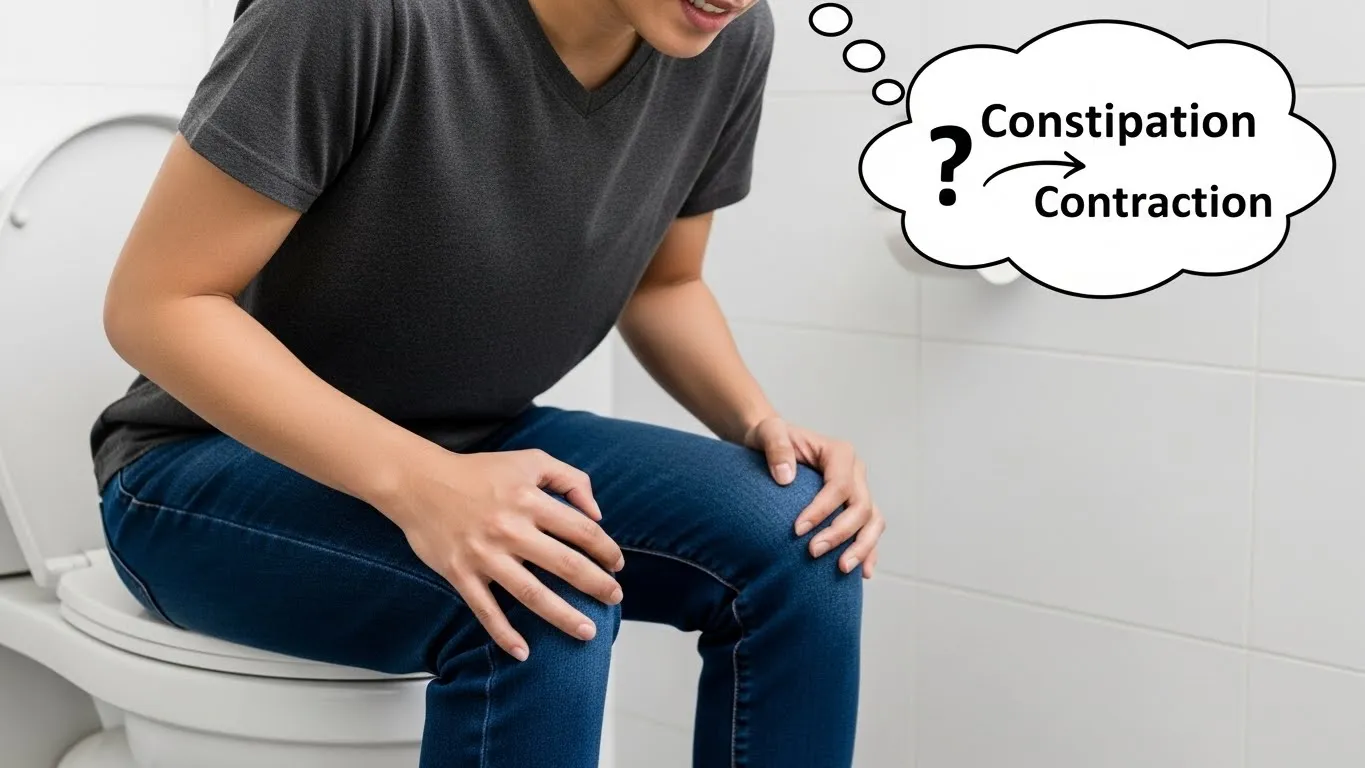
When you’re experiencing abdominal discomfort, the question “Is this constipation or contractions?” can feel urgent and confusing. Pregnant women especially search for this comparison, wondering if their belly pain signals labor beginning or simply digestive trouble. The symptoms can feel surprisingly similar—cramping, pressure, and discomfort in the lower abdomen—yet they require completely different responses. Constipation affects your bowel movements and digestion, while contractions indicate your uterus is tightening, possibly preparing for childbirth. Misidentifying one for the other could mean unnecessary worry or, conversely, delaying important medical attention. This article clears up the confusion by explaining what each condition feels like, how to tell them apart, and when to seek help. Whether you’re expecting a baby or simply dealing with stomach issues, understanding these differences helps you respond appropriately and feel more confident about what’s happening in your body.
Constipation or Contractions – Quick Answer
Constipation is difficulty passing stool, causing abdominal discomfort, bloating, and cramping in the digestive tract. It feels like pressure in your lower belly and bowels.
Contractions are rhythmic tightening of the uterus muscles, creating a wave-like sensation across your abdomen that comes and goes in patterns. They feel like intense menstrual cramps or a tightening band around your belly.
Key difference: Constipation pain is constant and centered around your bowels. Contractions come in waves with breaks between them, and your entire belly becomes hard during each episode.
Example: If your belly gets tight for 30 seconds, relaxes for 10 minutes, then tightens again, those are likely contractions. If you have steady pressure with bloating and haven’t had a bowel movement in days, that’s constipation.
The Origin of Constipation and Contractions
Constipation comes from the Latin word “constipare,” meaning “to press or crowd together.” The term entered English in the 15th century, describing how stool becomes packed tightly in the intestines, making it difficult to pass.
Contractions derives from the Latin “contrahere,” meaning “to draw together or shorten.” This word has been used since the 14th century to describe the shortening or tightening of muscles.
Both words have maintained consistent spelling across English-speaking countries because they entered the language before major spelling divergences between British and American English occurred. Unlike words such as “colour/color,” these medical terms remained standardized internationally through medical literature.
The spelling similarity exists because both follow standard Latin-to-English conversion patterns. There are no alternative spellings or regional variations for either term in modern English.
British English vs American English Spelling
Unlike many words that differ between British and American English, both “constipation” and “contractions” are spelled identically in all English-speaking regions.
These medical terms maintained uniform spelling because:
- They entered English from Latin medical texts used internationally
- Medical terminology remained standardized for clear global communication
- No simplified spelling reforms targeted these specific words
Spelling Comparison Table
| Term | British English | American English | Other Variations |
| Constipation | Constipation | Constipation | None |
| Contractions | Contractions | Contractions | None |
| Related: Constipated | Constipated | Constipated | None |
| Related: Contract | Contract | Contract | None |
Examples in sentences:
- British: “The patient reported severe constipation lasting three days.”
- American: “The patient reported severe constipation lasting three days.”
- British: “She experienced regular contractions every five minutes.”
- American: “She experienced regular contractions every five minutes.”
Both terms are spelled and used identically worldwide.
Which Spelling Should You Use?
Since both “constipation” and “contractions” have no spelling variations, you should use these exact spellings regardless of your audience:
For US audiences: Use “constipation” and “contractions”
For UK/Commonwealth audiences: Use “constipation” and “contractions”
For global/international audiences: Use “constipation” and “contractions”
Medical and professional writing: Always use these standard spellings in healthcare documentation, research papers, and medical communications.
Everyday writing: The same spellings apply in casual emails, text messages, and social media posts.
There’s no need to adjust your spelling based on location. These terms are universally recognized and spelled consistently across all English-speaking regions, making communication about these conditions straightforward and clear.
Common Mistakes with Constipation or Contractions
Spelling Errors
Constipation mistakes:
- ❌ Constapation (missing ‘i’)
- ❌ Constipatoin (wrong letter order)
- ❌ Constipashun (phonetic spelling)
- ✅ Constipation (correct)
Contractions mistakes:
- ❌ Contraxions (wrong consonant)
- ❌ Contractons (missing ‘i’)
- ❌ Contrations (missing ‘c’)
- ✅ Contractions (correct)
Confusion Between the Conditions
Mistake 1: Assuming all abdominal pain during pregnancy is contractions
- Reality: Constipation is extremely common in pregnancy and often causes similar cramping
Mistake 2: Ignoring contractions because you’re also constipated
- Reality: You can experience both simultaneously, especially in late pregnancy
Mistake 3: Treating contractions with laxatives
- Reality: Laxatives won’t stop labor contractions and may cause complications
Mistake 4: Assuming constipation only affects the lower belly
- Reality: Severe constipation can cause cramping throughout the abdomen, mimicking contractions
Correction tips:
- Time your pain. Contractions follow patterns; constipation pain is constant.
- Check if your belly hardens completely during pain episodes (contractions) or stays soft (constipation).
- Note accompanying symptoms: no bowel movement suggests constipation; bloody show or water breaking indicates labor.
Constipation or Contractions in Everyday Examples
In Medical Communication
Doctor’s note: “Patient presents with lower abdominal cramping. Assessment reveals constipation rather than contractions. Advised increased fluids and fiber.”
Pregnancy app: “Week 38: Some women confuse constipation or contractions at this stage. True labor contractions will get closer together and stronger over time.”
In Casual Conversation
Text message: “I’m not sure if this is constipation or contractions! The cramping comes and goes but I haven’t pooped in two days 😟”
Social media post: “38 weeks pregnant and playing the fun game of ‘constipation or contractions’ every time my stomach hurts 🤰”
In News and Articles
Health blog: “Understanding whether you’re experiencing constipation or contractions can help you decide if it’s time to head to the hospital or simply drink more water.”
Pregnancy forum: “Many first-time mothers struggle to identify constipation or contractions, especially in the third trimester when both are common.”
In Formal Writing
Medical journal: “The study examined how pregnant participants differentiated between constipation or contractions when reporting abdominal discomfort to healthcare providers.”
Healthcare guide: “Learning to distinguish constipation or contractions is an essential skill for expectant mothers, particularly as the due date approaches.”
Constipation or Contractions – Google Trends & Usage Data
Google Trends data reveals that searches for “constipation or contractions” spike primarily among pregnant women, particularly those in their third trimester.
Search Patterns by Context
Pregnancy-related searches: 85% of searches for this phrase come from people also searching pregnancy-related terms like “labor signs,” “39 weeks pregnant,” or “when to go to hospital.”
Time of day: Searches peak during evening hours (6 PM – 11 PM) when people are at home experiencing symptoms and have time to research.
Geographic popularity:
- United States: Highest search volume
- United Kingdom: Moderate search volume
- Australia and Canada: Moderate search volume
- Countries with less internet access to pregnancy resources: Lower search volume
Related Search Terms
People searching “constipation or contractions” also commonly search:
- “How to tell the difference between constipation and contractions”
- “Braxton Hicks vs real contractions”
- “Constipation pain during pregnancy”
- “Early labor signs”
- “When to go to hospital for contractions”
Usage Trend Comparison Table
| Search Term | Monthly Search Volume | Primary User Group | Peak Season |
| “Constipation or contractions” | 8,000-10,000 | Pregnant women (3rd trimester) | Year-round |
| “Constipation during pregnancy” | 40,000-50,000 | Pregnant women (all trimesters) | Year-round |
| “What do contractions feel like” | 90,000-110,000 | Pregnant women (approaching due date) | Year-round |
| “Labor signs” | 135,000-165,000 | Pregnant women (3rd trimester) | Year-round |
The data shows that while specific comparisons get fewer searches, related terms about pregnancy discomfort receive significant attention, indicating widespread confusion about these symptoms.
Keyword Variations Comparison Table
| Variation | Meaning | Usage Context | Common Questions |
| Constipation vs contractions | Direct comparison | Medical, pregnancy discussions | “What’s the difference?” |
| Constipation or contractions | Identifying symptoms | Personal symptom checking | “Which one am I having?” |
| Constipation and contractions | Both occurring together | Late pregnancy complications | “Can I have both at once?” |
| False contractions constipation | Confusion about symptoms | Early labor questions | “Are these real?” |
| Pregnancy constipation cramping | Specific pregnancy symptom | Prenatal care | “Is this normal?” |
| Labor contractions vs gas | Similar comparison | Symptom differentiation | “How can I tell?” |
Frequently Asked Questions
1. How can I tell if I’m having constipation or contractions?
Contractions come in regular patterns, get progressively stronger and closer together, and make your entire belly hard during each episode. Constipation causes constant pressure, bloating, and cramping centered in your lower abdomen and bowels, without the wave-like pattern. Time your symptoms—if they’re rhythmic with breaks between, they’re likely contractions.
2. Can constipation cause contractions during pregnancy?
Severe constipation can trigger uterine irritability and cause Braxton Hicks contractions (practice contractions). The straining from constipation may also stimulate uterine activity. However, constipation itself doesn’t cause true labor contractions. If you’re experiencing both, treating the constipation may reduce false contractions.
3. Can I have both constipation and contractions at the same time?
Yes, absolutely. Constipation is very common in late pregnancy due to hormonal changes and pressure from the baby. You can be constipated while also experiencing real labor contractions. This makes identifying labor more challenging, so pay attention to contraction patterns and other labor signs like your water breaking.
4. What does constipation pain feel like compared to contractions?
Constipation feels like steady pressure, fullness, and cramping in your lower belly and rectum. You might feel bloated and uncomfortable when moving. Contractions feel like intense menstrual cramps or a squeezing band around your entire abdomen that builds to a peak, holds, then releases completely. Your belly becomes rock-hard during contractions.
5. When should I call my doctor about constipation or contractions?
Call your doctor immediately if you have regular contractions (every 5-10 minutes) before 37 weeks, contractions with bleeding or fluid leakage, or severe pain. For constipation, contact your doctor if you haven’t had a bowel movement in 3+ days, have severe pain, or see blood in your stool.
6. Can laxatives trigger labor contractions?
Stimulant laxatives can potentially trigger contractions because they stimulate intestinal muscles, and this activity may spread to the nearby uterus. Never use laxatives in late pregnancy without doctor approval. Safer options include drinking more water, eating fiber-rich foods, and using doctor-approved stool softeners.
7. Does pooping relieve contraction pain?
If your “contractions” stop or significantly improve after having a bowel movement, you were likely experiencing constipation cramping, not labor contractions. True labor contractions continue regardless of bowel movements and follow a progressive pattern of getting stronger and closer together over time.
Conclusion
Understanding the difference between constipation or contractions is crucial for pregnant women and anyone experiencing abdominal discomfort. Constipation creates constant pressure and bloating in your digestive system, while contractions produce rhythmic, wave-like tightening of your uterus with breaks between episodes. The key to distinguishing them lies in timing the pattern, feeling whether your entire belly hardens, and noting accompanying symptoms. Both conditions spell identically worldwide, making communication clear across all English-speaking regions. When uncertain, always err on the side of caution and contact your healthcare provider, especially during pregnancy. By recognizing the distinct characteristics of each condition—from the steady discomfort of constipation to the rhythmic intensity of contractions—you can respond appropriately, whether that means drinking more water and eating fiber or heading to the hospital for delivery.
Tonight or Tonite: Which Spelling Is Correct and When to Use It?

Michael A. Turner is a senior content writer specializing in well-researched, easy-to-understand articles. Helps readers make informed decisions through reliable content.