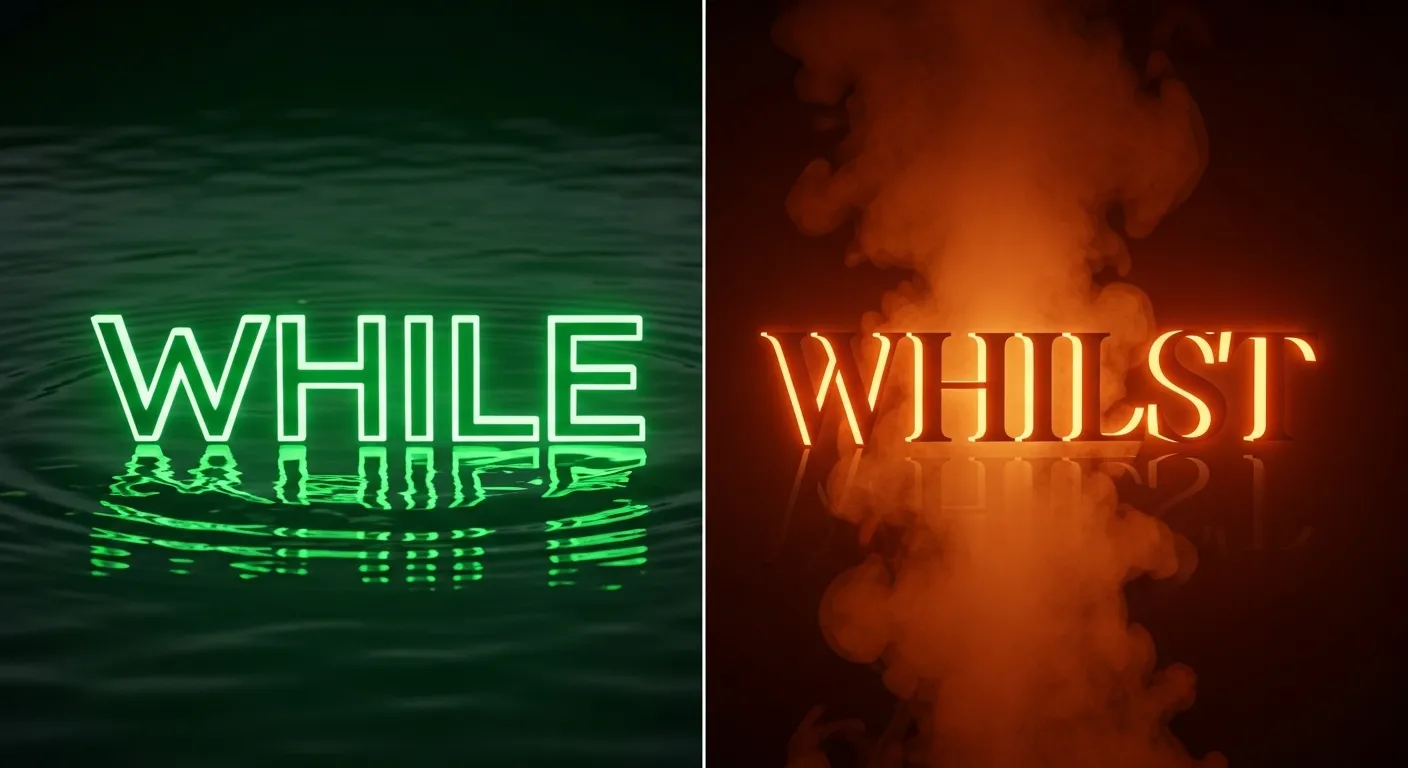
Both while and whilst are correct. While is common in American English. Whilst is more common in British English.
An international company was preparing a global marketing campaign. The American team wrote, “Please review this while we update the design.” The British team edited the sentence to read, “Please review this whilst we update the design.”
Both teams were confident. Both believed they were right. And interestingly, both were correct.
This small difference creates big confusion for writers around the world. Many people search for “while or whilst” because they want to know which version sounds professional, modern, or grammatically correct. Is one outdated? Is one more formal? Does it change the meaning?
The truth is simple. The difference is not about correctness. It is about regional preference and tone. This guide explains the meaning, origin, regional usage, style differences, and professional advice so you can confidently choose the right word for your audience.
Let’s break it down clearly.
While or Whilst – Quick Answer
Both words mean the same thing.
They are used to show:
- Time (“during the time that”)
- Contrast (“whereas”)
- Condition (“at the same time as”)
Examples:
- I listened to music while working.
- I listened to music whilst working.
- She prefers tea, while he prefers coffee.
- She prefers tea, whilst he prefers coffee.
Meaning stays the same. The difference is style and region.
The Origin of While and Whilst
The word while comes from Old English hwil, meaning “a period of time.” It has been used for centuries in English writing.
The word whilst developed later as a variation. English once added “-st” to certain words for style or rhythm. Over time, most of these forms disappeared. But “whilst” survived, mainly in British English.
Both forms have existed for hundreds of years. Neither is new. Neither is incorrect.
British English vs American English Spelling
This is where the main difference appears.
| Word | American English | British English |
| While | Very Common | Common |
| Whilst | Rare | Very Common |
In the United States:
- “While” is standard.
- “Whilst” sounds formal or unusual.
In the United Kingdom:
- Both are correct.
- “Whilst” is more common in formal writing.
In Australia and New Zealand:
- “Whilst” is also widely used.
In Canada:
- “While” is more common, but both appear.
The choice depends on audience location.
Which One Should You Use?
If Your Audience Is American
Use while. It sounds natural and modern.
If Your Audience Is British
You may use either, but whilst may sound slightly more formal.
For Global Business Writing
Use while. It is widely accepted and easier for international readers.
For Academic Writing
Check your style guide. Many academic journals prefer “while.”
For Creative Writing
Both are acceptable. Choose based on tone and rhythm.
Professional tip: When writing for an international audience, choose clarity over tradition. “While” is simpler and more globally recognized.
Common Mistakes with While or Whilst
1. Thinking One Is Wrong
Both are correct.
2. Mixing Both in One Document
Choose one style and stay consistent.
3. Assuming “Whilst” Is More Intelligent
Using “whilst” does not make writing more advanced. Clarity matters more.
4. Using Incorrect Grammar
Incorrect: I was cooking whilst she was ate dinner.
Correct: I was cooking whilst she was eating dinner.
Grammar rules remain the same for both words.
While and Whilst in Everyday Examples
In Emails:
- I will respond while reviewing the file.
- I will respond whilst reviewing the file.
In News:
- Markets rose while inflation slowed.
- Markets rose whilst inflation slowed.
In Business Reports:
- Profits increased while expenses remained stable.
In Academic Writing:
- The study was conducted whilst maintaining strict controls.
Both words function the same way grammatically.
Google Trends & Usage Data
Search data shows:
- “While” has higher global usage.
- “Whilst” is more popular in the UK, Australia, and parts of South Asia.
In American media and publishing, “while” dominates.
In British newspapers and formal UK writing, “whilst” appears frequently.
However, worldwide digital platforms prefer “while” because it is simpler and shorter.
The trend shows that “while” continues to grow globally due to international communication.
Comparison Table: While vs Whilst
| Feature | While | Whilst |
| Meaning | Same | Same |
| American English | Standard | Rare |
| British English | Common | Very Common |
| Formal Tone | Neutral | Slightly Formal |
| Global Clarity | High | Moderate |
| Modern Usage | Very High | Regional |
The table confirms that the difference is stylistic, not grammatical.
FAQs
1. Is “whilst” outdated?
No. It is still widely used in British English.
2. Is “while” more modern?
Yes, especially in American and global contexts.
3. Do they have different meanings?
No. They mean the same thing.
4. Can I use “whilst” in American writing?
You can, but it may sound unusual.
5. Which is better for SEO?
“While” is searched more often globally.
6. Is “whilst” more formal?
It can sound slightly more formal in British English.
7. Should I avoid mixing them?
Yes. Stay consistent in one piece of writing.
Conclusion
The difference between while and whilst is not about right or wrong. It is about region and style. Both words share the same meaning and grammar function. They express time, contrast, or simultaneous action.
If your audience is in the United States or global markets, “while” is the safest and clearest choice. It feels modern, direct, and widely accepted. If your audience is primarily British or Australian, “whilst” may sound natural and slightly formal.
Clear communication depends on understanding your readers. Choosing the correct regional style strengthens credibility and professionalism. Now that you know the difference, you can confidently select the word that fits your audience and tone.
Whether you write while traveling or whilst traveling, the message remains the same.
Adress or Address: Which Spelling Is Correct? ✅

Miles Thornton is a seasoned author and content specialist with a knack for simplifying complex topics. Passionate about clear, engaging writing, creates articles that inform and inspire readers. With years of experience in digital publishing, Miles combines professionalism with creativity, delivering insightful content for diverse audiences