Have you ever written a sentence and suddenly paused at usage or useage, wondering which one is correct? If yes, you’re not alone. This spelling confusion is extremely common among students, bloggers, office professionals, content writers, and even native English speakers.
English has many words that end in age like marriage, coverage, storage, and percentage so it feels natural to assume useage might also be correct.
People search for usage or useage because they want their writing to sound accurate and professional. Even a small spelling error can reduce credibility, especially in academic papers, business documents, technical writing, or published online content.
The confusion becomes worse when people see useage written incorrectly on blogs, forums, or social media, making it seem acceptable.
This article removes all doubt once and for all. You’ll learn the correct spelling, understand where the word comes from, see how British and American English treat it, explore common mistakes, examine realworld examples, and discover why useage looks right but isn’t. By the end, you’ll confidently know which spelling to use and you’ll never secondguess it again.
More to discover about ! Behavioral or Behavioural? The Correct Spelling Explained Simply
Usage or Useage ; Quick Answer
The answer is simple and absolute:
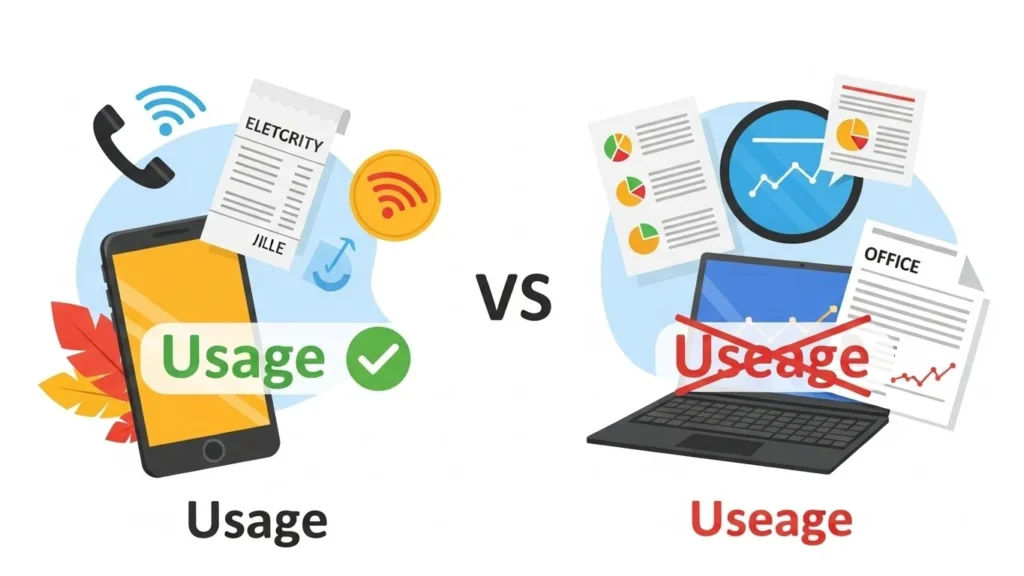
✅ Usage is the correct spelling
❌ Useage is incorrect and nonstandard
Correct Examples:
- Phone usage increased last year.
- This guide explains correct word usage.
- Monitor your data usage carefully.
Incorrect Examples:
- ❌ Internet useage
- ❌ Word useage rules
- ❌ High data useage
There are no exceptions to this rule.
The Meaning of “Usage”
Before going deeper, it helps to understand what usage actually means.
Usage refers to:
- The act or manner of using something
- Accepted or customary ways language is used
Examples:
- Water usage during summer increases.
- Proper grammar usage is important in exams.
- Mobile data usage should be limited.
So, usage can relate to consumption, habit, or linguistic practice, depending on context.
The Origin of Usage or Useage
The word usage comes from Middle French usage, meaning “use, practice, or custom.” It entered English in the late Middle Ages with the spelling usage, and that spelling has remained unchanged for centuries.
Importantly:
- Usage has never historically been spelled as useage
- No dictionary or formal grammar system recognizes useage
Why “Useage” Appeared
The incorrect form useage developed later because of:
- Visual similarity to other age words
- Assumptions based on pronunciation
- Pattern imitation (marriage, coverage, baggage)
However, use does not form useage by any grammatical rule. The correct noun form evolved directly as usage, not use + age.
Why “Useage” Looks Right (But Isn’t)
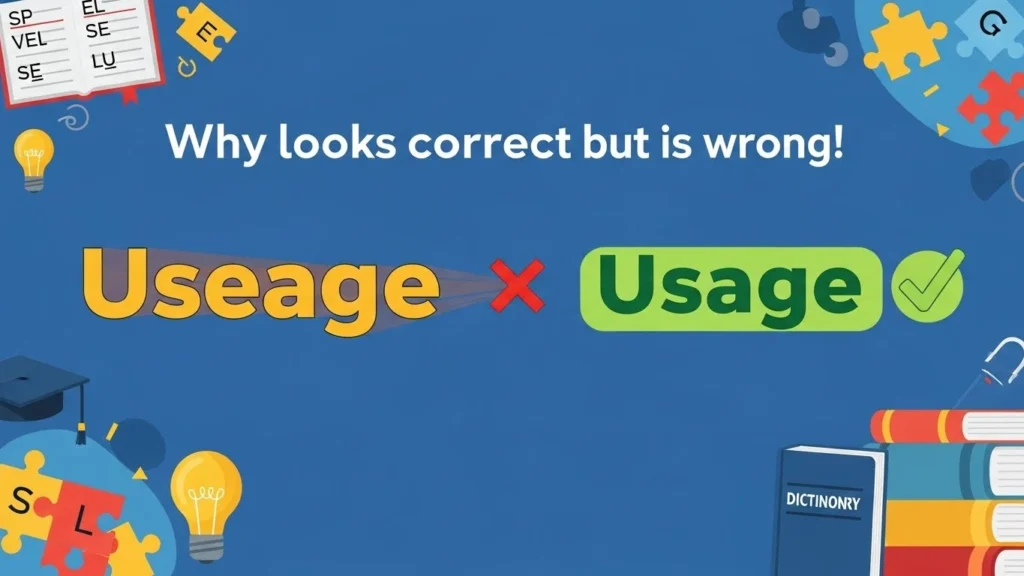
This is the core reason behind the confusion.
English has many nouns formed with age, such as:
- Marriage
- Coverage
- Leakage
- Breakage
- Storage
So the brain naturally expects:
use + age = useage ❌
But English is not always logical or patternconsistent.
The Reality:
- Usage is a complete word inherited from French
- It is not formed by adding age to use
- Therefore, useage breaks historical and linguistic rules
This is why spellcheckers flag useage as an error.
British English vs American English Spelling
Some spelling confusions exist because of UK vs US differences (colour/color, honour/honor). But this is not one of them.
There is no difference between British and American English here.
| Feature | British English | American English |
| Correct spelling | Usage ✅ | Usage ✅ |
| Incorrect spelling | Useage ❌ | Useage ❌ |
| Meaning | Same | Same |
| Pronunciation | Same | Same |
So If you’re writing for:
- UK
- USA
- Canada
- Australia
- International audience
Usage is always the correct choice.
Usage vs Use: What’s the Difference?
This is another area where people get confused.
Use (verb or noun)
- Means to employ something
- Simple and direct
Example:
- I use my phone daily.
Usage (noun only)
- Refers to how often, how much, or how something is used
- Often more formal
Example:
- Phone usage has increased.
So:
- ✔️ Use = action
- ✔️ Usage = pattern, habit, or amount
Once you spot the pattern, the correction becomes automatic.
Usage or Useage in RealLife Contexts
1. Academic Writing
- “This study analyzes language usage patterns.”
- “Incorrect word usage affects clarity.”
2. Business & Corporate Writing
- “Monitor employee data usage.”
- “Software usage policies must be followed.”
3. Technology & Internet
- “Mobile data usage is capped.”
- “Internet usage has grown globally.”
4. Media & Journalism
- “Energy usage declined last year.”
- “Fuel usage increased during winter.”
5. Everyday Communication
- “My phone usage is too high.”
- “Reduce screen usage before bed.”
Usage in Language & Grammar Contexts
In linguistics, usage has a special meaning.
It refers to:
- Accepted ways words are used
- Conventional grammar patterns
- Idiomatic expressions
Example:
- “Modern usage allows informal contractions.”
- “This word’s usage has changed over time.”
This is why usage appears often in:
- Dictionaries
- Style guides
- Grammar books
Google Trends & Usage Data
Search trend analysis shows:
- Usage is searched primarily for meaning and examples
- Useage is searched mainly in “is this correct?” queries
In published books, academic journals, and professional writing:
- Usage dominates almost 100%
- Useage appears only as a typo
This confirms:
➡️ Useage is not an alternative spelling
➡️ It is simply a common error
Comparison Table: Usage vs Useage
| Feature | Usage | Useage |
| Correct spelling | ✅ Yes | ❌ No |
| Dictionary accepted | ✅ Yes | ❌ No |
| Used in UK & US | ✅ Yes | ❌ No |
| Appears in formal writing | ✅ Yes | ❌ No |
| Considered a typo | ❌ | ✅ |
FAQs
1. Is useage ever correct?
No. It is always incorrect.
2. Why do people spell it useage?
Because many English nouns end in age, which causes confusion.
3. Is usage formal?
It can be formal or neutral, depending on context.
4. Is usage used more in British English?
No. It is equally used worldwide.
5. Can usage mean habit or custom?
Yes, especially in linguistic or traditional contexts.
6. Will spellcheck catch useage?
Yes. Most modern tools flag it instantly.
Memory Tip: How to Remember the Correct Spelling
Think of it this way:
- Usage = already a complete word
- There is no “e” between use and age
Or remember:
If you’re unsure, drop the extra “e” usage is clean and correct.
Conclusion
The confusion between usage or useage is understandable, but the correct answer is clear. Usage is the only correct spelling in English, used consistently across British and American contexts. The form useage has never been standard and exists only as a misspelling.
This confusion happens because English contains many age words, but use doesn’t follow that pattern. Once you know this, the mistake becomes easy to avoid.If you’re writing an academic paper, business document, blog post, or everyday message, always choose usage. It keeps your writing accurate, professional, and trustworthy. With this clear rule in mind, you’ll never need to look it up again

Miles Thornton is a seasoned author and content specialist with a knack for simplifying complex topics. Passionate about clear, engaging writing, creates articles that inform and inspire readers. With years of experience in digital publishing, Miles combines professionalism with creativity, delivering insightful content for diverse audiences