Have you ever typed a sentence and suddenly paused at trully or truly? If yes, you’re definitely not alone. This is one of those small spelling doubts that quietly interrupt writing even for fluent English users.
Because English spelling doesn’t always match pronunciation, words like truly often look like they should have double letters. When spoken aloud, truly can sound like trul lee, which makes trully seem reasonable at first glance.
People frequently search for trully or truly because they want their English to look correct and professional. Whether it’s an email, an academic assignment, a blog post, or a social media caption, a minor spelling error can affect credibility.
Unfortunately, the internet sometimes makes things worse when incorrect spellings appear repeatedly in comments, memes, or casual posts, writers start doubting what they already know.
This article removes that confusion completely. We’ll cover the correct spelling, its historical background, spelling rules, British vs American usage, real life examples, common mistakes, memory tricks, and professional usage contexts.
By the end of this guide, you won’t just know the answer you’ll understand why it’s correct and never hesitate again.
More about Fryed vs Fried: Which One’s Actually Correct?
Trully or Truly ; Quick Answer
✅ Truly is the correct spelling
❌ Trully is incorrect and never accepted
Examples:
- I truly appreciate your help.
- She is truly talented.
- We are truly grateful for your support.
There are no exceptions to this rule.
Why This Confusion Happens So Often
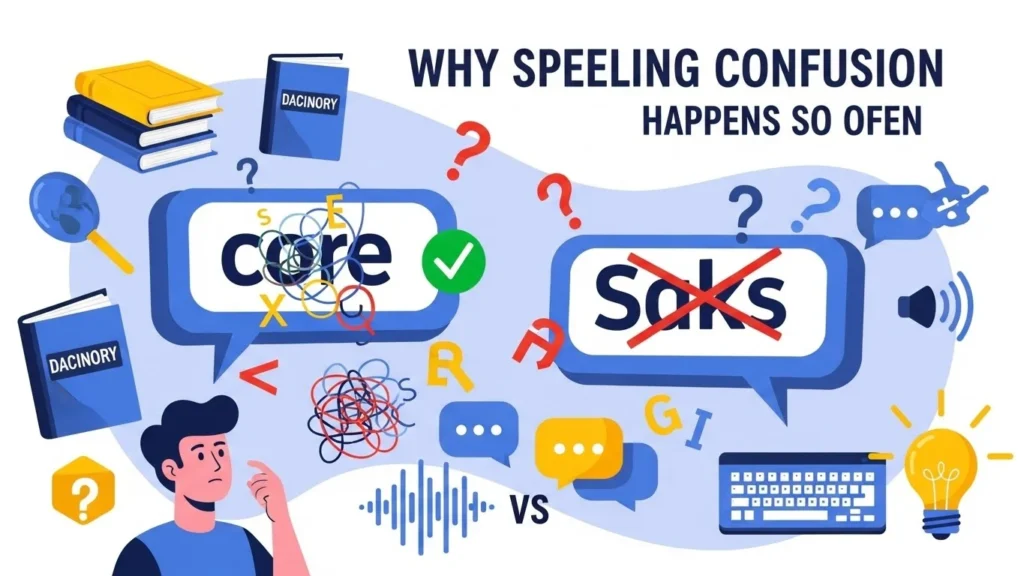
The confusion between trully and truly exists mainly because of pronunciation and spelling expectations.
Here’s why people get it wrong:
- The word true ends with ue
- Many English words double consonants when adding suffixes
- Pronunciation makes the word sound “long”
- Writers expect spelling to reflect sound (but English often doesn’t)
As a result, trully looks right, even though it isn’t.
The Origin of Truly
The word truly comes from the adjective true, combined with the adverb forming suffix ly.
Word structure:
- True (adjective)
- ly (suffix meaning “in a manner”)
You might expect:
true + ly = truelly
But English simplifies the spelling.
Instead of truelly, the language drops one letter and forms:
truly
This simplified form has been standard for centuries.
Why Truly Has Only One “L”
English follows a simplification rule when forming adverbs:
When a word ends in e, and ly is added, the e is usually dropped.
Examples:
- True → Truly
- Due → Duly
- Whole → Wholly (exception with double l, but different rule)
The spelling trully ignores this rule and has never been standard English.
Is There Any British vs American Difference?
No ❌
This is not a British vs American spelling issue.
| Feature | British English | American English |
| Correct spelling | Truly | Truly |
| Alternative spelling | ❌ Trully | ❌ Trully |
| Pronunciation | Same | Same |
| Formal acceptance | Yes | Yes |
Unlike words such as honour/honor or colour/color, truly is identical worldwide.
Which Spelling Should You Use?
Always choose:
✅ Truly
This applies in:
- UK English
- US English
- Academic writing
- Business communication
- Journalism
- Social media
- Legal or formal documents
There are zero contexts where trully is acceptable.
Common Mistakes with Trully or Truly
❌ Incorrect:
- I am trully sorry for the delay.
- This is trully impressive.
- She trully understands the problem.
✅ Correct:
- I am truly sorry for the delay.
- This is truly impressive.
- She truly understands the problem.
Truly in Real Life Contexts
📧 Emails
I truly appreciate your time and support.
📰 News Writing
The event was truly historic for the nation.
📱 Social Media
This song is truly beautiful!
📚 Academic Writing
The findings are truly significant.
🏢 Professional Writing
We are truly committed to excellence.
Why “Trully” Looks Right (But Isn’t)
The spelling trully looks correct because:
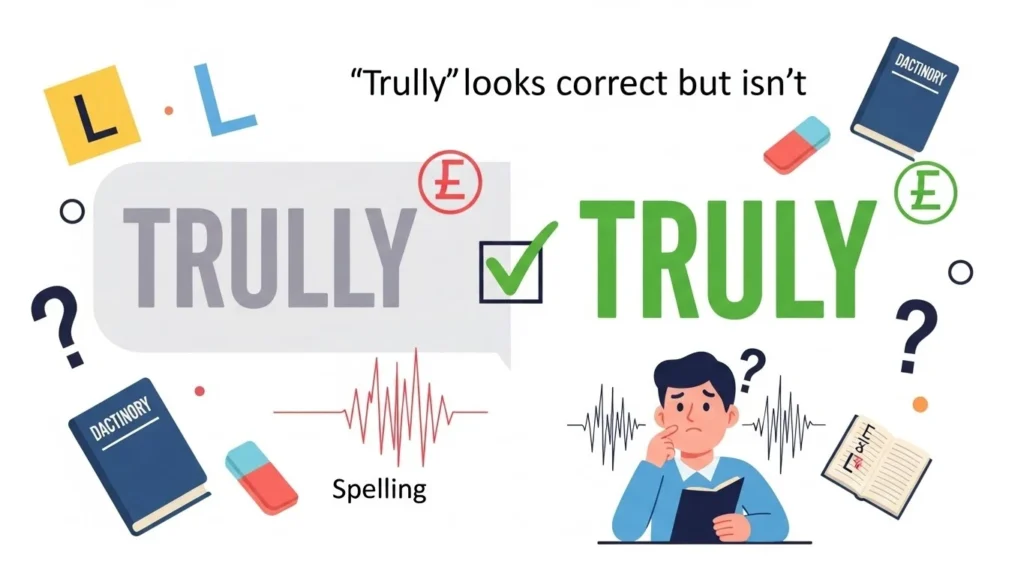
- Many English words double consonants
- The spoken word sounds strong
- Writers expect symmetry
- Visual familiarity from repeated online mistakes
But English spelling is based on history, not logic.
That’s why trully feels right but never is.
Spell Check & Grammar Tools
Good news ✔️
Most modern tools catch this mistake:
- Microsoft Word
- Grammarly
- Google Docs
- Apple spell check
They will always flag “trully” as incorrect.
Google Trends & Usage Data
Search data shows:
- Truly dominates books, articles, and websites
- Trully appears mostly in:
- Spelling check searches
- Typing errors
- Non edited online comments
- Spelling check searches
Published and professional writing uses truly exclusively.
Comparison Table: Trully vs Truly
| Feature | Trully | Truly |
| Correct spelling | ❌ No | ✅ Yes |
| In dictionaries | ❌ No | ✅ Yes |
| British English | ❌ No | ✅ Yes |
| American English | ❌ No | ✅ Yes |
| Professional use | ❌ No | ✅ Yes |
| Common typo | ✅ Yes | ❌ No |
Related Words That Follow the Same Pattern
- Due → Duly
- True → Truly
- Whole → Wholly (exception, different base)
Learning truly helps reinforce other adverb rules.
FAQs
1. Is trully ever correct?
No. It has never been accepted.
2. Why doesn’t truly have two “l”s?
Because English drops letters for smoother spelling.
3. Is truly formal?
It works in both formal and informal writing.
4. Do British people use trully?
No. They use truly only.
5. Can spellcheck catch it?
Yes, almost always.
6. Easy trick to remember?
👉 True + ly = Truly
Conclusion
The difference between trully or truly is simple but important. Truly is the only correct spelling in English, used worldwide in both British and American contexts. Trully is always a spelling mistake, even though it may look correct to the eye.
This confusion exists because English pronunciation can be misleading and because many words double letters when forming new words. However, true follows a simplification rule, dropping unnecessary letters when ly is added.
Once you learn this rule, the decision becomes automatic. Whether you’re writing an email, an article, an exam answer, or a caption, choosing truly keeps your writing polished, accurate, and professiona

Miles Thornton is a seasoned author and content specialist with a knack for simplifying complex topics. Passionate about clear, engaging writing, creates articles that inform and inspire readers. With years of experience in digital publishing, Miles combines professionalism with creativity, delivering insightful content for diverse audiences