Use “ton” in American English and “tonne” for the metric system.
Many people get confused when they see ton and tonne used in similar situations. Both words relate to weight, both are correct, and both appear in news, shipping, business, and science. So why are there two spellings, and how do you know which one to use?
People search for ton or tonne when dealing with measurements, trade documents, academic writing, or global content. Using the wrong word can cause confusion, especially when exact weight matters. In some cases, a ton and a tonne are not the same weight, which makes this difference even more important.
This article explains ton vs tonne in clear, simple English. You’ll learn meanings, origins, British vs American usage, types of tons, common mistakes, examples, tables, FAQs, and clear advice on which term you should use.
Ton or Tonne – Quick Answer
- Ton → American English and non-metric use
- Tonne → Metric unit (1,000 kilograms)
Both measure weight, but they are not always equal.
Meaning of Ton
Ton is a unit of weight, but its meaning depends on context.
In modern usage, ton can mean:
- A large amount
- A unit of weight (varies by system)
The word ton is common in:
- American English
- Informal expressions
- Non-metric systems
Examples:
- The truck carries one ton of goods.
- I have a ton of work today.
Meaning of Tonne
Tonne is a metric unit of mass.
It always means:
- 1,000 kilograms
- 2,204.62 pounds
The word tonne is used in:
- Metric system
- Science
- International trade
- British and Commonwealth English
Examples:
- The shipment weighs two tonnes.
- Carbon emissions are measured in tonnes.
Origin of Ton and Tonne
Origin of Ton
- Comes from Old English and Old French
- Originally meant a large container or barrel
- Later became associated with large weight
Origin of Tonne
- Comes from French tonne
- Adopted to represent a metric weight
- Standardized as 1,000 kilograms
The shared origin explains why the words look similar.
Types of “Ton” Explained
This is where confusion increases.
1. Short Ton (US Ton)
- Used in the United States
- Equals 2,000 pounds
- About 907 kilograms
2. Long Ton (UK Imperial Ton)
- Older British system
- Equals 2,240 pounds
- About 1,016 kilograms
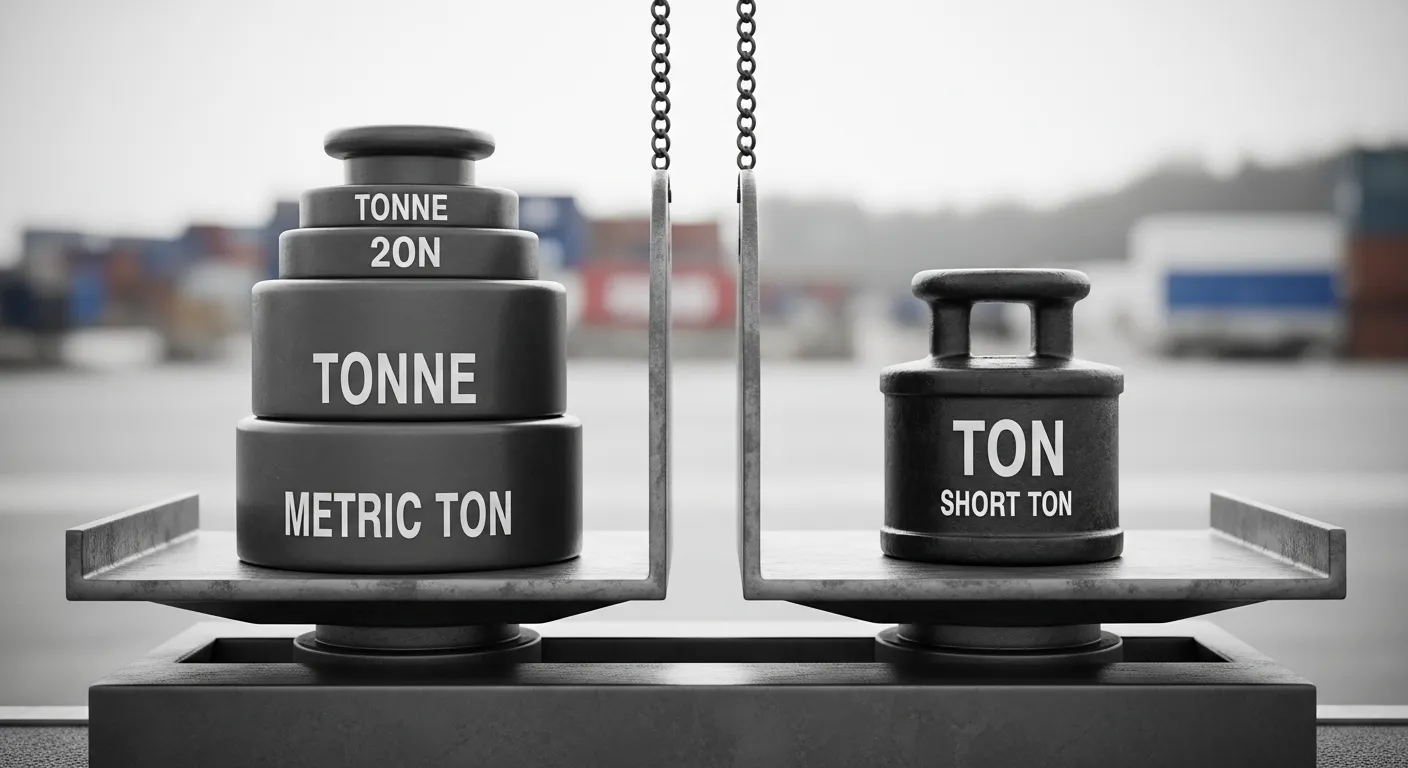
3. Metric Ton (Tonne)
- Equals 1,000 kilograms
- Used worldwide
Ton vs Tonne: Comparison Table
| Type | Name | Weight |
| Short ton | US ton | 2,000 lb |
| Long ton | UK ton | 2,240 lb |
| Metric ton | Tonne | 1,000 kg |
This table shows why using the right word matters.
British English vs American English Usage
| English Type | Preferred Term |
| American English | Ton |
| British English | Tonne (metric) |
| International | Tonne |
| Scientific Writing | Tonne |
Modern British English mostly uses tonne for clarity.
Which Should You Use?
Ask yourself two questions:
- Am I using the metric system?
- Who is my audience?
- US audience → ton
- Global or scientific audience → tonne
- Exact measurement needed → tonne
When accuracy matters, tonne is safer.
Ton or Tonne in Everyday Examples
In Business
- The company shipped five tonnes of steel.
- The truck can carry one ton.
In News
- Emissions reached 10 million tonnes.
- Farmers harvested a ton of crops.
In Casual Speech
- I ate a ton of food.
- We had a ton of fun.
Only ton is used informally this way.
Ton as an Informal Expression
Ton also means:
- A lot
- Many
Examples:
- I have a ton of emails.
- She has a ton of energy.
Tonne is never used this way.
Common Mistakes with Ton or Tonne
Mistake 1: Using tonne casually
❌ I have a tonne of homework
✅ I have a ton of homework
Mistake 2: Mixing systems
❌ The load weighs one ton (metric context)
✅ The load weighs one tonne
Mistake 3: Assuming they are equal
❌ A ton always equals a tonne
✅ They are different units
Ton vs Tonne in Science and Environment
In:
- Climate science
- Physics
- Engineering
Tonne is always used because it is:
- Metric
- Standard
- Precise
Example:
- Carbon output is measured in tonnes.
Ton vs Tonne in Shipping and Trade
International shipping almost always uses:
- Tonnes
Reason:
- Avoid confusion
- Follow metric standards
Using ton can cause costly mistakes.
Pronunciation Differences
They sound almost the same:
- Ton → /tʌn/
- Tonne → /tʌn/
The spelling is the only clear difference.
Ton or Tonne in Writing and SEO
Search behavior shows:
- “Ton” is searched more casually
- “Tonne” appears in technical and global searches
For SEO:
- US-focused content → ton
- Global or technical content → tonne
Search engines understand both but context matters.
Memory Trick to Remember the Difference
- Tonne = metric = 1,000 kg
- Ton = flexible and informal
Or remember:
- Extra letters = extra precision
Can You Use Both in One Article?
Only if:
- You clearly explain the difference
- You label each unit clearly
Otherwise, use one system consistently.
FAQs: Ton or Tonne
1. Is a ton the same as a tonne?
No. A tonne is exactly 1,000 kg.
2. Which is heavier?
A long ton is heavier than a tonne. A short ton is lighter.
3. Is tonne British English?
Yes, and also international metric usage.
4. Is ton American English?
Yes, mainly.
5. Can ton mean “a lot”?
Yes, in informal English.
6. Is tonne used casually?
No, it is formal and technical.
7. Which should I use for accuracy?
Tonne.
Ton vs Tonne in Global English
Modern English accepts both words, but clarity depends on context. Global communication prefers tonne because it avoids confusion across systems.
Final Verdict
The difference between ton and tonne is more than spelling. A ton can mean different weights depending on the system, while a tonne always means 1,000 kilograms. That consistency makes tonne the preferred choice in science, trade, and international writing.
Use ton for American audiences and informal expressions. Use tonne when precision matters or when writing for a global audience. Choosing the right term keeps your writing clear, accurate, and professional.
Mathew or Matthew: Which Spelling Is Correct?

James L. Morrison is a content writer focused on English grammar, word meanings, and usage differences. He enjoys breaking down complex language rules into simple explanations. His work is designed to help readers quickly understand the correct word choice in everyday writing and professional communication.