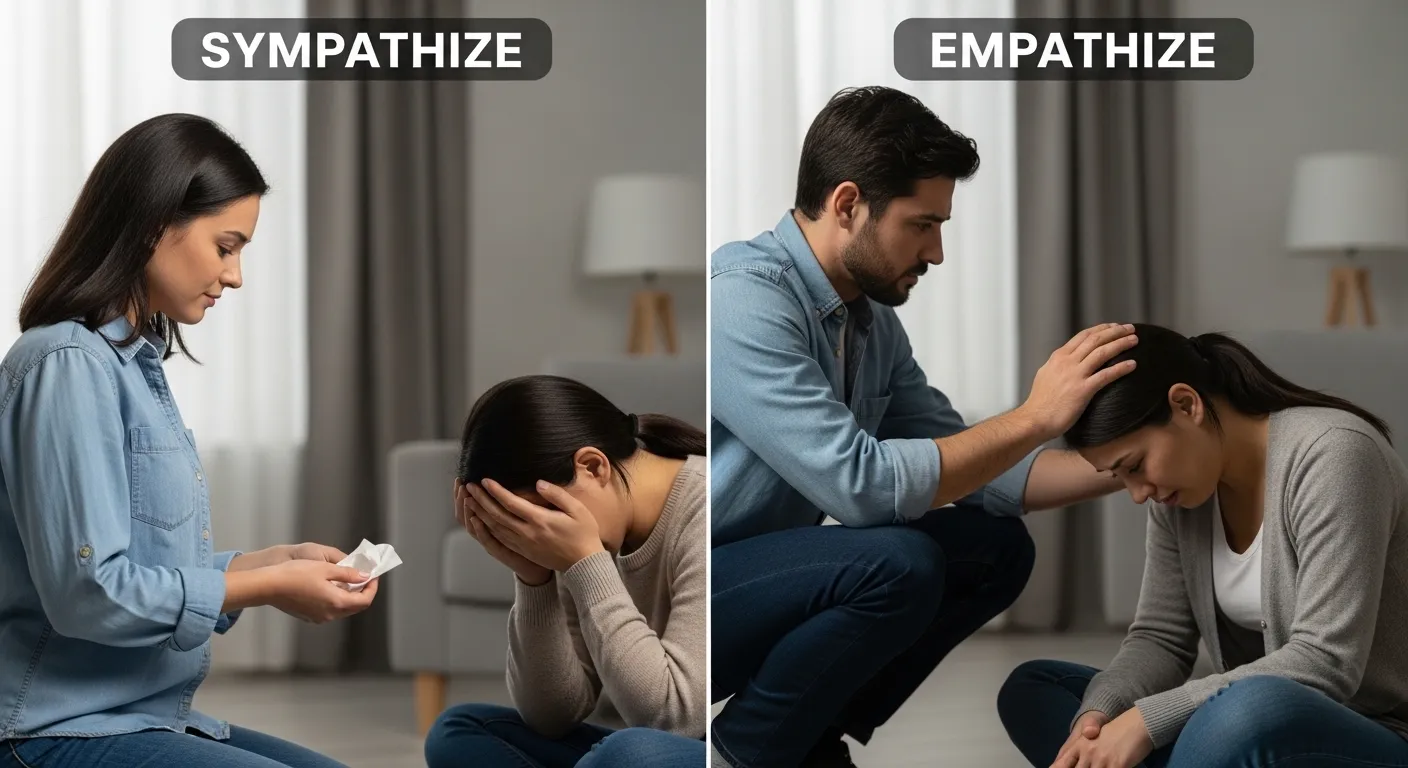
Sympathize means feeling sorry for someone, while empathize means feeling what someone feels.
Many people confuse sympathize or empathize because both words deal with emotions and caring about others. They sound similar, they are used in similar situations, and in casual talk people often mix them up.
Still, their meanings are not the same, and using the wrong one can change the message you are trying to send.
People search for sympathize or empathize when writing messages of support, professional emails, essays, or social posts. They want to sound caring, respectful, and accurate. Choosing the right word matters a lot in emotional situations.
This article explains the difference between sympathize and empathize in very simple English. You will learn meanings, origins, examples, common mistakes, usage in daily life, comparison tables, FAQs, and clear advice on when to use each word.
Sympathize or Empathize – Quick Answer
- Sympathize → Feeling sorry for someone
- Empathize → Feeling with someone
Examples:
- I sympathize with your loss.
- I empathize with how you feel.
Meaning of Sympathize
Sympathize is a verb.
It means:
- To feel pity or sorrow for someone
- To care about someone’s pain from the outside
- To understand a situation without sharing the same feeling
Examples:
- I sympathize with your situation.
- She sympathized with the victims.
- We sympathize with those affected.
When you sympathize, you acknowledge pain, but you do not feel it yourself.
Meaning of Empathize
Empathize is also a verb.
It means:
- To understand someone’s feelings deeply
- To imagine yourself in their place
- To feel emotions similar to theirs
Examples:
- I empathize with your fear.
- He empathized with her sadness.
- I can empathize because I’ve been there.
When you empathize, you emotionally connect.
Key Difference Between Sympathize and Empathize
The core difference is emotional distance.
- Sympathize → Care without sharing feelings
- Empathize → Care by sharing feelings
You can sympathize with anyone.
You empathize more easily when you have lived through something similar.
Origin of Sympathize
Sympathize comes from:
- Greek sym (together)
- Greek pathos (feeling)
Originally, it meant feeling together, but over time it became more about expressing concern, not sharing the same emotion fully.
Origin of Empathize
Empathize comes from:
- Greek em (in)
- Greek pathos (feeling)
It literally means feeling inside someone else’s experience.
This explains why empathize feels deeper.
British English vs American English
There is no spelling difference here.
| English Type | Sympathize | Empathize |
| British English | Correct | Correct |
| American English | Correct | Correct |
| Global English | Correct | Correct |
Both words are used worldwide.
Sympathize vs Empathize: Comparison Table
| Feature | Sympathize | Empathize |
| Meaning | Feel sorry for | Feel with |
| Emotional depth | Surface level | Deep |
| Personal experience needed | No | Often yes |
| Common in formal writing | Yes | Yes |
| Used in emotional support | Yes | Yes |
How Sympathize Is Used in Sentences
Expressing Concern
Examples:
- I sympathize with your loss.
- We sympathize with your difficulties.
Formal and Polite Use
Examples:
- The company sympathizes with affected families.
- I sympathize with your position.
Sympathize is often used in:
- Official statements
- News
- Professional communication
How Empathize Is Used in Sentences
Emotional Connection
Examples:
- I empathize with your stress.
- She empathizes with his pain.
Shared Experience
Examples:
- As a parent, I empathize.
- I empathize because I felt the same.
Empathize is personal and emotional.
Sympathize or Empathize in Everyday Life
In Emails
- I sympathize with the inconvenience.
- I empathize with how frustrating this feels.
In News
- Leaders sympathized with victims.
- The speaker empathized with families.
On Social Media
- Sending sympathy and support.
- I truly empathize with your story.
In Formal Writing
- The report sympathizes with affected groups.
- The study shows how people empathize.
Common Mistakes with Sympathize or Empathize
Mistake 1: Using them as exact synonyms
❌ I empathize with your loss (formal condolence)
✅ I sympathize with your loss
Mistake 2: Using sympathize in personal pain sharing
❌ I sympathize because I felt the same pain
✅ I empathize because I felt the same pain
Mistake 3: Overusing empathize in formal writing
Formal texts often prefer sympathize.
When to Use Sympathize
Use sympathize when:
- Offering polite support
- Writing professionally
- You have not experienced the same pain
Examples:
- Business emails
- Official statements
- Condolence messages
When to Use Empathize
Use empathize when:
- You deeply understand feelings
- You share emotional experience
- Writing personal messages
Examples:
- Personal conversations
- Counseling
- Emotional storytelling
Emotional Impact of Each Word
- Sympathize feels respectful and distant
- Empathize feels warm and close
Both are caring, but they send different emotional signals.
Sympathize vs Empathize in Psychology
In psychology:
- Empathy is considered a key emotional skill
- Sympathy is seen as awareness without immersion
Therapists focus more on empathizing.
Sympathize or Empathize in Professional Settings
In workplaces:
- Managers often sympathize
- Counselors often empathize
Both are useful, depending on role.
Google Search and Usage Trends
Search data shows:
- “Sympathize” is common in formal contexts
- “Empathize” is rising in emotional and social topics
- Users search both to avoid sounding insensitive
Search intent focuses on correct emotional tone.
Memory Trick to Remember the Difference
Easy rule:
- Sympathy = Sorry for you
- Empathy = Feel with you
Think:
- Sympathy stands outside
- Empathy steps inside
Can You Use Both Together?
Yes, sometimes.
Example:
- I sympathize with your loss and empathize with your pain.
This shows care and emotional understanding.
Are Sympathize and Empathize Interchangeable?
No, not always.
They overlap, but meaning and emotional depth differ. Choosing the wrong one may sound cold or overly personal.
Sympathize or Empathize in Education
In essays and exams:
- Correct usage matters
- Teachers look for emotional accuracy
Using the right word improves clarity.
Cultural Use Around the World
Across cultures:
- Sympathy is more formal
- Empathy is more personal
Both words are accepted in global English.
FAQs: Sympathize or Empathize
1. Are sympathize and empathize the same?
No, they are different.
2. Which word shows deeper feeling?
Empathize.
3. Is sympathize more formal?
Yes, often.
4. Can I empathize without experience?
You can try, but experience helps.
5. Which is better in condolences?
Sympathize.
6. Is empathy stronger than sympathy?
Emotionally, yes.
7. Can I use both in one sentence?
Yes, when appropriate.
Final Verdict
The difference between sympathize or empathize lies in emotional depth. Sympathize means showing care and concern from the outside. Empathize means emotionally stepping into someone else’s feelings.
Both words are kind and supportive, but they are not interchangeable. Use sympathize in polite, formal, or professional situations. Use empathize when you deeply understand or share the emotion.
Choosing the right word helps your message sound sincere, thoughtful, and emotionally accurate.
Ton or Tonne: Meaning, Difference, and Use

Michael A. Turner is a senior content writer specializing in well-researched, easy-to-understand articles. Helps readers make informed decisions through reliable content.