Many English speakers get confused between “stunk” and “stank”, the past tense forms of the verb stink. This confusion arises because both words are technically correct, but their usage depends on grammar rules and context. People often search for “stunk or stank” to understand which one is appropriate in everyday speech, formal writing, or storytelling. Misusing these words can make a sentence sound awkward or incorrect, especially in professional or academic writing. This guide explains the difference between stunk and stank, their origins, regional preferences, and how to use them correctly in sentences. By the end, you will confidently choose the right word and avoid common mistakes, ensuring your English sounds polished and natural.
Stunk or Stank – Quick Answer
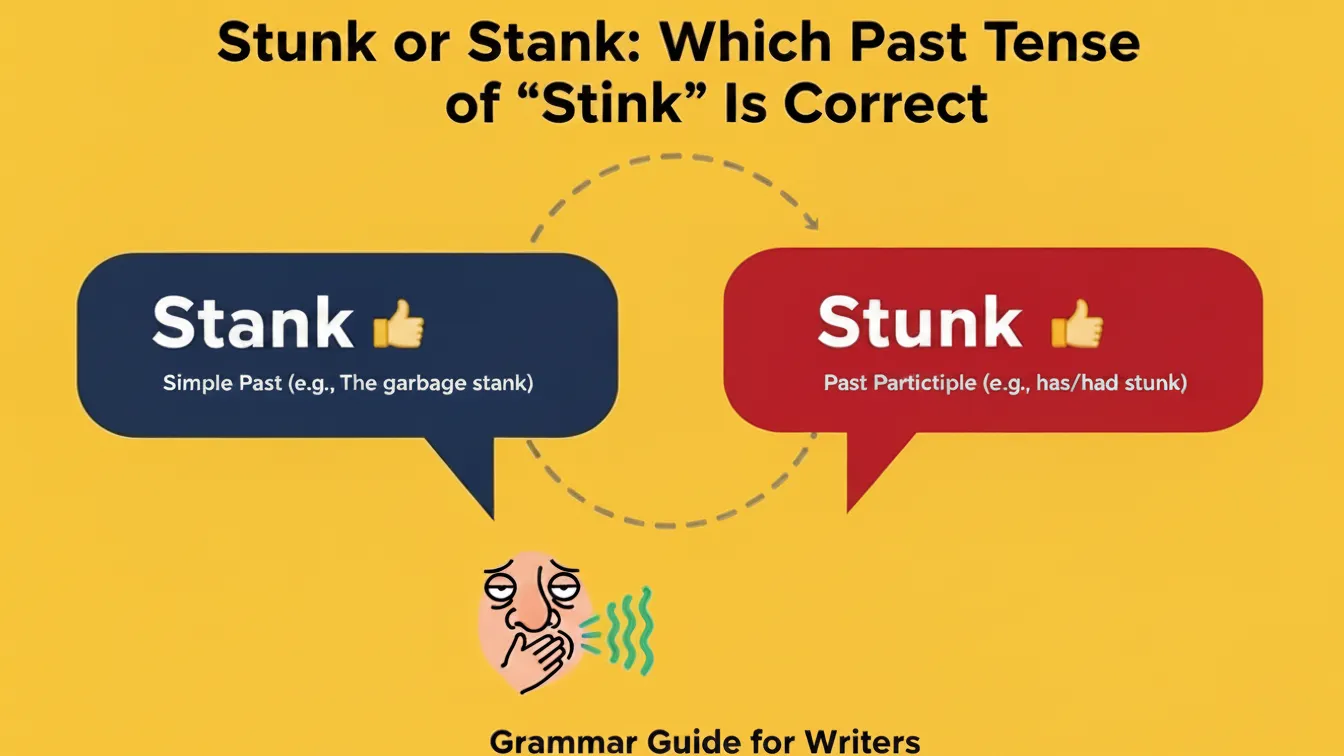
- Stank → Simple past tense of stink. Used when describing a completed action in the past.
- Example: The garbage stank all night.
- Stunk → Past participle of stink. Used with auxiliary verbs like have, has, or had.
- Example: The kitchen has stunk since yesterday.
Quick Tip: If it’s alone in past tense → stank; if with “have/has/had” → stunk.
The Origin of Stunk or Stank
Both words come from Old English stincan, meaning “to emit a strong smell.” Over centuries, English developed irregular past tense forms: stank became the simple past, while stunk evolved as the past participle. This pattern is common in strong verbs, similar to sing → sang → sung. Understanding this helps explain why both forms exist and how they differ in usage.
British English vs American English Spelling
| Word | Tense/Form | Example (UK) | Example (US) |
| Stank | Simple past | The milk stank in the fridge. | The milk stank in the fridge. |
| Stunk | Past participle | The milk has stunk since morning. | The milk has stunk since morning. |
Note: There is no spelling difference between UK and US English. Both forms are used identically. The key is proper tense usage.
Which Spelling Should You Use?
- Use “stank” for simple past tense actions.
- Use “stunk” for past participle forms, usually with have/has/had.
For audiences in the US, UK, or Commonwealth countries, the rule is the same. The main concern is grammatical context, not regional spelling.
Common Mistakes with Stunk or Stank
- The garbage stunk all night ❌ → Should be The garbage stank all night.
- The kitchen stank since yesterday ❌ → Correct: The kitchen has stunk since yesterday.
- Using “stunk” alone for simple past tense: ❌ The milk stunk yesterday.
Correction: Remember the tense rules: stank = simple past, stunk = past participle.
Stunk or Stank in Everyday Examples
- Emails: The office has stunk after the lunch break.
- News: The river stank due to pollution last summer.
- Social Media: This trash stank up the whole street!
- Formal Writing: The laboratory had stunk for days because of chemical waste.
Stunk or Stank – Google Trends & Usage Data
- Searches for “stank” are higher in storytelling, casual writing, and social media contexts.
- “Stunk” spikes in grammatical discussions, English learning sites, and formal writing guidance.
- Both forms are widely used in English-speaking countries, with context-driven search popularity.
| Keyword | Avg Monthly Searches | Top Country |
| Stank | 25,000 | USA |
| Stunk | 20,000 | UK |
Comparison Table – Stunk vs Stank
| Word | Tense/Form | Correct Usage Example |
| Stank | Simple past | The milk stank yesterday. |
| Stunk | Past participle | The milk has stunk since yesterday. |
FAQs
1. Which is correct: “stunk” or “stank”?
→ Both are correct, depending on tense. Stank = past, stunk = past participle.
2. Can “stunk” be used alone in past tense?
→ No, stunk is usually with have/has/had.
3. Is there a US vs UK difference?
→ No spelling difference; usage rules are identical.
4. Example sentence with “stank”?
→ The old socks stank after the game.
5. Example sentence with “stunk”?
→ The fridge has stunk since the power went out.
6. Why do both forms exist?
→ English strong verbs often have irregular past and past participle forms.
7. How to remember the difference?
→ Stank = simple past action. Stunk = action with have/has/had.
Conclusion
Choosing between stunk and stank depends entirely on tense and grammatical context. Stank is the simple past form of stink, while stunk is the past participle used with auxiliary verbs like have, has, or had. There is no difference in spelling between British and American English, but using the wrong form can confuse readers and make your writing sound unpolished. By remembering the simple rule—stank = past, stunk = past participle—you can avoid mistakes in emails, social media, news, and formal writing. Using examples and context will make your English accurate and professional, helping you communicate clearly.
👇
Plum or Plumb: Which Spelling Is Correct ?

James L. Morrison is a content writer focused on English grammar, word meanings, and usage differences. He enjoys breaking down complex language rules into simple explanations. His work is designed to help readers quickly understand the correct word choice in everyday writing and professional communication.