Introduction
Have you ever written “beautiful sites” when you meant “beautiful sights”? If yes, you’re not alone. The confusion between sites or sights is one of the most common English mistakes, even among native speakers. Both words sound exactly the same, but they have very different meanings. That’s why so many people search for this keyword. They know one is wrong, but they’re not sure which one to use.
This mix-up often happens in emails, travel blogs, school assignments, and social media posts. Writing the wrong word can change the meaning of your sentence or make your writing look careless. For example, a “website site” makes sense, but a “website sight” does not. On the other hand, “beautiful sights” is correct, while “beautiful sites” usually isn’t unless you’re talking about locations.
This article clears that confusion quickly and clearly. You’ll learn the exact difference, where these words come from, how British and American English use them, and which one fits your sentence. By the end, choosing between sites and sights will feel easy and natural.
Sites or Sights Quick Answer
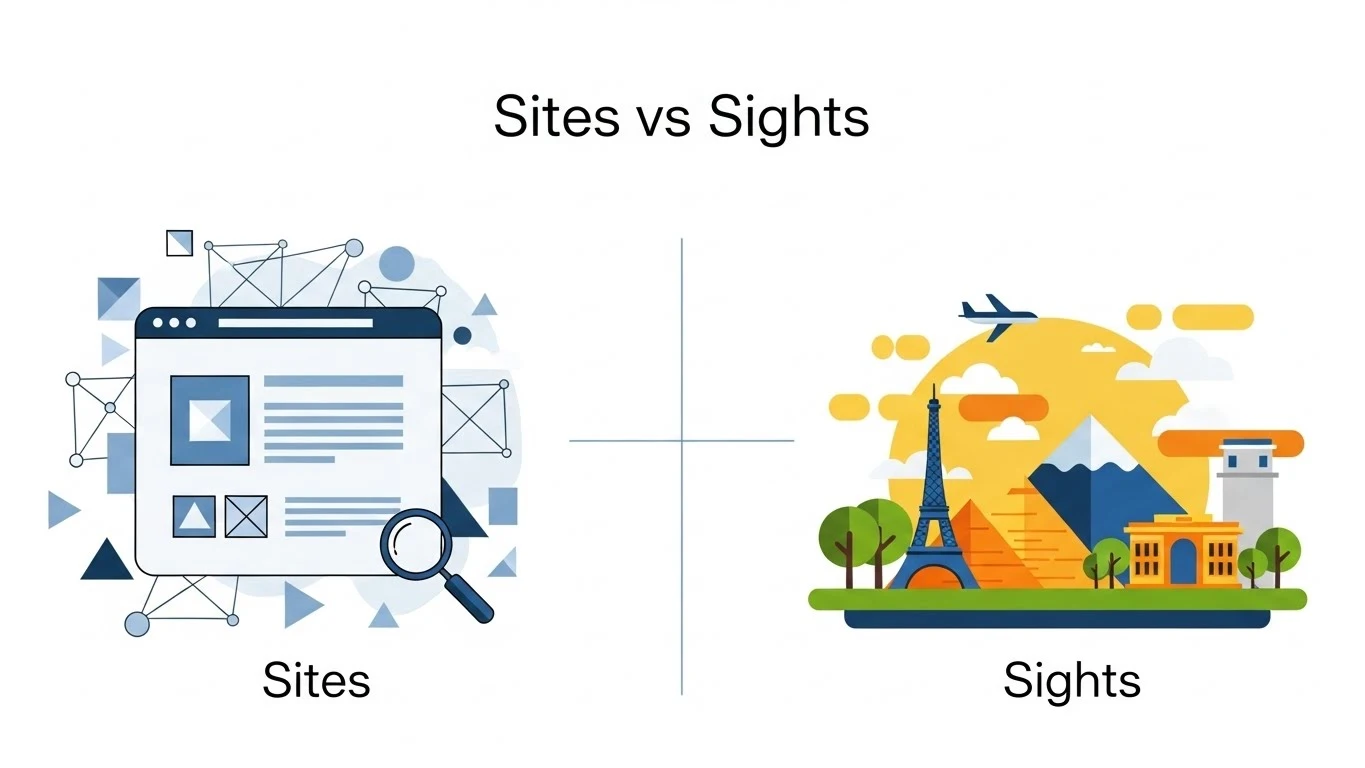
- Sites refers to places, locations, or websites
- Sights refers to things you see or views
Examples:
- This is a popular tourist site.
- The city has amazing sights.
The Origin of Sites or Sights
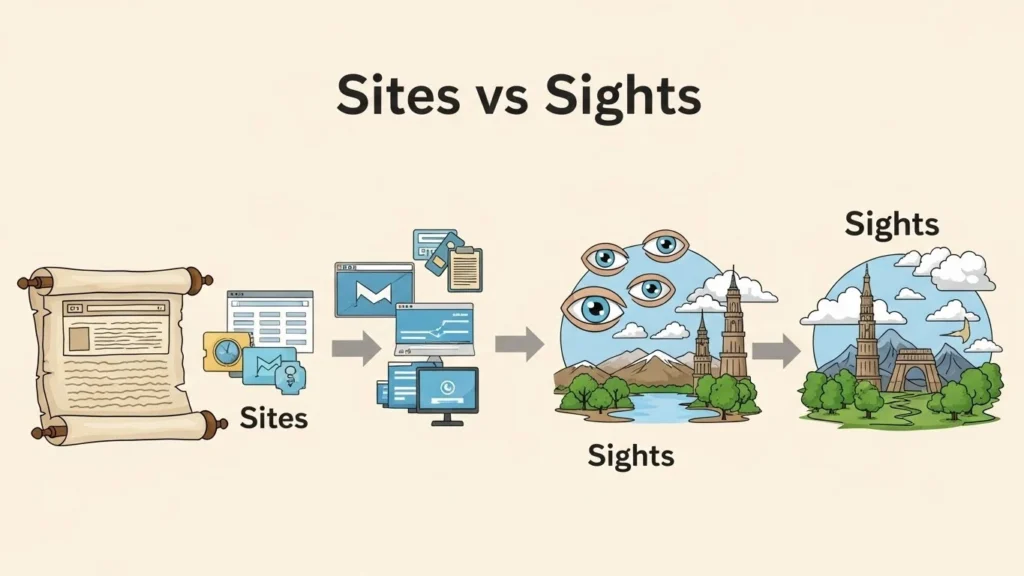
The word site comes from the Latin situs, meaning “position” or “place.” It has always been linked to location.
Sight comes from Old English siht, meaning “the act of seeing.” Over time, its plural form of sights became common for things worth seeing. The confusion exists because English pronunciation stays the same while meanings are separated.
👉 Sewn or Sewed? The Correct Past Tense Explained Simply
British English vs American English Spelling
There is no spelling difference between British and American English for these words.
| Word | British English | American English |
| Sites | ✅ Same meaning | ✅ Same meaning |
| Sights | ✅ Same meaning | ✅ Same meaning |
Which Spelling Should You Use?
Use sites when talking about:
- Locations
- Construction areas
- Websites
Use sights when talking about:
- Views
- Things you see
- Tourist attractions visually
Audience advice:
- US & UK: Same rules
- Global writing: Focus on meaning, not spelling
- Professional writing: Double-check context
Common Mistakes with Sites or Sights
- ❌ The city has many beautiful sites
✅ The city has many beautiful sights - ❌ Visit our new sight online
✅ Visit our new site online - ❌ Using both as interchangeable
✅ Choose based on meaning
Sites or Sights in Everyday Examples
- Email: “Please review the project site today.”
- News: “Tourists enjoyed the historic sights.”
- Social media: “Loved the sights of Paris!”
- Formal writing: “The archaeological site was protected.”
Sites or Sights Google Trends & Usage Data
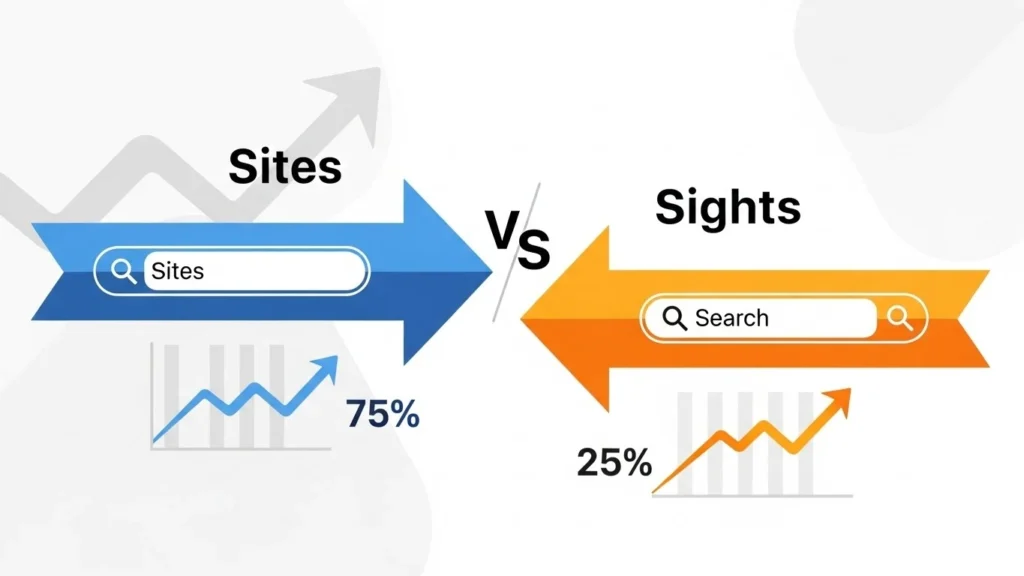
Search data shows “sites or sights” are commonly searched by students, travelers, and content writers. Searches increase during travel seasons and academic months, when people write blogs, essays, or marketing content. “Sites” appears more in tech and business searches, while “sights” appears more in travel-related searches.
Comparison Table: Sites vs Sights
| Feature | Sites | Sights |
| Meaning | Place or location | Things you see |
| Related to vision | ❌ No | ✅ Yes |
| Used for websites | ✅ Yes | ❌ No |
| Used in travel | Sometimes | Very common |
FAQs
1. Are sites and sights interchangeable?
No, they have different meanings.
2. Which is correct: tourist sites or tourist sights?
Both can be correct, but tourist sights are more common.
3. Can site mean website?
Yes, very commonly.
4. Is this a British vs American issue?
No, both use the same rules.
5. How can I remember the difference?
“Sight” relates to seeing.
6. Is “sightseeing sites” correct?
No, use “sightseeing sights” or “tourist sites.”
Conclusion
The difference between sites or sights is based on meaning, not spelling or regional English rules. Sites refers to places, locations, or online pages, while sights refers to things you see or views worth looking at. Because they sound the same, it’s easy to mix them up, but the context of your sentence always gives the answer.
If you’re talking about vision, beauty, or experiences, sights are the correct choice. If you’re referring to a physical location or a website, sites is the right word. This simple rule works in emails, academic writing, social posts, and professional content.Taking one extra second to choose the correct word can greatly improve the clarity and quality of your writing. Once you connect sight with seeing, the confusion disappears completely.

Daniel R. Foster is an experienced English language writer and editor who specializes in explaining commonly confused words and grammar nuances. With a strong passion for clarity in communication, he creates easy-to-understand comparisons that help learners, students, and professionals use English more confidently. His articles focus on accuracy, real-world examples, and practical usage.