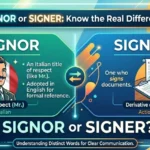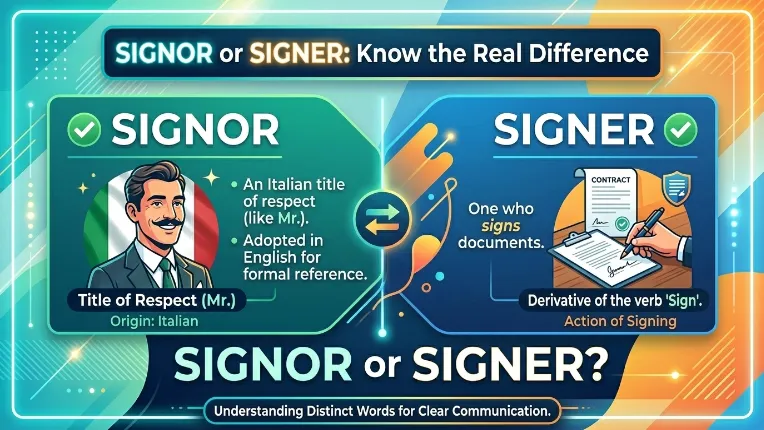
“Signor” is an Italian title for a man, while “signer” means a person who signs a document.
You’re filling out a formal letter and pause at a name: “Signor Rossi.” Then later, you write: “the signer of the agreement.” Suddenly, doubt hits. Are these two words related? Or are you mixing something up?
This is exactly why people search for “signor or signer.” The words look almost identical. They sound similar. But their meanings are completely different. One belongs to Italian language and culture. The other is a common English word used in legal and everyday writing.
In 2026, where global communication is normal, these small differences matter more than ever. Using the wrong word can confuse readers or make your writing look unprofessional.
This guide clears everything. You’ll learn the exact difference, correct usage, real-life examples, and when to use each word with confidence.
Signor or Signer – Quick Answer
These words are not interchangeable.
- ✅ Signor = Italian title meaning Mr.
- Signor Bianchi will join us today.
- ✅ Signer = a person who signs something
- The signer approved the contract.
👉 Simple rule:
Use signor for Italian names. Use signer for documents.
The Origin of Signor or Signer
The difference becomes clear when you look at their origins.
Signor
- Comes from Italian word “signore”
- Means sir or mister
- Used as a respectful title before a name
Example:
- Signor Ferrari (Mr. Ferrari)
Signer
- Comes from English verb “sign”
- Means a person who signs documents
- Common in legal, business, and formal writing
Example:
- The signer must provide ID.
👉 Even though they look alike, they come from completely different languages.
British English vs American English Spelling
There is no spelling difference between British and American English for these words.
| Feature | Signor | Signer |
| Language Origin | Italian | English |
| American English | Same | Same |
| British English | Same | Same |
| Usage Type | Title | Role/Person |
| Formal Use | Yes (names) | Yes (documents) |
👉 Both forms stay the same globally.
Which Spelling Should You Use?
Choosing between signor or signer depends on context.
Use Signor when:
- Referring to an Italian man
- Writing formal names
- Talking about Italian culture
Example:
- Signor Angelo is our guest.
Use Signer when:
- Talking about contracts or forms
- Referring to someone who signs
- Writing legal or business content
Example:
- Each signer must sign the agreement.
👉 Golden rule: Context decides the word.
Common Mistakes with Signor or Signer
Here are common errors:
❌ The signor signed the document.
✔️ The signer signed the document.
❌ Signer Rossi will attend the meeting.
✔️ Signor Rossi will attend the meeting.
❌ Mixing cultural title with action word
✔️ Keep meanings separate
👉 The mistake happens because both words look similar.
Signor or Signer in Everyday Examples
Let’s see how both words are used:
Emails
- Please contact the signer for confirmation.
- We welcome Signor Luca to the event.
News & Media
- The signer of the treaty was announced.
- Signor Verdi was honored at the ceremony.
Social Media
- Meeting Signor Giovanni today 🇮🇹
- All signers must complete the form online.
Formal Writing
- Each signer is legally responsible for the document.
- Signor Ricci delivered the keynote speech.
👉 Both words are common—but in different contexts.
Signor or Signer – Google Trends & Usage Data
Usage trends in 2026 show clear patterns:
- Signer
- Very common globally
- Used in legal and business contexts
- Signor
- Less frequent
- Mostly used in cultural or Italian references
By region:
- USA/UK: “Signer” dominates
- Italy & cultural contexts: “Signor” appears more
👉 Conclusion: Both are correct—but used in different situations.
Comparison Table: Signor vs Signer
| Aspect | Signor | Signer |
| Meaning | Mr. (Italian title) | Person who signs |
| Language | Italian | English |
| Usage | Names | Documents |
| Context | Cultural/Formal | Legal/Business |
| Confusion Level | High | High |
FAQs About Signor or Signer
1. Is signor the same as signer?
No. They have completely different meanings and uses.
2. What does signor mean?
It means Mr. in Italian and is used before a man’s name.
3. What does signer mean?
It refers to a person who signs a document.
4. Can I use signor in English writing?
Yes, when referring to an Italian person or title.
5. Is signer used in legal documents?
Yes, it is very common in contracts and agreements.
6. Which word is more common?
“Signer” is more widely used globally.
7. Are they interchangeable?
No. Using one instead of the other is incorrect.
Conclusion
The confusion between signor or signer comes from their similar spelling, but their meanings are completely different. One is rooted in Italian culture, while the other is part of everyday English vocabulary.
Signor is a respectful title, just like “Mr.,” used before Italian names. It carries cultural and formal value. On the other hand, signer is a practical word used in business, legal documents, and daily communication to describe someone who signs something.
In 2026, where communication often crosses borders, understanding such differences is essential. Using the wrong word can confuse readers or weaken your message. But once you know the distinction, it becomes easy to choose the right one.
So next time you see signor or signer, remember this simple idea:
Signor is a title. Signer is an action-based role.
Use them correctly, and your writing will always stay clear, accurate, and professional.

Michael A. Turner is a senior content writer specializing in well-researched, easy-to-understand articles. Helps readers make informed decisions through reliable content.