Many English learners and even native speakers often get confused between “occured” and “occurred”. Is the single “r” correct, or should it always have two? This common spelling dilemma appears in emails, social media posts, academic writing, and professional documents. Using the wrong form can make your writing look careless.
People search for “occured or occurred” to confirm the correct spelling, understand the rules behind it, and learn how to avoid mistakes. If you’ve ever doubted whether to write “it has occured” or “it has occurred,” this guide will clarify everything. By the end, you’ll know the history, grammar rules, and practical usage tips to write confidently and correctly.
Occured or Occurred – Quick Answer
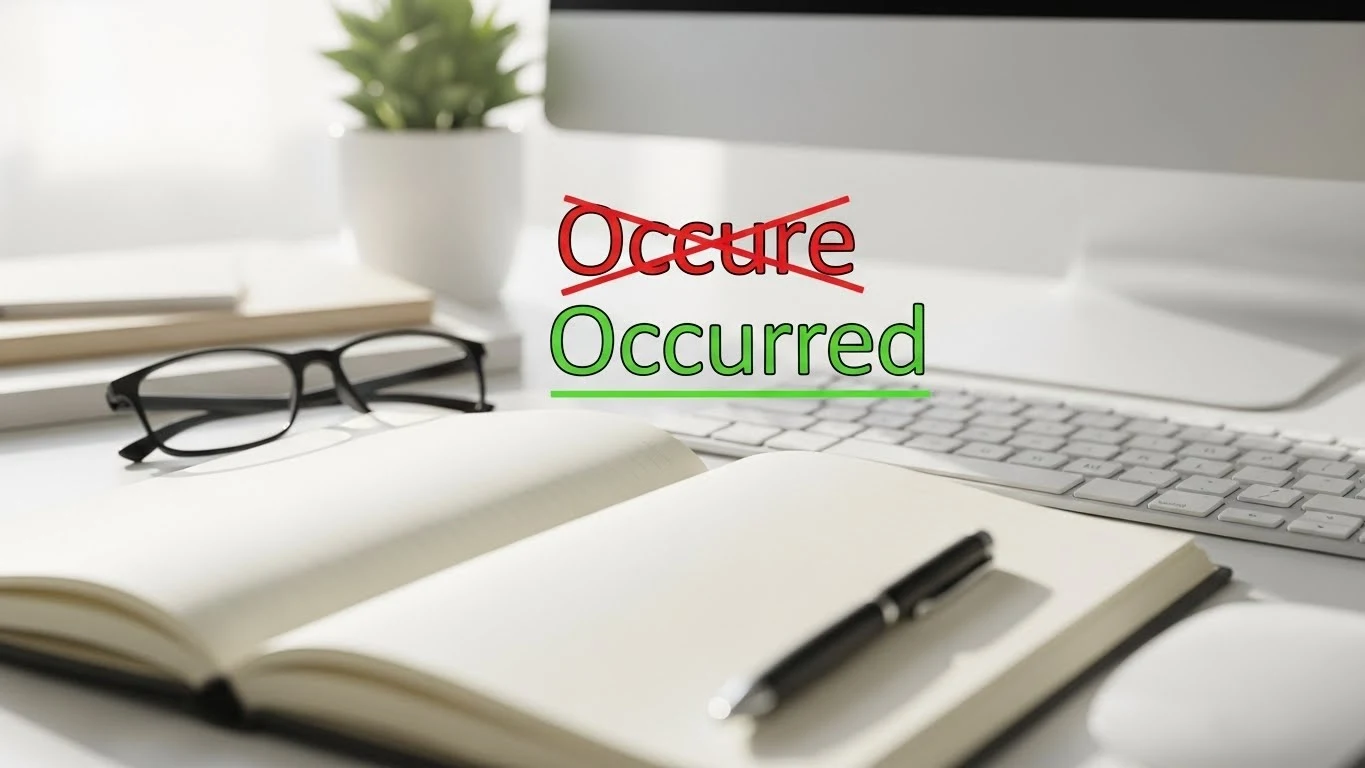
The correct spelling is: occurred ✅ (with two “r”s).
Occured ❌ (with one “r”) is incorrect.
Examples:
- Correct: The error occurred yesterday during the update.
- Incorrect: The error occured yesterday during the update.
Tip: Whenever you’re unsure, remember the verb “occur” doubles the consonant r when forming the past tense.
Excel or Excell: Which Spelling Is Correct and When to Use It?
The Origin of Occurred
The word occur comes from the Latin “occurrere”, meaning to run to or meet. In English, it has been used since the late 15th century to describe events that happen or take place.
The doubling of the r in occurred follows standard English spelling rules:
- One-syllable or stressed-syllable verbs ending in a single consonant after a single vowel often double the consonant in past tense (e.g., run → ran, refer → referred).
- Occur fits this pattern: the stress is on the second syllable, so the consonant doubles: occur → occurred.
Fun fact: Many people drop one “r” mistakenly because in casual writing, it may sound like it only has one “r.”
British English vs American English Spelling
In this case, both British and American English use “occurred”. Unlike words like travelling (UK) vs traveling (US), occurred does not have regional spelling variations.
Comparison Table:
| Variation | Correct? | Notes |
| occured | ❌ | Common mistake, missing doubled “r” |
| occurred | ✅ | Standard in both UK & US English |
| occur’d | ❌ | Not valid in modern English |
Rule Reminder: Double the consonant in the past tense if the verb has a stressed final syllable.
Which Spelling Should You Use?
Since occurred is correct in both British and American English, always use occurred in:
- US writing: business emails, reports, blogs
- UK/Commonwealth writing: academic essays, newspapers
- Global audiences: professional documents and social media
Avoid “occured”, even in informal contexts. Most spellcheckers now automatically flag it as incorrect.
Common Mistakes with Occurred
- Dropping a “r”
❌ The accident occured last night.
✅ The accident occurred last night. - Misplacing in sentences
❌ Yesterday an error has occured.
✅ Yesterday, an error occurred. - Using apostrophes incorrectly
❌ The event occur’d suddenly.
✅ The event occurred suddenly. - Confusing with similar verbs
Some confuse occurred with happened. They are synonyms, but “occurred” is slightly more formal and suitable for reports or academic writing.
Occured or Occurred in Everyday Examples
Here are examples showing proper usage in daily contexts:
Emails:
- A system error occurred during the update. Please check.
News articles:
- A major storm occurred in the northern region yesterday.
Social media posts:
- An unexpected event occurred at the concert last night!
Formal writing:
- Several incidents occurred during the experiment, affecting the results.
Occured or Occurred – Google Trends & Usage Data
A quick look at Google Trends shows:
- “Occurred” dominates searches worldwide.
- “Occured” appears occasionally, mostly in misspellings.
- The confusion is common among students, writers, and non-native speakers.
Insights: Correct usage is crucial in academic and professional settings. Incorrect spelling can reduce credibility.
Comparison Table: Keyword Variations Side by Side
| Word | Correct? | Usage Context | Notes |
| occured | ❌ | Informal / Mistake | Always avoid |
| occurred | ✅ | Universal (US, UK, global) | Standard in writing |
| occurrd | ❌ | Typo | Not recognized |
FAQs – Occured or Occurred
1. Is “occured” correct?
No, always use occurred with double “r”.
2. Why do people spell it “occured”?
Because it sounds like one “r,” and people often drop letters in casual writing.
3. Does British English use “occured”?
No, both UK and US English use occurred.
4. Can I use “occurred” in formal writing?
Yes, it’s ideal for professional, academic, and official contexts.
5. Is “occurred” a verb or noun?
It’s a verb; the noun form is occurrence.
6. How do I remember the spelling?
Think: “occur” → double the r → occurred.
7. Is “occurred” the past tense or past participle?
It is both past tense and past participle.
Example: It occurred yesterday. / It has occurred before.
Conclusion
Spelling mistakes like “occured” can make even good writing look sloppy. The correct spelling is occurred, with double “r”. It is universally accepted in both British and American English and should be used in emails, social media, reports, and formal documents.
Remember the rule: stress the syllable and double the consonant. Avoid shortcuts or casual misspellings. When in doubt, spellcheckers and grammar tools are reliable helpers, but knowing the correct spelling yourself ensures confidence and credibility.
By mastering occurred, you’ll improve your writing, avoid embarrassing mistakes, and communicate professionally and clearly across all contexts.

James L. Morrison is a content writer focused on English grammar, word meanings, and usage differences. He enjoys breaking down complex language rules into simple explanations. His work is designed to help readers quickly understand the correct word choice in everyday writing and professional communication.