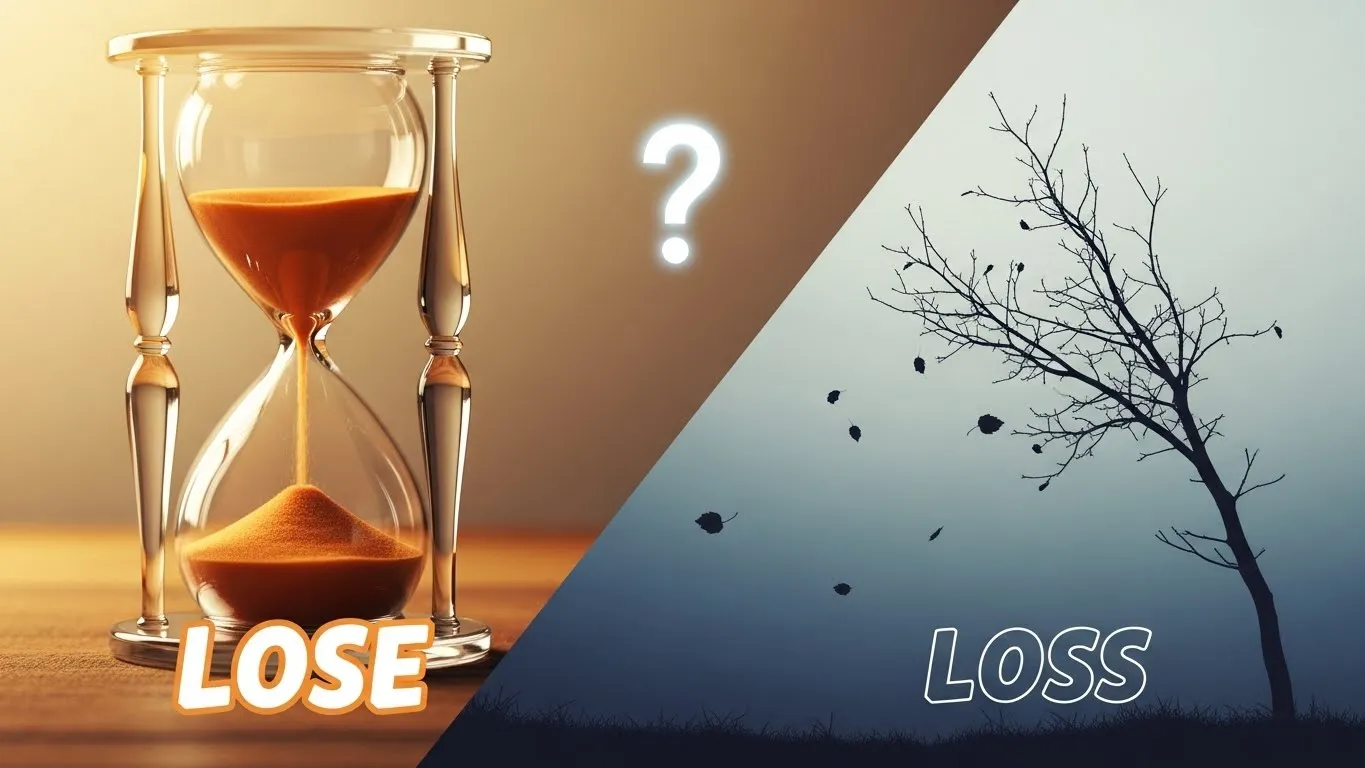
Many English speakers often confuse “lose” and “loss” because they sound similar but have different meanings and grammatical uses. This confusion can lead to mistakes in writing emails, social media posts, or formal documents. People search for “lose or loss” to quickly understand which word fits in a sentence and avoid embarrassing errors. Lose is a verb, while loss is a noun. Knowing the difference helps you write clearly, whether you’re talking about losing an object, a game, or experiencing a financial or emotional loss. This article explains the distinction, provides examples, highlights common mistakes, and offers advice on proper usage for both British and American English.
Lose or Loss – Quick Answer
- Lose → Verb; means to fail to keep something or fail to win.
- Example: I always lose my keys.
- Example: The team will lose the match if they don’t try harder.
- Loss → Noun; refers to the fact of losing something or someone, or the amount lost.
- Example: His loss of the wallet upset him.
- Example: The company reported a financial loss this quarter.
The Origin of Lose or Loss
- Lose comes from Old English losian, meaning “to perish or be destroyed.” Over time, it developed the modern sense of failing to retain or win something.
- Loss comes from Old English los, meaning “destruction, deprivation, or defeat.” It evolved into the noun form we use today to describe an instance of losing.
British English vs American English Spelling
Both lose and loss are spelled the same in British and American English, but usage rules are identical.
| Word | Part of Speech | Example (UK) | Example (US) |
| Lose | Verb | Don’t lose your umbrella. | Don’t lose your umbrella. |
| Loss | Noun | The company suffered a loss. | The company suffered a loss. |
Note: There are no regional spelling differences, but context determines which word to use.
Which Spelling Should You Use?
- Use “lose” when you need a verb (action of losing).
- Use “loss” when you need a noun (state of losing or amount lost).
For global audiences, including US, UK, and Commonwealth countries, the rules remain consistent. Focus on the grammatical role in the sentence.
👇
Cited or Sited: Which Spelling Is Correct and How to Use It?
Common Mistakes with Lose or Loss
- Writing I had a big lose yesterday ❌ → Correct: I had a big loss yesterday.
- Writing Don’t loss your chance ❌ → Correct: Don’t lose your chance.
- Using lose as a noun or loss as a verb.
Quick tip: If it’s an action, use lose; if it’s a thing, use loss.
Lose or Loss in Everyday Examples
- Emails: “Please don’t lose this important document.”
- News: “The team suffered a major loss in the finals.”
- Social Media: “I hate to lose in online games.”
- Formal Writing: “The company’s financial loss increased due to market changes.”
Lose or Loss – Google Trends & Usage Data
- Lose tends to have higher search volume related to games, personal items, and habits.
- Loss is more common in news, finance, and emotional contexts.
| Keyword | Avg Monthly Searches | Top Country |
| Lose | 60,000 | USA |
| Loss | 45,000 | UK |
Comparison Table – Lose vs Loss
| Word | Part of Speech | Meaning | Example |
| Lose | Verb | Fail to keep or win | I don’t want to lose. |
| Loss | Noun | The state or amount of losing | The loss was unexpected. |
FAQs
1. Is it “lose” or “loss” for a verb?
→ Lose is the verb.
2. Can “loss” be plural?
→ Yes, e.g., financial losses or personal losses.
3. Are there UK/US spelling differences?
→ No, both are spelled the same.
4. Which is correct: “I hate to lose” or “I hate the loss”?
→ Both are correct depending on grammar: lose (verb), loss (noun).
5. Can “loss” refer to emotional pain?
→ Yes, e.g., She mourned the loss of her friend.
6. How do I remember the difference?
→ Verb = lose. Noun = loss.
7. Can “lose” be used for competitions?
→ Yes, e.g., We might lose the game tomorrow.
Conclusion
The difference between lose and loss is simple once you understand their grammatical roles. Lose is a verb describing the action of failing to keep or win something, while loss is a noun describing the state or amount of losing. There are no spelling differences between British and American English, so context is key. Remember these distinctions in emails, formal writing, social media, and news to ensure clear communication. Avoid common mistakes, and always check if you need a verb or noun in the sentence. By mastering these simple rules, you will write accurately and confidently in any English context.

I am Oliver Kentwood, an English author fascinated by the quirks of language. I explore correct and incorrect spellings, helping readers navigate common confusions with clarity and style.