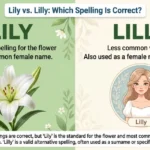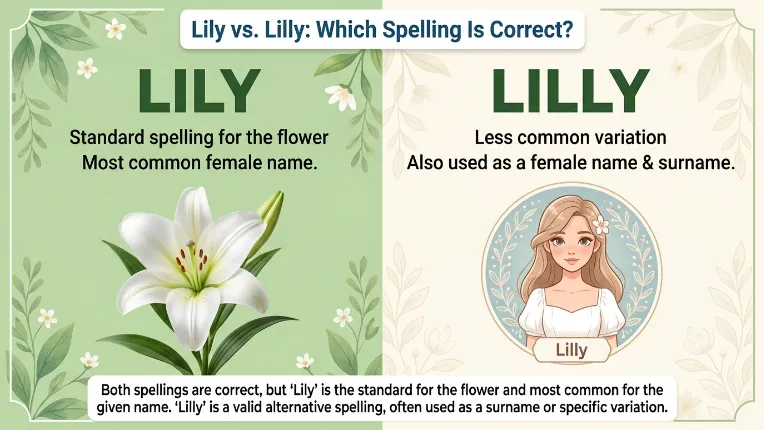
“Lily” is the correct spelling for the flower and most common usage, while “Lilly” is usually a surname or brand name.
You are typing a simple message: “I bought a beautiful lily for the garden.” Suddenly you pause. Should it be lily or lilly? That tiny extra “l” can make you second-guess your spelling. Many people face this exact confusion while writing emails, social media captions, school assignments, or even blog posts.
The problem is simple: both lily and lilly appear online, in books, and even in names of companies and people. Because of this, many writers wonder if they are both correct spellings or if one of them is a mistake.
Search engines receive thousands of queries about “lily or lilly” every month because users want a quick and reliable answer. Is one American spelling and the other British? Is it like color vs colour or center vs centre?
This article clears up the confusion. You will learn the correct spelling, why the difference exists, how each version is used, and which one you should choose in writing.
Lily or Lilly – Quick Answer
The correct spelling for the flower and the common English word is lily.
Examples:
- She planted a lily in the garden.
- The pond was full of water lilies.
- Lily is also a common first name.
The spelling “lilly” is usually not used for the flower. Instead, it appears in:
- Surnames (for example: someone named John Lilly)
- Company names
- Brand names
Quick comparison
| Word | Meaning | Correct Usage |
| Lily | Flower / female name | Correct standard spelling |
| Lilly | Mostly surname or brand | Not used for the flower |
So if you are writing about the plant or the name, “lily” is the correct spelling.
The Origin of Lily or Lilly
The word lily has a long linguistic history. It comes from the Latin word “lilium”, which described the elegant flowering plant known for its beauty and fragrance.
Over time, the word traveled through different languages:
| Language | Word |
| Latin | lilium |
| Old English | lilie |
| Middle English | lily |
| Modern English | lily |
The spelling gradually stabilized as lily in modern English.
So where did “lilly” come from?
The double-“l” spelling mostly developed as a family name. In some regions, surnames evolved from personal names or occupations, and spelling variations appeared because spelling rules were not standardized centuries ago.
As a result, Lilly became a surname and later appeared in brand names and organizations.
But the plant name remained “lily.”
British English vs American English Spelling
Many English spelling differences exist between British and American English.
Examples include:
| American English | British English |
| Color | Colour |
| Center | Centre |
| Favorite | Favourite |
Because of these differences, many people assume lily vs lilly is another regional variation.
However, that assumption is incorrect.
Both British English and American English use the same spelling: lily.
Comparison Table
| Usage | American English | British English |
| Flower name | Lily | Lily |
| Common first name | Lily | Lily |
| Alternative spelling | Lilly (rare) | Lilly (rare) |
So the spelling does not change between US and UK English.
Which Spelling Should You Use?
Choosing the correct spelling depends on context.
Use “Lily” when:
- Talking about the flower
- Writing a person’s first name
- Creating articles or blogs
- Writing formal documents
- Describing plants or gardens
Example:
- The white lily symbolizes purity.
Use “Lilly” when:
- Writing someone’s surname
- Referring to a brand or company name
- Using a specific personal spelling
Example:
- Sarah Lilly wrote the book.
Quick Guide
| Situation | Correct Spelling |
| Flower | Lily |
| Girl’s name | Lily |
| Surname | Lilly |
| Brand name | Lilly |
For most everyday writing, lily is the correct choice.
Common Mistakes with Lily or Lilly
Many writers make small spelling mistakes with this word.
Here are the most common ones.
1. Using “Lilly” for the flower
❌ The garden has a pink lilly.
✔ The garden has a pink lily.
2. Assuming it is a US vs UK difference
Some people believe lily is American and lilly is British.
This is not true. Both countries use lily.
3. Double-letter confusion
Because many English words double letters, writers sometimes add an extra l by habit.
Examples:
- Really
- Fully
- Silly
But lily does not follow this pattern.
4. Autocorrect mistakes
Sometimes typing software changes the spelling incorrectly if a contact or name uses Lilly.
Always double-check the context.
Lily or Lilly in Everyday Examples
Let’s see how the word appears in daily communication.
Emails
Correct:
Please bring white lilies for the decoration.
Incorrect:
Please bring white lillys.
Social Media
Correct:
My favorite flower is the lily.
Incorrect:
I planted a new lilly today.
News Writing
Correct:
The rare mountain lily blooms once a year.
Formal Writing
Correct:
The lily is often used as a symbol of purity in literature.
As you can see, professional writing consistently uses lily.
Lily or Lilly – Google Trends & Usage Data
Search data shows an interesting pattern.
“Lily” is far more common than “lilly.”
Search engines record millions of searches for lily, while lilly appears much less often.
Popularity by Country
| Country | Most Common Spelling |
| United States | Lily |
| United Kingdom | Lily |
| Canada | Lily |
| Australia | Lily |
| India | Lily |
The spelling lilly mostly appears in searches related to:
- People with the surname Lilly
- Companies or brands
- Typing mistakes
This data confirms that lily is the standard spelling worldwide.
Comparison Table: Lily vs Lilly
| Feature | Lily | Lilly |
| Correct for flower | Yes | No |
| Common first name | Yes | Rare |
| Surname usage | Rare | Yes |
| Used in brands | Sometimes | Often |
| Standard English spelling | Yes | No |
FAQs
1. Is it lily or lilly for the flower?
The correct spelling for the flower is lily.
2. Is Lilly ever correct?
Yes. Lilly is correct when used as a surname or brand name.
3. Why do some people spell it Lilly?
Because it is used in family names and sometimes appears due to spelling mistakes.
4. Is lily a British or American spelling?
It is the same in both British and American English.
5. Can Lily be a person’s name?
Yes. Lily is a very common female first name.
6. Why does autocorrect sometimes suggest Lilly?
Your device may recognize Lilly as a contact name or brand.
7. Is “lillies” correct plural spelling?
No. The correct plural form is lilies.
Conclusion
The confusion between lily or lilly usually happens because both spellings appear online. However, their uses are different.
The word lily is the correct and standard spelling for the beautiful flowering plant and the popular first name. It has a long history that traces back to Latin and Old English, and it is used consistently in both American and British English.
The spelling lilly, on the other hand, is mostly found in surnames and brand names. It is not the correct spelling for the flower or general writing.
Understanding this distinction helps avoid common spelling mistakes in emails, articles, academic writing, and social media posts.
If you are describing the plant, writing a story, naming the flower, or using the common first name, always choose lily.
Only use lilly when referring to a specific surname or organization that officially uses that spelling.
In short, remember this simple rule: flowers and common names use “lily,” while family names may use “lilly.” Keeping this rule in mind will ensure your writing stays clear, accurate, and professional.

Samantha Harvey is an English language writer specializing in English spelling, grammar, and usage comparisons. She creates clear, search-friendly content that helps readers understand common word confusions with practical examples. Her work focuses on UK and US English differences for learners and online publishers.