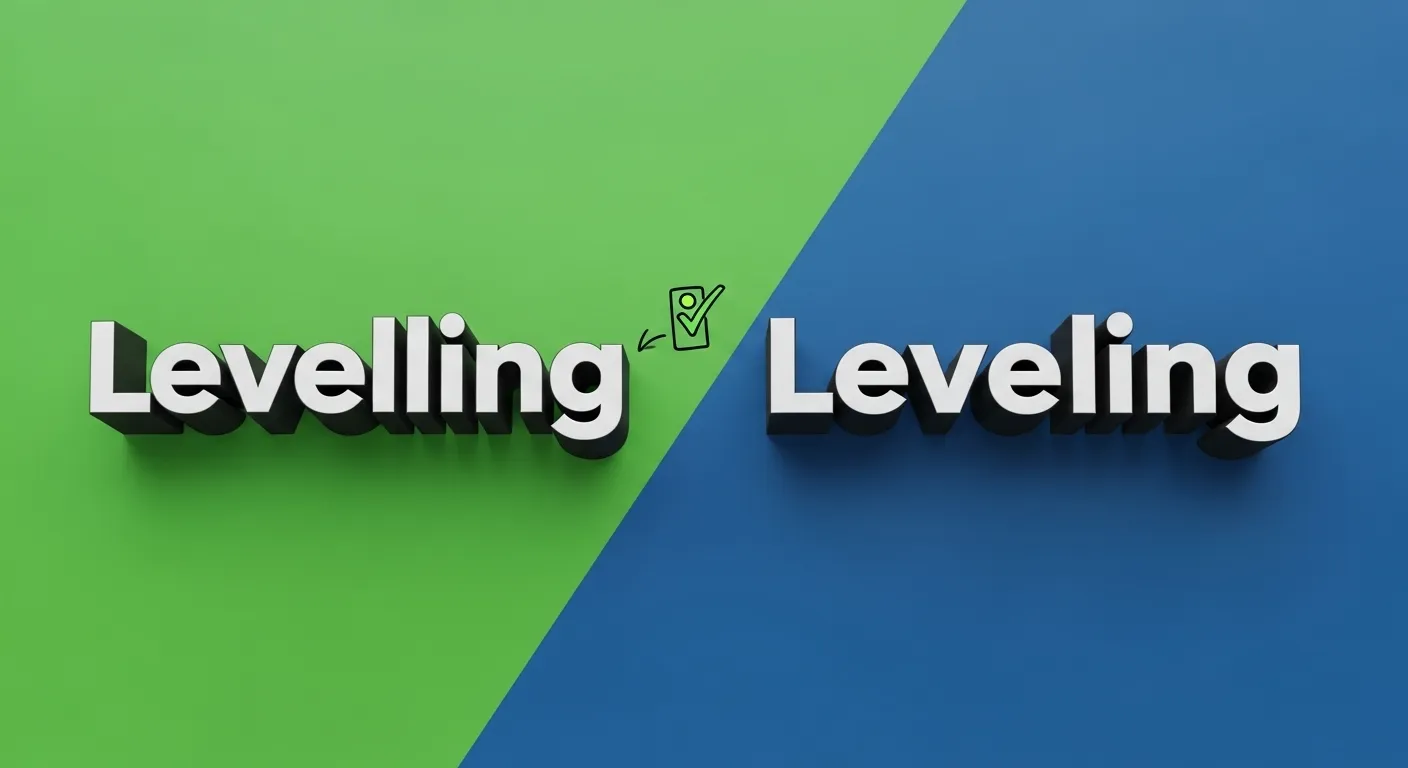
“Leveling” is American English, while “levelling” is British English. Both are correct, depending on your audience.
Many people pause when they write levelling or leveling. Both spellings look right, sound the same, and appear in trusted sources. So why do two versions exist? The confusion usually comes from British vs American English spelling rules, especially with words that end in -el.
People search for levelling or leveling when writing articles, emails, technical documents, construction guides, or academic content. A single extra L can feel like a mistake, but in this case, it often isn’t. The key is knowing which English style you are using and staying consistent.
This article explains the difference in simple words. You’ll learn meanings, origins, spelling rules, regional usage, common mistakes, examples, tables, FAQs, and clear advice on which spelling you should use with confidence.
Levelling or Leveling – Quick Answer
- Leveling → American English
- Levelling → British English
Both mean the same thing: making something flat, equal, or even.
Meaning of Leveling / Levelling
Leveling / Levelling comes from the verb level.
It means:
- Making something flat
- Making something equal
- Reducing differences
- Balancing or evening out
Examples:
- The workers are leveling the ground.
- New rules are levelling the playing field.
The meaning never changes. Only the spelling does.
Origin of Level and Its Spellings
The word level comes from:
- Old French: livelle
- Latin: libella (a small balance)
When English adopted the word, it kept the base spelling level. Later, British and American English developed different rules for adding endings.
That is why both spellings exist today.
British English vs American English Spelling Rules
This difference follows a common spelling rule.
British English Rule
British English often doubles the final L before adding:
- -ing
- -ed
Examples:
- Travel → travelling
- Cancel → cancelled
- Level → levelling
American English Rule
American English usually does not double the L.
Examples:
- Travel → traveling
- Cancel → canceled
- Level → leveling
Levelling vs Leveling: Side-by-Side Comparison
| Feature | Levelling | Leveling |
| English type | British | American |
| Correct spelling | Yes | Yes |
| Meaning | Same | Same |
| Pronunciation | Same | Same |
| Used in UK | Yes | Rare |
| Used in US | Rare | Yes |
Which Spelling Should You Use?
Ask one simple question:
Who is my audience?
- Writing for US readers → leveling
- Writing for UK readers → levelling
- Writing for a global audience → choose one and stay consistent
Consistency matters more than the spelling itself.
Common Mistakes with Levelling or Leveling
Mistake 1: Mixing spellings
❌ The ground is leveling and levelling fast
✅ The ground is leveling fast
Mistake 2: Thinking one spelling is wrong
❌ Levelling is incorrect
✅ Levelling is British English
Mistake 3: Changing spelling mid-article
❌ leveling → levelling → leveling
✅ Use one style only
Levelling / Leveling in Everyday Examples
In Construction
- The crew is leveling the floor.
- The builders are levelling the land.
In Sports
- The rule change is leveling competition.
- New teams help with levelling the league.
In Education
- Online learning is leveling access.
- Scholarships are levelling opportunities.
In Technology
- Software updates are leveling performance gaps.
- Tools help with levelling efficiency.
Leveling as a Noun
In some contexts, leveling / levelling works as a noun.
Examples:
- Floor leveling takes time.
- Land levelling improves drainage.
The noun form follows the same regional spelling rules.
Related Words with the Same Pattern
| Base Word | British English | American English |
| Travel | Travelling | Traveling |
| Cancel | Cancelled | Canceled |
| Model | Modelling | Modeling |
| Level | Levelling | Leveling |
Learning this pattern helps avoid many spelling mistakes.
Levelling or Leveling in Formal Writing
Both spellings are acceptable in:
- Academic writing
- Professional documents
- Technical manuals
What matters is consistency and audience alignment.
Many style guides recommend:
- APA style → American spelling
- UK academic style → British spelling
Levelling or Leveling in SEO Writing
Search data shows:
- Leveling is searched more globally
- Levelling is common in UK-based searches
For SEO:
- US websites → leveling
- UK websites → levelling
- Global websites → pick one version and stick with it
Search engines recognize both forms.
Pronunciation Differences
There are no pronunciation differences.
Both are pronounced:
LEV-uh-ling
Spelling does not change the sound.
Levelling the Playing Field (Phrase)
This phrase appears often in writing.
Meaning:
- Making things fair
- Reducing advantage
Examples:
- Education helps level the playing field.
- New rules are levelling the playing field.
Again, spelling depends on region.
Can Both Spellings Appear in One Text?
Only if:
- You are quoting different sources
- You clearly separate UK and US contexts
Otherwise, mixing spellings looks unprofessional.
Simple Memory Trick
- US = one L → leveling
- UK = double L → levelling
Think:
- Shorter spelling → American English
FAQs: Levelling or Leveling
1. Is levelling correct?
Yes, in British English.
2. Is leveling American English?
Yes, it is the standard American spelling.
3. Do they mean the same thing?
Yes, the meaning is identical.
4. Is one more formal than the other?
No, both are equally formal.
5. Which spelling is older?
Levelling follows older British spelling rules.
6. Can I use both spellings for SEO?
Yes, but consistency is better.
7. Does pronunciation change?
No, pronunciation stays the same.
Levelling or Leveling in Global English
Modern English accepts both spellings. International readers usually understand both. Problems only arise when spelling is inconsistent or mismatched with the audience.
Clear writing always respects the reader’s expectations.
Final Verdict
Levelling and leveling are both correct spellings of the same word. The difference is not about meaning, grammar, or pronunciation. It is purely about British vs American English.
If you write for a US audience, use leveling. If you write for a UK audience, use levelling. If your audience is global, choose one form and use it consistently. Once you understand this simple rule, this spelling choice becomes easy and stress-free.
Lilly or Lily: Meaning, Difference, and Use

James L. Morrison is a content writer focused on English grammar, word meanings, and usage differences. He enjoys breaking down complex language rules into simple explanations. His work is designed to help readers quickly understand the correct word choice in everyday writing and professional communication.