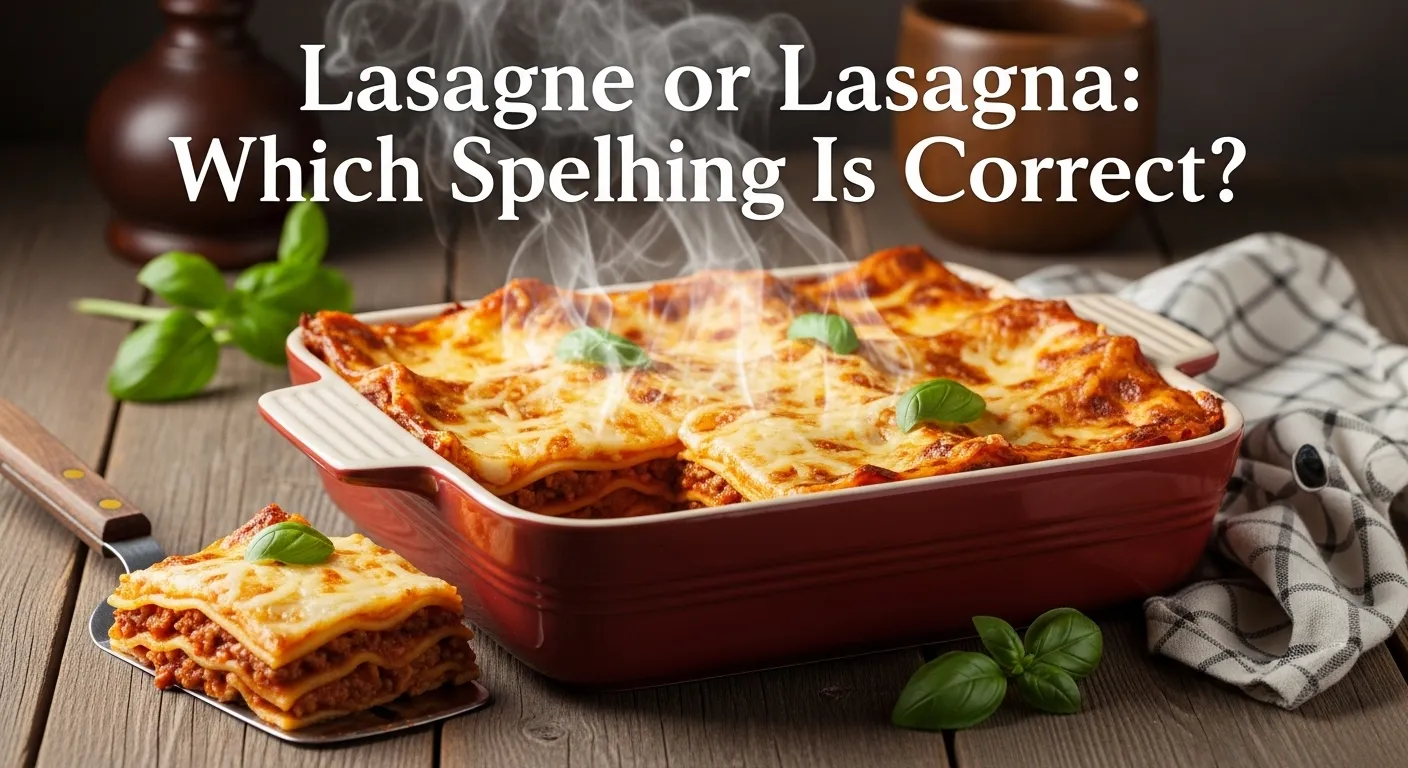
Both “lasagne” and “lasagna” are correct. “Lasagna” is American English, while “lasagne” is British English.
Many people get confused when they see lasagne spelled with an e at the end and lasagna spelled with an a. You might notice one spelling on a restaurant menu and a different one in a recipe book. This often leads to the common question: lasagne or lasagna, which one is correct?
The short truth is simple. Both spellings are correct, but they are used in different types of English. The confusion comes from regional language differences rather than grammar rules. Just like color and colour, or favorite and favourite, this spelling difference depends on where the English is being used.
In this guide, you’ll learn the real difference between lasagne and lasagna, their origins, how Italians use the word, British vs American preferences, examples, common mistakes, usage tips, FAQs, and which spelling you should choose for writing or SEO.
Lasagne or Lasagna – Quick Answer
- Lasagna → ✅ American English
- Lasagne → ✅ British English
Both words refer to the same Italian pasta dish made with layers of pasta, sauce, and cheese.
Origin of Lasagne and Lasagna
The word comes from Italian.
- In Italian:
- Lasagna = singular (one sheet of pasta)
- Lasagne = plural (multiple sheets)
Originally, Italians used lasagne because the dish contains many pasta sheets layered together. Over time, English borrowed the word but adapted it differently in different regions.
Italian Usage Explained Simply
In traditional Italian:
- Una lasagna → one pasta sheet
- Le lasagne → the dish (many sheets)
So technically, Italians say lasagne for the dish. However, English does not strictly follow Italian grammar, which is why both spellings exist today.
British English vs American English
This is the key difference most learners need to know.
| English Type | Preferred Spelling |
| American English | Lasagna |
| British English | Lasagne |
| Australian English | Lasagne |
| Canadian English | Both (lasagna more common) |
Neither spelling is wrong. It depends on audience and region.
Why Americans Use “Lasagna”
American English simplified many foreign spellings over time. When Italian immigrants brought the dish to the U.S., lasagna became the standard spelling.
Examples in American English:
- Beef lasagna
- Cheese lasagna
- Homemade lasagna recipe
In the U.S., lasagna refers to both the dish and the pasta sheets.
Why British English Uses “Lasagne”
British English stayed closer to the original Italian plural form.
Examples in British English:
- Vegetable lasagne
- Chicken lasagne
- Traditional Italian lasagne
British menus, cookbooks, and food blogs usually prefer lasagne.
Are Lasagne and Lasagna Pronounced Differently?
No.
Both are pronounced almost the same:
luh-ZAHN-yuh
The spelling difference does not affect pronunciation in everyday English.
Common Mistakes with Lasagne or Lasagna
Mistake 1: Thinking one spelling is wrong
❌ Lasagne is incorrect
✅ Both are correct
Mistake 2: Mixing spellings in the same text
❌ Lasagna recipe for classic lasagne
✅ Choose one spelling and stay consistent
Mistake 3: Assuming Italian rules apply to English
❌ Lasagna must be plural
✅ English usage is flexible
Examples in Sentences
American English
- My mom makes the best lasagna.
- This lasagna has three layers of cheese.
- I ordered chicken lasagna.
British English
- The café serves homemade lasagne.
- This lasagne tastes amazing.
- She cooked spinach lasagne for dinner.
Lasagne vs Lasagna in Writing
Formal Writing
Both are acceptable, but consistency matters.
Informal Writing
Use the spelling your audience expects.
SEO Writing
Choose based on search intent:
- US audience → lasagna
- UK audience → lasagne
Google Search Behavior
Search trends show:
- Lasagna is searched more globally
- Lasagne dominates UK-based searches
- Food blogs often include both spellings
Many websites smartly mention both to cover wider search intent.
Comparison Table: Lasagne vs Lasagna
| Feature | Lasagne | Lasagna |
| Correct spelling | Yes | Yes |
| English type | British | American |
| Origin | Italian plural | English adaptation |
| Pronunciation | Same | Same |
| Used on menus | UK, AU | US |
Lasagne Sheets vs Lasagna Sheets
In cooking:
- Lasagne sheets → British English
- Lasagna sheets → American English
Both refer to the flat pasta used to make the dish.
Lasagne or Lasagna: Which Should You Use?
Ask yourself:
- Who is my audience?
- Which English am I writing in?
- Am I being consistent?
Quick rule:
- Writing for US readers → Lasagna
- Writing for UK readers → Lasagne
Cultural Context and Food Menus
Restaurants usually match local spelling:
- US restaurants → Lasagna
- UK restaurants → Lasagne
- Italian restaurants → Often lasagne
Menus often reflect authenticity rather than grammar.
FAQs: Lasagne or Lasagna
1. Is lasagne plural?
In Italian, yes. In English, not necessarily.
2. Is lasagna American English?
Yes, it is the standard American spelling.
3. Is lasagne British English?
Yes, it is the standard British spelling.
4. Are they different dishes?
No, they are the same dish.
5. Can I use both spellings in one article?
It’s better to choose one for consistency.
6. Which spelling is older?
Lasagne comes closer to the original Italian form.
7. Which spelling is more popular?
Lasagna is more common worldwide.
Lasagne vs Lasagna vs Pasta
All refer to the same layered pasta dish. The difference is spelling and regional preference, not meaning or recipe.
Final Verdict
Lasagne and lasagna are both correct spellings for the same delicious Italian dish. The only real difference lies in regional English usage. British English prefers lasagne, while American English prefers lasagna. Neither is wrong, and neither changes the meaning.
For clear and confident writing, always match your spelling to your audience and stay consistent throughout your content. When in doubt, remember this simple rule: US equals lasagna, UK equals lasagne.
Wear or Ware: Meaning, Difference, and Usage

Michael A. Turner is a senior content writer specializing in well-researched, easy-to-understand articles. Helps readers make informed decisions through reliable content.