Introduction
Have you ever paused while writing an email, speech, or article and wondered: should it be honourable or honorable? You’re not alone. This spelling confusion is very common, especially for writers who work with international audiences or switch between British and American English. Both spellings look correct, sound the same, and appear in respected publications which makes the choice even harder.
People search for honourable or honorable because they want to avoid mistakes in formal writing. This word often appears in titles, awards, legal documents, and professional communication. Using the “wrong” spelling for your audience can make your writing seem careless, even if your message is strong.
This article solves that confusion in a simple way. You’ll get a quick answer, learn why two spellings exist, see how British and American English differ, and understand which spelling is best for your audience. By the end, you’ll know exactly when to use honourable and when honorable is the better choice without second-guessing.
More about Vasoline or Vaseline? The Correct Spelling Explained Clearly
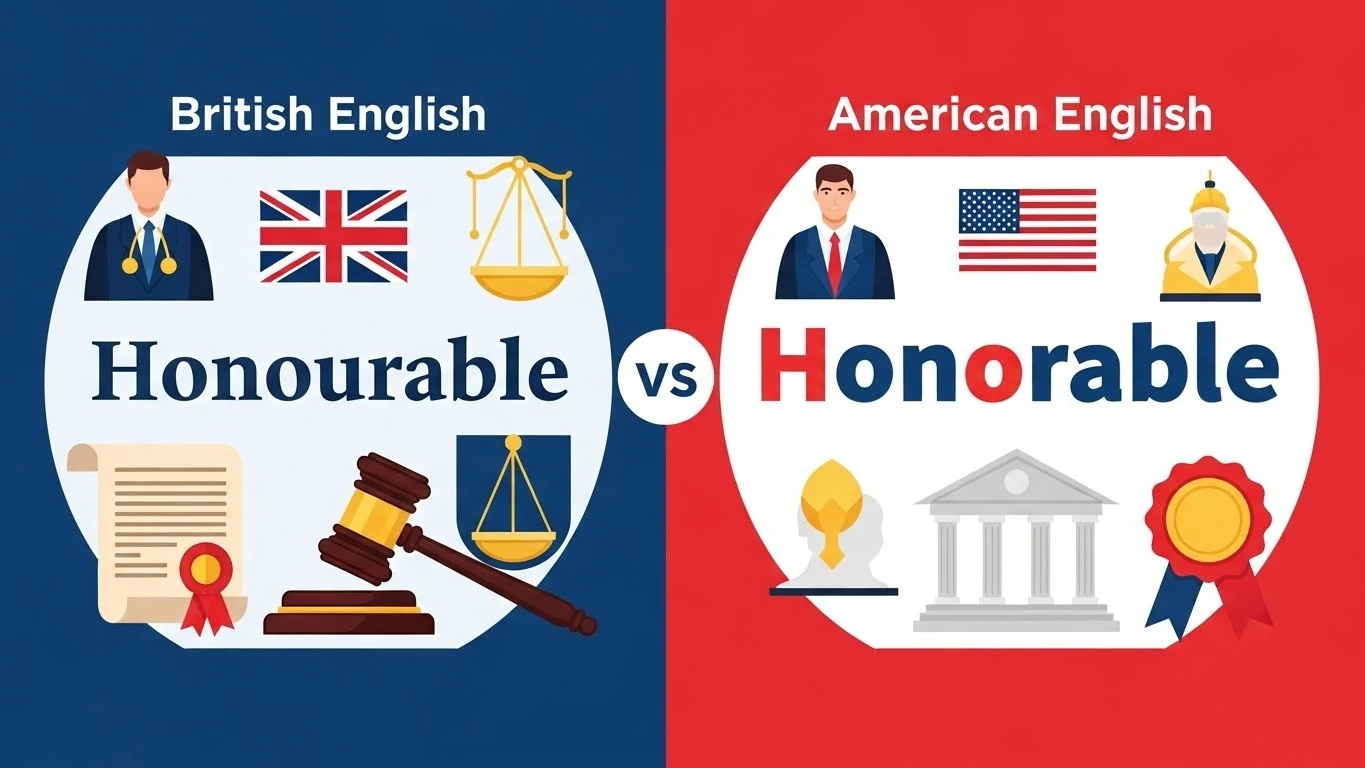
Honourable or Honorable ; Quick Answer
Both spellings are correct, but usage depends on region.
- Honourable → British English
- Honorable → American English
Examples:
- He received an honourable award. (UK)
- She is an honorable judge. (US)
The Origin of Honourable or Honorable
The word comes from the Latin honor, meaning “respect” or “esteem.” It passed into Old French as honourable, which included the -our spelling. British English kept this form.
American English later simplified many words by dropping the u. This change was popularized by Noah Webster in the 19th century to make spelling more phonetic. That’s why honorable became standard in the United States, while honourable remained correct in the UK and Commonwealth countries.
British English vs American English Spelling
| Feature | British English | American English |
| Preferred spelling | Honourable | Honorable |
| Uses “-our” | Yes | No |
| Used in official titles | Yes | Yes |
| Pronunciation | Same | Same |
Which Spelling Should You Use?
Choose based on your audience:
- US audience: Honorable
- UK & Commonwealth: Honourable
- Global or mixed audience: Pick one style and stay consistent
- Legal or official titles: Follow local spelling rules
Consistency matters more than the spelling itself.
Common Mistakes with Honourable or Honorable
- ❌ Mixing spellings in one document
✅ Use only one form consistently - ❌ Assuming one spelling is “more correct”
✅ Both are correct regionally - ❌ Using British spelling for US legal titles
✅ Match the country’s standard🔹 Honourable vs Honorable in Official Titles & Ranks
Yeh word aksar titles ke sath use hota hai, is liye spelling aur bhi important ho jati hai.
Common Official Uses:
The Honourable Justice (UK, Canada, Australia)
The Honorable Judge (United States)
Honourable Member of Parliament (UK)
Honorable Mention (US academic & awards context)
📌 Rule:
Title jis country ka ho, spelling usi country ki follow karein.
🔹 Legal, Government & Formal Writing Perspective
Legal aur government writing mein style guides strictly follow kiye jate hain:
🇬🇧 UK Courts & Parliament → Honourable
🇺🇸 US Courts & Congress → Honorable
🇨🇦 Canada (British-based system) → Honourable
🇦🇺 Australia → Honourable
❗ Galat regional spelling unprofessional aur sometimes non-compliant lagti hai.
🔹 Honourable / Honorable in Awards & Education
Yeh lafz awards mein bohot common hai:
Context
Preferred Spelling
Honorable Mention (US)
Honorable
Honourable Achievement (UK)
Honourable
Academic certificates
Regional standard
International competitions
Organizer’s style
Honourable or Honorable in Everyday Examples
- Email: “It was an honourable decision.” (UK)
- News: “The honorable senator spoke today.” (US)
- Social media: “Such an honourable act!”
- Formal writing: “He was granted an honorable mention.”
Honourable or Honorable ; Google Trends & Usage Data
Search trends show honorable dominance in the United States, while honourable leads in the UK, Canada, Australia, and New Zealand. Globally, usage depends on regional English standards rather than popularity or correctness.
Comparison Table: Honourable vs Honorable
| Feature | Honourable | Honorable |
| Correct spelling | ✅ Yes | ✅ Yes |
| British English | Preferred | Accepted |
| American English | Rare | Preferred |
| Meaning | Same | Same |
FAQs
1. Is honourable wrong in American English?
It’s not wrong, but it’s uncommon.
2. Is honorable accepted in British English?
It’s understood, but not preferred.
3. Do both spellings mean the same thing?
Yes, the meaning is identical.
4. Which spelling should I use in exams?
Follow your country’s English standard.
5. What about “honour” vs “honor”?
The same UK vs US rule applies.
6. Is one spelling more formal?
No, both are equally formal.
Conclusion
The difference between honourable or honorable is not about right or wrong it’s about regional usage. British English keeps the traditional -our spelling, while American English uses the simplified -or form. Both spellings are correct, respected, and widely used in formal writing.
The key is knowing your audience. If you’re writing for the UK or Commonwealth countries, honourable is the natural choice. For American readers, honorable will feel more familiar and professional. In global content, consistency matters more than the spelling you choose.
By understanding this simple difference, you can write with confidence and avoid unnecessary edits or confusion. Once you match the spelling to the audience, your writing looks polished, accurate, and professional.