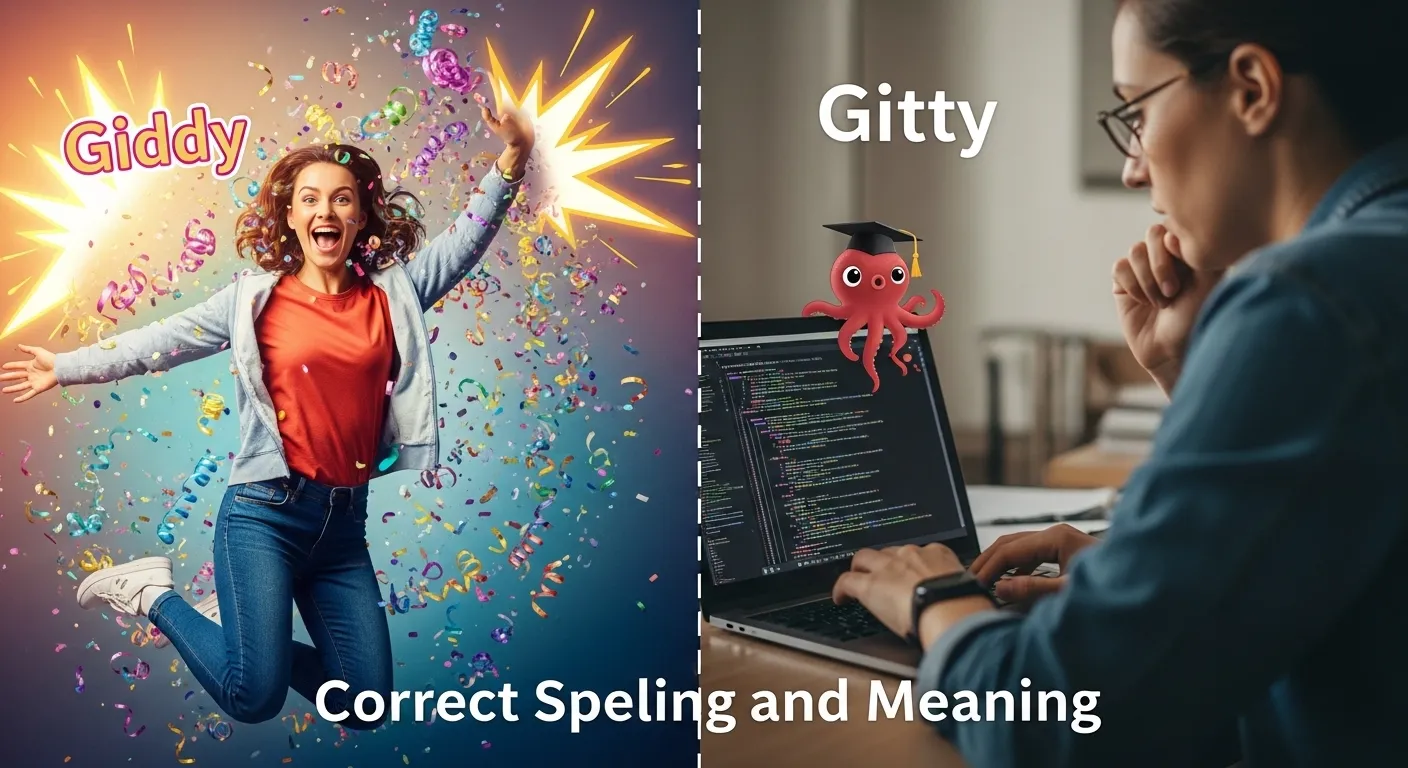
Giddy is a correct English word meaning excited or dizzy, while gitty is usually a spelling mistake and not standard English.
The confusion between gitty or giddy is common, especially among English learners and casual writers. Both words look similar, sound close when spoken quickly, and often appear in informal writing. This makes people pause and wonder: Is “gitty” a real word, or should I use “giddy”?
Most people search for “gitty or giddy” when writing messages, captions, school assignments, or descriptive content. They want to express excitement, happiness, nervous energy, or dizziness but they’re unsure which spelling is correct. Spellcheckers usually flag gitty, which adds more confusion instead of clarity.
This article clears everything up in a simple, structured way. You’ll learn the correct spelling, word origins, regional usage, common mistakes, real life examples, and practical advice on choosing the right word every time. Tables, FAQs, and usage insights are included to make learning fast and memorable.
By the end, you’ll confidently know when to use giddy and why gitty should almost always be avoided.
Gitty or Giddy – Quick Answer
✅ Giddy = correct English word
❌ Gitty = incorrect spelling in standard English
Examples:
- She felt giddy with excitement.
- He was giddy after spinning around.
If you want to describe excitement, happiness, or dizziness, the correct word is giddy.
The Origin of Gitty or Giddy
Origin of Giddy
The word giddy comes from Old English gidig, meaning insane, possessed, or foolish. Over centuries, the meaning softened and became more positive. Today, giddy commonly means:
- Feeling very happy or excited
- Feeling dizzy or lightheaded
- Acting silly due to strong emotion
This long history confirms that giddy is an established, correct English word.
What About Gitty?
Gitty does not have a recognized origin in standard English dictionaries. It is usually:
- A phonetic spelling error
- A typo for giddy
- Occasionally used as slang or a name, but not as a standard adjective
That’s why gitty is flagged as incorrect in formal writing.
British English vs American English Spelling
There is no difference between British and American English for this word.
| Word | British English | American English |
| giddy | ✅ Correct | ✅ Correct |
| gitty | ❌ Incorrect | ❌ Incorrect |
Both regions recognize giddy and reject gitty in standard usage.
Which Spelling Should You Use?
The choice is straightforward.
Always use giddy when:
- Describing excitement or joy
- Talking about dizziness
- Expressing nervous energy
- Writing formally or informally
Avoid gitty unless:
- You are quoting slang
- It’s a character name or brand name
- It appears in creative or fictional writing with intention
Audience-based advice:
- US audience: Use giddy
- UK/Commonwealth: Use giddy
- Global/ESL writing: Never use gitty
Common Mistakes with Gitty or Giddy
Here are frequent errors and how to fix them:
- ❌ I feel gitty about the results
✅ I feel giddy about the results - ❌ She was gitty with joy
✅ She was giddy with joy - ❌ The child became gitty after spinning
✅ The child became giddy after spinning
Why this happens:
People spell the word the way it sounds instead of how it’s written.
Gitty or Giddy in Everyday Examples
Emails
- I’m giddy with excitement about the project.
News
- Fans were giddy after the final victory.
Social Media
- Feeling giddy today 😄
- This news makes me giddy!
Formal Writing
- Excessive movement may cause giddy sensations.
- Children often become giddy during celebrations.
Gitty or Giddy – Google Trends & Usage Data
Search trends show “gitty or giddy” spikes during:
- ESL learning periods
- Grammar and spelling checks
- Informal writing and texting contexts
Countries with notable search interest:
- India
- Pakistan
- United States
- United Kingdom
- Philippines
User intent behind searches:
- Confirm correct spelling
- Avoid embarrassing writing mistakes
- Improve everyday English accuracy
Data clearly shows that people search this keyword to verify correctness, not meaning.
Comparison Table: Gitty vs Giddy
| Feature | Giddy | Gitty |
| Correct spelling | ✅ Yes | ❌ No |
| Dictionary entry | ✅ Yes | ❌ No |
| Meaning | Excited or dizzy | None (standard English) |
| Used in US English | ✅ Yes | ❌ No |
| Used in UK English | ✅ Yes | ❌ No |
Extended Comparison: Usage and Context
| Context | Correct Choice |
| Emotional excitement | giddy |
| Physical dizziness | giddy |
| Formal writing | giddy |
| Informal writing | giddy |
| Slang or typo | gitty (avoid) |
FAQs: Gitty or Giddy
1. Is “gitty” ever correct?
No, not in standard English.
2. Why do people write gitty instead of giddy?
Because of pronunciation confusion and fast typing.
3. Is giddy a positive word?
Usually yes, but it can also describe dizziness.
4. Can giddy describe children?
Yes. It’s commonly used for playful excitement.
5. Is giddy formal or informal?
It works in both contexts.
6. Does giddy have a medical meaning?
Yes. It can describe lightheadedness.
7. Will spellcheck accept gitty?
No. Most tools flag it as an error.
Conclusion
The confusion between gitty or giddy is easy to understand, but the rule is simple. Giddy is the correct and accepted English word used to describe excitement, joy, nervous energy, or dizziness. Gitty, on the other hand, is not a standard English word and should be avoided in professional, academic, and everyday writing.
Understanding this distinction helps you write more clearly and confidently. Even small spelling errors can distract readers or reduce credibility, especially in emails, exams, or published content. Choosing the correct word shows attention to detail and strong language skills.
Whenever you feel unsure, remember this rule:
👉 If you mean excited or dizzy, the word is always GIDDY.
With that clarity, you can avoid mistakes and express yourself accurately every time.
Aisles or Isles: What’s the Difference and Which One Is Correct?✅

Miles Thornton is a seasoned author and content specialist with a knack for simplifying complex topics. Passionate about clear, engaging writing, creates articles that inform and inspire readers. With years of experience in digital publishing, Miles combines professionalism with creativity, delivering insightful content for diverse audiences