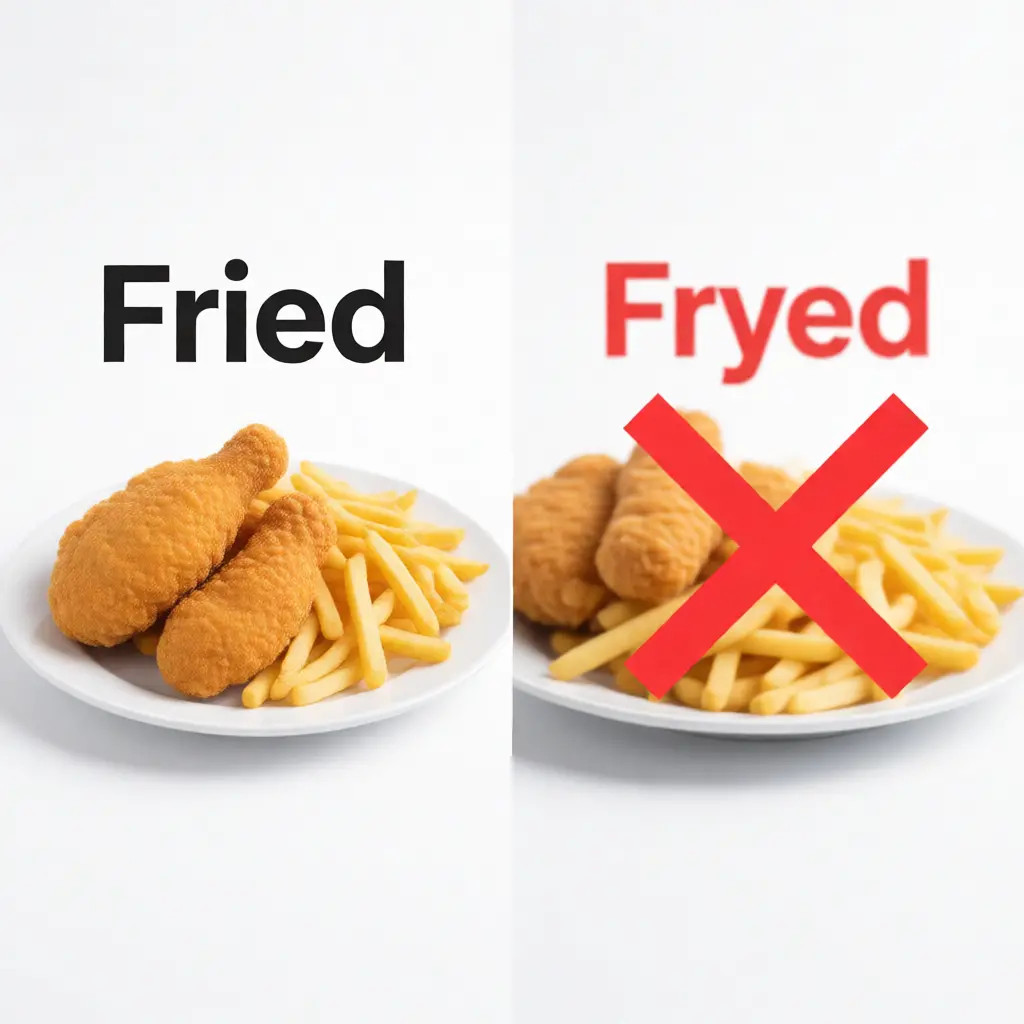
Have you ever typed “fryed or fried” into Google and paused, unsure which spelling is actually correct? You’re not alone. This is a very common spelling confusion, especially for people who write in English as a second language or those who rely on pronunciation when spelling words. Since both forms look possible, many users assume they are interchangeable.
The confusion usually comes from how English handles past tense verbs. We add -ed to many verbs, but spelling rules can change depending on the word’s structure. When people see the verb fry, they naturally think fryed should be correct. However, English spelling doesn’t always follow intuition.
This article solves that confusion clearly and quickly. You’ll learn which spelling is correct, why the other one is wrong, and how English spelling rules apply here. We’ll also cover usage examples, common mistakes, regional differences, and real-world writing contexts like emails and social media. By the end, you’ll never second-guess fryed or fried again.
Fryed or Fried – Quick Answer
✅ “Fried” is the correct spelling.
❌ “Fryed” is incorrect and not a real English word.
Examples:
- She fried the eggs for breakfast.
- The restaurant serves fried chicken.
“Fryed” does not appear in dictionaries and should never be used in formal or informal writing.
The Origin of Fryed or Fried
The verb fry comes from the Old French word frire, meaning to cook in oil. It entered English in the Middle Ages and has followed standard verb rules ever since.
When forming the past tense of verbs ending in -y, English has a clear rule:
- If a verb ends in consonant + y, change y to i and add -ed.
So:
- fry → fried
- try → tried
- cry → cried
This rule explains why “fryed” never existed. English spelling evolved to maintain pronunciation clarity, not visual symmetry.
British English vs American English Spelling
There is no difference between British and American English for this word.
| Variant | British English | American English |
| fry (present) | fry | fry |
| fried (past) | fried | fried |
| fryed | ❌ Incorrect | ❌ Incorrect |
Unlike words such as colour/color, this spelling is identical worldwide.
Which Spelling Should You Use?
Your choice is simple:
- US audience: Use fried
- UK audience: Use fried
- Australia, Canada, Pakistan, global English: Use fried
There is no situation where fryed is acceptable. If you want professional, correct English, always use fried.
Which Spelling Should You Use?
Helpped or Helped: Correct Spelling Explained Clearly
Common Mistakes with Fryed or Fried
Here are frequent errors people make:
❌ I fryed the fish yesterday.
✅ I fried the fish yesterday.
❌ She likes fryed snacks.
✅ She likes fried snacks.
❌ The potatoes were fryed in oil.
✅ The potatoes were fried in oil.
Tip: If the base word ends in -y, always check if the y → i rule applies.
Fryed or Fried in Everyday Examples
Emails
- I fried the food before the guests arrived.
News
- Health experts warn against excessive fried foods.
Social Media
- Just had the best fried chicken ever!
Formal Writing
- The sample was fried under controlled conditions.
In every context, fried remains the correct and professional choice.
Fryed or Fried – Google Trends & Usage Data
Search data shows that “fryed” is searched mostly due to confusion, not correctness.
- “Fried” dominates usage in recipes, restaurants, academic texts, and news.
- “Fryed” appears mainly in spelling-related searches and autocorrect mistakes.
Countries with high ESL populations often search fryed or fried, indicating learning intent rather than usage preference.
Comparison Table: Fryed vs Fried
| Feature | Fryed | Fried |
| Correct spelling | ❌ No | ✅ Yes |
| Dictionary listed | ❌ No | ✅ Yes |
| Past tense of fry | ❌ No | ✅ Yes |
| Used in US English | ❌ No | ✅ Yes |
| Used in UK English | ❌ No | ✅ Yes |
| Professional writing | ❌ No | ✅ Yes |
FAQs About Fryed or Fried
1. Is “fryed” ever correct?
No. It is always incorrect.
2. Why do people write “fryed”?
Because they add -ed without applying the y → i rule.
3. Is fried an adjective or verb?
Both. Fried chicken (adjective), She fried eggs (verb).
4. Does pronunciation affect spelling here?
No. Spelling follows grammar rules, not sound.
5. Are there any exceptions to this rule?
No exceptions for fry.
6. Is fried informal English?
No. It is standard and formal.
7. Does autocorrect accept fryed?
Most tools flag it as an error.
Conclusion
The confusion between fryed or fried is common, but the rule is simple once you understand it. “Fried” is the only correct spelling, and it applies universally across British, American, and global English. The incorrect form fryed comes from misunderstanding how verbs ending in -y form their past tense.
If the word ends in a consonant followed by y, English changes the y to i before adding -ed. This same rule applies to tried, cried, and dried. Knowing this rule not only fixes this one mistake but also helps you avoid many similar spelling errors.
Whether you’re writing recipes, emails, social media posts, or professional documents, using fried ensures clarity and credibility. Bookmark this rule, apply it consistently, and you’ll write with more confidence and accuracy.

Miles Thornton is a seasoned author and content specialist with a knack for simplifying complex topics. Passionate about clear, engaging writing, creates articles that inform and inspire readers. With years of experience in digital publishing, Miles combines professionalism with creativity, delivering insightful content for diverse audiences