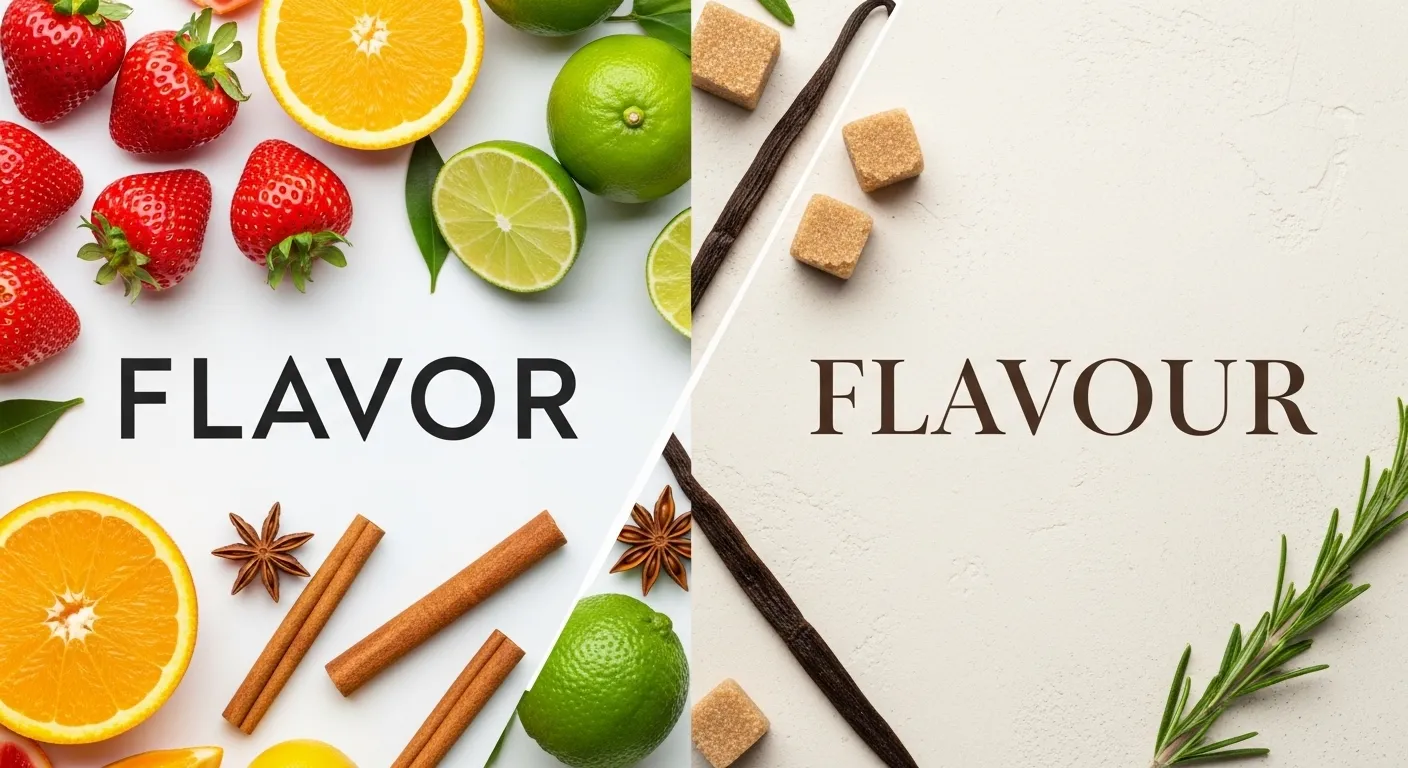
“Flavor” is American English, while “flavour” is British English. Both spellings are correct.
Have you ever stopped while writing a recipe, food review, or product description and wondered whether to write flavor or flavour? You are not alone. This is one of the most searched spelling confusions in English, especially among writers, students, bloggers, and SEO professionals.
The confusion exists because both spellings look right and mean the same thing. Spellcheck tools may flag one as incorrect depending on your language settings, which makes things even more confusing. If you write for an international audience, choosing the wrong spelling can make your content feel inconsistent or less professional.
This article explains the difference between flavor and flavour in a clear and simple way. You’ll learn their origins, regional spelling rules, correct usage, common mistakes, examples from everyday writing, and which spelling you should use based on your audience.
Flavor or Flavour – Quick Answer
- Flavor → American English spelling
- Flavour → British English spelling
Simple Examples
- This soup has a rich flavor. (US)
- This soup has a rich flavour. (UK)
The meaning is exactly the same in both cases.
The Origin of Flavor and Flavour
Both words come from the Old French word flaveur, which meant “taste” or “smell.” This word entered English centuries ago and slowly changed based on regional spelling preferences.
Why the Spellings Split
- British English kept the -our ending from French
- American English simplified many spellings by removing the u
This pattern appears in many English words, not just flavor.
British English vs American English Spelling
This difference follows a well-known spelling rule.
Key Rule
- British English: prefers -our
- American English: prefers -or
Examples
| British English | American English |
| flavour | flavor |
| colour | color |
| honour | honor |
| favourite | favorite |
Comparison Table
| Feature | Flavor | Flavour |
| Meaning | Taste or character | Taste or character |
| Region | United States | UK, Australia, India |
| Dictionary accepted | Yes | Yes |
| Formal writing | Yes | Yes |
Which Spelling Should You Use?
Your choice should depend on your audience.
Use Flavor if:
- You write for a US audience
- Your website targets American readers
- You follow American English style guides
Use Flavour if:
- You write for the UK or Commonwealth
- Your audience is in Britain, Australia, or New Zealand
- You follow British English rules
For Global or SEO Content
Most global websites prefer American English, so flavor is often the safer choice. The key is consistency.
Common Mistakes with Flavor or Flavour
Mistake 1: Mixing spellings
❌ The ice cream has great flavour and strong flavor.
✅ The ice cream has great flavor. (US)
Mistake 2: Thinking one spelling is wrong
❌ “Flavour” is incorrect.
✅ Both spellings are correct.
Mistake 3: Ignoring audience
Using British spelling on a US food blog can confuse readers.
Flavor or Flavour in Everyday Examples
Emails
- This product has a unique flavor.
- The sauce adds rich flavour to the dish.
News
- The brand introduced a new chocolate flavor.
- The recipe brings traditional flavour back.
Social Media
- Loving this new coffee flavor!
- Full of summer flavour.
Formal Writing
- Artificial flavor was removed from the product.
- Natural flavour enhances quality.
Flavor or Flavour – Google Trends & Usage Data
Search trends show:
- “Flavor” dominates searches in the United States
- “Flavour” is more common in the UK and Australia
- Globally, “flavor” appears more often due to US-based content
For SEO purposes, flavor usually has higher global search volume, but regional sites should always use local spelling.
Comparison Table: Flavor vs Flavour
| Aspect | Flavor | Flavour |
| Meaning | Same | Same |
| English Type | American | British |
| SEO Reach | Global | Regional |
| Pronunciation | Same | Same |
| Grammar | Correct | Correct |
FAQs: Flavor or Flavour
1. Is “flavour” correct English?
Yes. It is correct in British English.
2. Is “flavor” American English?
Yes. It is the standard US spelling.
3. Do they mean different things?
No. The meaning is exactly the same.
4. Can I use both in one article?
No. Always stay consistent.
5. Which spelling is better for SEO?
“Flavor” usually performs better globally.
6. Is “flavour” outdated?
No. It is still widely used in British English.
7. Which spelling should students use?
Follow the spelling rules taught in your region.
Conclusion
The difference between flavor and flavour is purely regional. Both spellings are correct, accepted, and widely used. The only thing that changes is where you use them. Flavor is preferred in American English, while flavour is standard in British English.
To write clearly and professionally, always match your spelling to your audience. If your readers are global or US-based, flavor is usually the best option. If your content targets the UK or Commonwealth countries, flavour is the right choice.
Once you understand this simple rule, you can write with confidence and avoid unnecessary spelling doubts.
Witch or Which: Meaning, Difference, and Usage

Michael A. Turner is a senior content writer specializing in well-researched, easy-to-understand articles. Helps readers make informed decisions through reliable content.