Many people often get confused between “excel” and “excell.” Is it just a spelling mistake, or is there a context where both are correct? This confusion arises because English has many tricky words, and minor changes can affect meaning or correctness. Whether you’re writing emails, social media posts, academic papers, or using software names like Microsoft Excel, choosing the right spelling is important.
People search for “excel or excell” because they want to avoid embarrassing typos and ensure professional writing. Understanding which spelling is correct not only improves clarity but also boosts confidence in communication. In this guide, we’ll break down the differences, explain common mistakes, and provide practical advice for both British and American English users.
Excell or Excel – Quick Answer
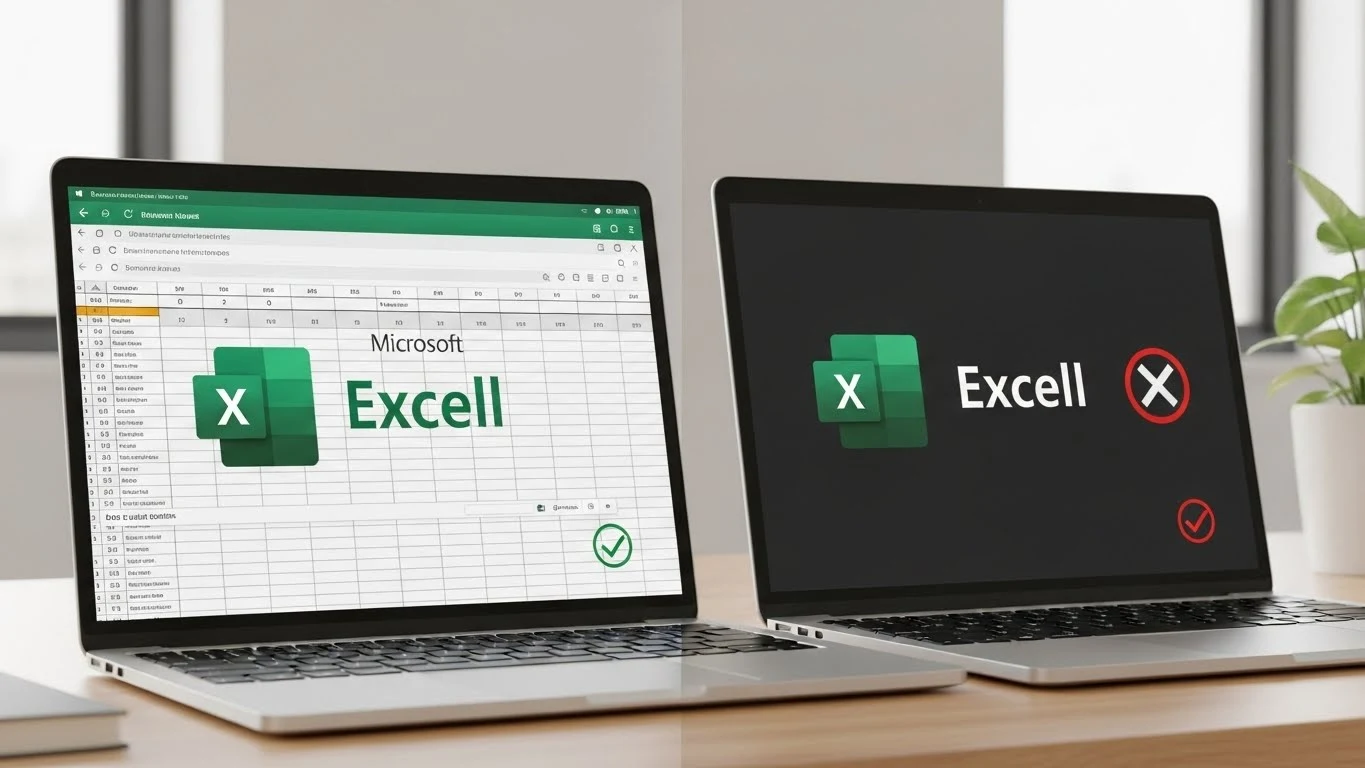
Quick Answer: ✅ The correct spelling is “excel.”
- Excel (verb): To do something extremely well.
- Example: “She continues to excel in mathematics.”
- Excel (noun/brand): Microsoft’s spreadsheet program.
- Example: “I created the report in Excel.”
Excell is not a standard word in English. It is a common misspelling that occurs because of the double “l” pattern seen in words like “travelled” or “cancelled” in British English.
| Word | Correct Usage | Example |
| Excel | Correct (verb & brand) | “He excels at programming.” / “Open Excel.” |
| Excell | Incorrect | “She will excell in her studies.” ❌ |
The Origin of Excel
The word “excel” comes from Latin “excellere,” which means “to rise, surpass, or be eminent.” The verb has been in English since the late 15th century. Over time, it has maintained its original meaning of “being superior” or “performing extremely well.”
Excell never existed as a valid word in English. Its use likely originated from analogy with British spelling patterns, where verbs ending in a consonant sometimes double the final letter when conjugated: e.g., “travel → travelled.”
British English vs American English Spelling
Spelling differences between British and American English can sometimes create confusion, but “excel” is consistent across both varieties. There is no variant “excell” in either form of English.
| Feature | British English | American English |
| Correct spelling | Excel | Excel |
| Common misspelling | Excell | Excell |
| Verb conjugation | Excels / Excelling | Excels / Excelling |
| Examples | “She excels in science.” | “He continues to excel at work.” |
Notice: Even in British English, “excell” is incorrect. Unlike words such as “travelling” or “cancelled,” the final consonant in excel is not doubled.
Which Spelling Should You Use? excell vs excel
1. United States: Always use Excel. Avoid excell, even in informal writing.
2. United Kingdom/Commonwealth: Use Excel. No double “l.”
3. Global audience: Excel is universally accepted in professional and educational contexts.
✅ Rule of thumb: If it sounds like “excel,” spell it with one ‘l’
EI or IE: Which One Is Correct?(2026)
Common Mistakes with excel vs excell
Many errors happen because people apply British doubling rules incorrectly. Here are frequent mistakes:
| Mistake | Correction | Note |
| Excell | Excel | Double “l” is unnecessary. |
| Excellingg | Excelling | Only one “g” needed. |
| Excelledl | Excelled | Extra “l” is wrong. |
| Excelsiorly | Excels | Confusing with unrelated word “excelsior.” |
Tip: Check spelling with a dictionary or spell-checker when in doubt.
Excel in Everyday Examples
Emails:
- ✅ “I hope you excel in your new role.”
- ❌ “I hope you excell in your new role.”
News:
- ✅ “The athlete continues to excel on the international stage.”
Social Media:
- ✅ “She really excels at painting!”
Formal Writing:
- ✅ “Students must excel academically and socially to succeed.”
Software:
- ✅ “Please send me the data in Excel format.”
Complimented or Complemented: Explained with Examples?
Excel – Google Trends & Usage Data
Google Trends shows that “excel” is searched globally for both its verb meaning and the Microsoft software.
- Top countries: USA, UK, India, Canada, Australia.
- Common contexts:
- Learning Microsoft Excel
- Improving academic or professional performance
- Searching for tips and tutorials
Excell receives very few searches and is mostly flagged as a misspelling by search engines. Using Excel ensures better SEO and visibility.
Comparison Table – Keyword Variations Side by Side
| Variation | Correctness | Use Case |
| Excel | ✅ Correct | Verb & Microsoft software |
| Excell | ❌ Incorrect | Common misspelling |
| Excelling | ✅ Correct | Present participle of excel |
| Excelled | ✅ Correct | Past tense of excel |
| Excellently | ✅ Correct | Adverb form |
FAQs
1. Is “excell” ever correct?
No, it is always a misspelling. Use excel in all contexts.
2. How do I remember the correct spelling?
Think of Microsoft Excel: one “l” is always correct.
3. Does “excel” have a plural form?
No. As a verb or brand, it does not take a plural.
4. Can “excel” be used as an adjective?
Not directly. Use “excellent” instead.
- ✅ “She is an excellent student.”
- ❌ “She is an excel student.”
5. Is “excel” the same in UK and US English?
Yes, the spelling is identical.
6. What is the difference between “excel” and “excellent”?
- Excel = action, to perform well
- Excellent = quality, describes something as superior
7. How common is the misspelling “excell”?
It’s frequent in casual writing, social media, and non-native English contexts. Avoid it for professional use.
Conclusion
Choosing between excel and excell is simple once you know the rules. Excel is the only correct spelling for both the verb meaning “to perform exceptionally” and the Microsoft software brand. There is no valid variant with a double “l.” Avoid excell in emails, reports, social media, and formal writing.
Consistency matters. Using the correct spelling improves professionalism, ensures clear communication, and enhances credibility. Whether writing for a UK, US, or global audience, Excel is universally understood and accepted. Next time you type, remember the single “l” rule—your writing will immediately look polished and accurate.
By understanding origins, common mistakes, and usage patterns, you can confidently use Excel in all contexts.

Daniel R. Foster is an experienced English language writer and editor who specializes in explaining commonly confused words and grammar nuances. With a strong passion for clarity in communication, he creates easy-to-understand comparisons that help learners, students, and professionals use English more confidently. His articles focus on accuracy, real-world examples, and practical usage.