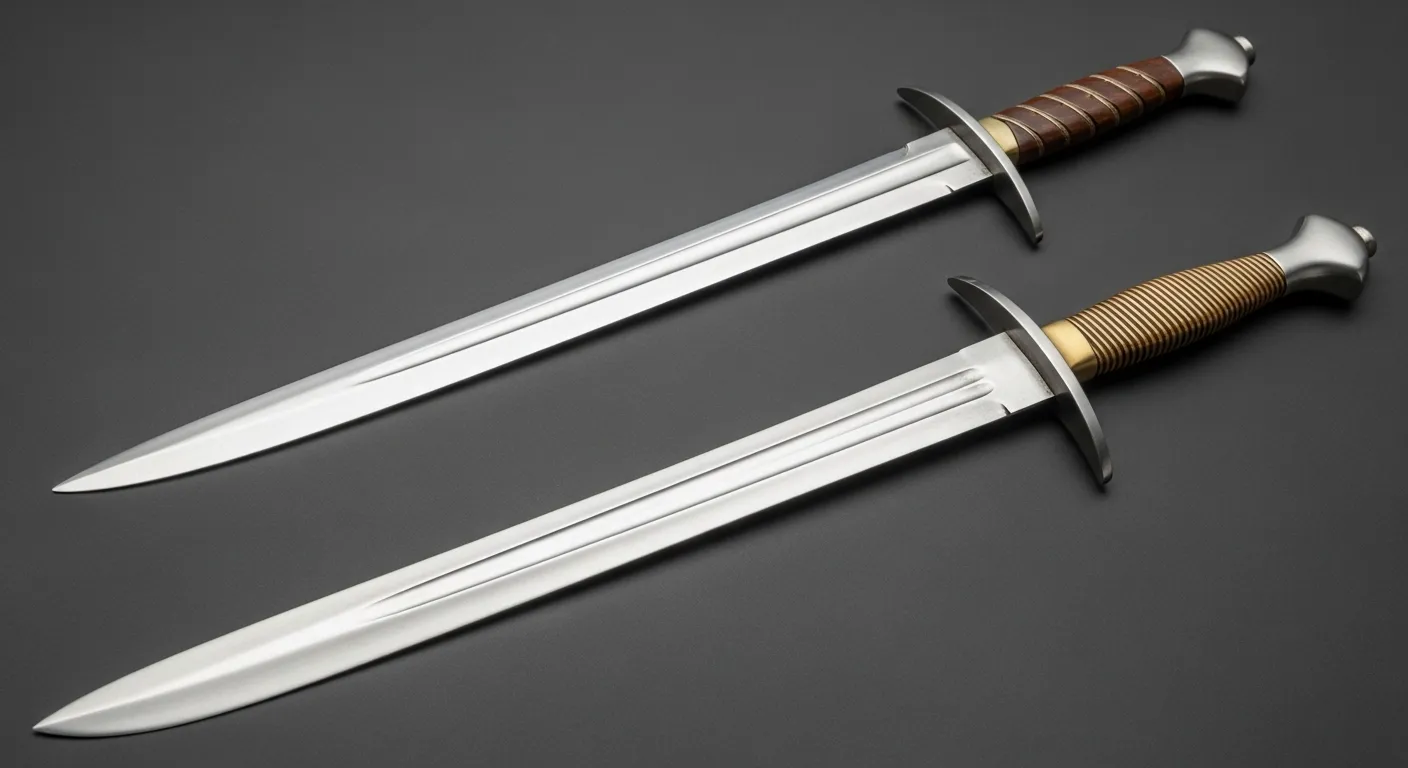
Both are correct, but a dirk is a type of dagger, while dagger is the general term for a short stabbing knife.
Have you ever seen the words dirk and dagger and wondered if they mean the same thing? Many people confuse these terms because both describe short, sharp knives used for stabbing. The confusion often comes from historical texts, movies, games, and weapon descriptions where the words seem interchangeable.
People search for “dirk or dagger” to understand the difference in meaning, usage, and context. Using the right word is important, especially in writing, historical content, fiction, or educational material. This guide explains the meanings, origins, usage differences, and when to use each word correctly in simple and clear language.
Dirk or Dagger – Quick Answer
A dagger is a general term for a short knife with a pointed blade used for stabbing.
A dirk is a specific type of long dagger, often associated with Scottish history.
Examples
- The knight carried a dagger on his belt.
- The soldier wore a traditional Scottish dirk.
In short: All dirks are daggers, but not all daggers are dirks.
The Origin of Dirk and Dagger
The word dagger comes from Middle English and has been used since the 14th century. It refers to a short weapon designed for close combat. Daggers were common in Europe and used by soldiers, nobles, and travelers for protection.
The word dirk comes from Scotland. It became popular in the 18th century and refers to a long thrusting dagger worn as part of traditional Highland dress. Scottish warriors and officers carried dirks as both a weapon and a symbol of status.
The difference developed over time because:
- Dagger became a broad general term.
- Dirk remained a cultural and historical type.
British English vs American English Usage
There is no spelling difference between British and American English for these words. However, usage context may vary.
| Word | American English | British English | Usage Type |
| Dagger | Common | Common | General term |
| Dirk | Less common | More common in historical context | Specific type |
Both forms are correct globally, but dagger is used more often in everyday language.
Which Word Should You Use?
Choose based on context and accuracy.
Use “dagger” when:
- Writing general content
- Describing any short stabbing knife
- Writing fiction, news, or general articles
- Addressing a global audience
Use “dirk” when:
- Talking about Scottish culture or history
- Describing a traditional Highland weapon
- Writing historical or military content
- Referring to ceremonial Scottish dress
For most modern writing, dagger is the safer and more widely understood choice.
Common Mistakes with Dirk and Dagger
Mistake 1: Using dirk as a general term
❌ He pulled out a dirk from his pocket.
✔ He pulled out a dagger from his pocket.
Mistake 2: Using dagger for Scottish ceremonial weapons
❌ The Highland officer wore a dagger with his kilt.
✔ The Highland officer wore a dirk with his kilt.
Mistake 3: Assuming both words are identical
They are related but not interchangeable in specific contexts.
Mistake 4: Using dirk in modern everyday writing
Unless the cultural context fits, use dagger.
Dirk and Dagger in Everyday Examples
News or Crime Reports
- Police recovered a dagger from the scene.
History Writing
- Scottish warriors carried a dirk as a secondary weapon.
Fiction
- The assassin hid a small dagger in his sleeve.
Cultural Events
- The officer wore a ceremonial dirk with traditional dress.
Gaming or Fantasy
- The character can equip a dagger or a Highland dirk.
Google Trends & Usage Data
Search data shows that dagger is far more popular worldwide. It appears frequently in:
- United States
- United Kingdom
- Canada
- Australia
- India
The term dirk is searched less often and mainly appears in:
- Historical research
- Scottish cultural content
- Military or ceremonial references
People searching “dirk or dagger” usually want to understand the difference, especially for writing accuracy or historical detail.
Comparison Table: Dirk vs Dagger
| Feature | Dirk | Dagger |
| Meaning | A specific type of long Scottish dagger | General short stabbing knife |
| Usage | Historical, cultural, ceremonial | General everyday use |
| Popularity | Low | High |
| Global understanding | Limited | Wide |
| Formal writing | Context-specific | Recommended for general use |
| Origin | Scotland | Medieval Europe |
FAQs
1. Is a dirk the same as a dagger?
A dirk is a type of dagger, but the word refers specifically to the Scottish style.
2. Which word is more common?
Dagger is much more common in modern English.
3. When should I use dirk?
Use it when writing about Scottish history, Highland dress, or ceremonial weapons.
4. Is dirk used in modern conversation?
Rarely. Most people use dagger instead.
5. Do British and American English use different spellings?
No. Both use the same spellings.
6. Can dirk be used in fiction?
Yes, if the story includes Scottish or historical elements.
7. Which word is better for SEO or general writing?
Dagger is better because it has wider recognition and higher search volume.
Conclusion
The difference between dirk and dagger is about specificity and context. A dagger is the general name for a short, pointed knife designed for stabbing. It is the most common and widely understood term across the world. A dirk, on the other hand, is a specific type of long dagger with strong ties to Scottish history and Highland tradition.
For most writing, especially blogs, articles, news, and fiction, dagger is the best choice because it is clear and familiar to a global audience. Use dirk only when the cultural or historical context requires accuracy. Understanding this difference helps your writing sound more precise, professional, and credible. Choosing the right word ensures readers clearly understand your meaning without confusion.
Cutesie or Cutesy: Which Is Correct?

I am Oliver Kentwood, an English author fascinated by the quirks of language. I explore correct and incorrect spellings, helping readers navigate common confusions with clarity and style.