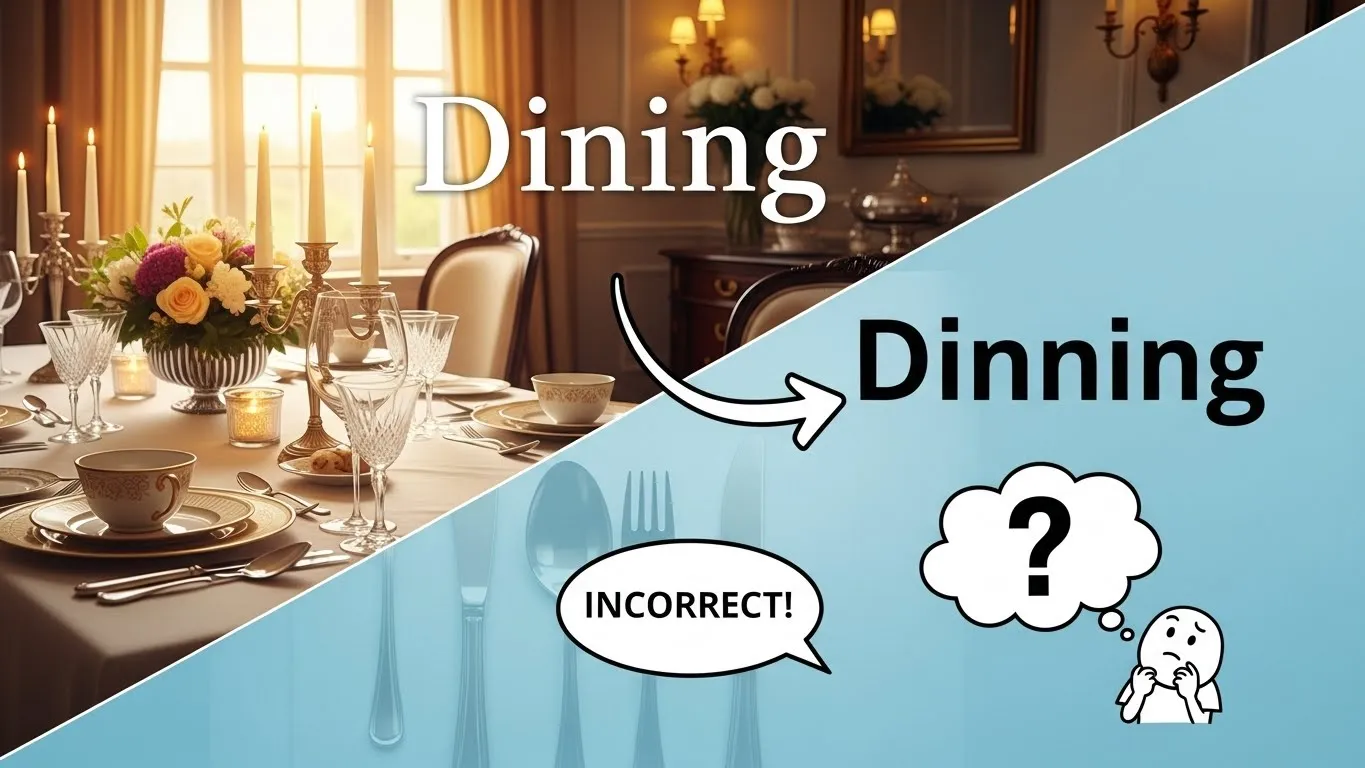
Are you confused about whether to write “dining” or “dinning”? You are not alone. English has many words that sound similar but have very different meanings, and this pair often trips people up. Using the wrong spelling can make your writing look unprofessional and even change your sentence meaning entirely. For instance, while “dining” relates to eating meals, “dinning” refers to a loud, repeated noise.
Many people search for this keyword because they see it online, in books, or in emails, and they are unsure which is correct. Understanding the difference is crucial for writers, students, bloggers, and professionals alike. This article will provide a clear, step-by-step explanation of dining vs dinning, their origins, spelling differences between British and American English, common mistakes, and practical usage examples. By the end, you will know exactly which word to use and how to avoid embarrassing errors.
Dining or Dinning – Quick Answer
Quick Answer:
- Dining → Correct spelling for eating meals.
- Dinning → Correct only when referring to a loud, continuous noise.
Examples:
- Dining: We are dining at the new Italian restaurant tonight.
- Dinning: The construction work was dinning into our ears all morning.
Remember, most people looking for “dining or dinning” are concerned about meals. In almost all cases related to food, “dining” is correct.
The Origin of Dining or Dinning
Dining
The word dining comes from the Old French word disner, meaning to have the first meal of the day (breakfast in medieval times). Over centuries, its meaning shifted to refer to having any meal, especially the main meal, which we call lunch or dinner today.
Dinning
Dinning, on the other hand, originates from the Old English dynian, meaning to make a loud, continuous noise. The word “din” has been in English since the 14th century, specifically referring to a harsh, persistent sound.
Key Point: Though they sound similar, these words have completely different roots and meanings. One relates to meals, the other to noise.
British English vs American English Spelling
In terms of spelling, both dining and dinning remain the same in British and American English. The confusion is not about regional spelling differences but about meaning and context.
| Word | British English | American English | Meaning | Example |
| Dining | Dining | Dining | Eating meals | We are dining in London tonight. |
| Dinning | Dinning | Dinning | Making loud, continuous noise | The children were dinning outside. |
Unlike words like “colour/color” or “travelling/traveling,” there is no spelling variation between the UK and US for these words.
Which Spelling Should You Use?
When deciding between dining and dinning, the audience and context matter:
- For US/UK/Commonwealth audiences: Use dining for meals.
- For professional writing or global communication: Stick to dining unless referring to noise.
- When writing about sound: Only use dinning.
Practical Tip: If your content is food-related (restaurants, recipes, meal plans), always use dining.
Common Mistakes with Dining or Dinning
Many people make these errors:
- Confusing the meaning: Writing We were dinning at the hotel (incorrect, should be dining).
- Spelling error: Writing diningg (extra “g” is wrong).
- Overuse of dinning in casual writing: Misusing “dinning” for meals in blogs or social media.
- Mixing up homophones: Writing dining but intending to describe noise (incorrect context).
Correcting Mistakes:
- Meal context → dining
- Noise context → dinning
Dining or Dinning in Everyday Examples
Emails:
- Correct: We will be dining with the client on Friday.
- Incorrect: We will be dinning with the client on Friday.
News Articles:
- Correct: Luxury hotels offer private dining experiences.
- Incorrect: Luxury hotels offer private dinning experiences.
Social Media:
- Correct: Enjoying fine dining at my favorite restaurant!
- Incorrect: Enjoying fine dinning at my favorite restaurant!
Formal Writing:
- Correct: The conference included a formal dining session.
- Incorrect: The conference included a formal dinning session.
Fun Fact: You rarely need “dinning” unless literally describing loud, persistent noise.
Dining or Dinning – Google Trends & Usage Data
A quick look at Google Trends shows dining is overwhelmingly more searched worldwide than dinning, especially in the US, UK, Canada, and Australia. People search this term mostly in food-related contexts like dining out, fine dining, and dining etiquette.
- Dining → 95% of searches
- Dinning → 5% of searches (mostly noise-related articles or linguistic queries)
Insight: If your content is SEO-driven, focusing on “dining” will attract far more relevant traffic.
Keyword Comparison Table
| Feature | Dining | Dinning |
| Meaning | Eating meals | Loud, persistent noise |
| Spelling Consistency | Same in UK & US | Same in UK & US |
| Common Usage | Restaurants, meals, etiquette | Noise, sound-related writing |
| Audience Relevance | Global, food lovers, writers | Niche, very specific |
| SEO Potential | High | Low |
FAQs
1. Is “dinning” ever correct?
Yes, but only when describing loud, continuous noise, e.g., The dinning from the construction was unbearable.
2. Can I use “dining” for breakfast, lunch, or dinner?
Yes. It refers to any meal, though “dinner” is most common in formal contexts.
3. Is there a regional difference in spelling?
No. Both words are spelled the same in British and American English.
4. How can I remember the difference?
Think: dining → meal, dinning → din/noise.
5. Can “dinning” be used metaphorically?
Rarely. It might describe metaphorical noise or repeated annoyance but is uncommon.
6. Which word should I use in blog posts about restaurants?
Always use dining. “Dinning” would confuse readers.
7. Is “dining room” correct?
Yes, it is correct everywhere. Avoid “dinning room,” which is incorrect.
Conclusion
Understanding dining vs dinning is simple once you know the difference: dining relates to meals, while dinning refers to noise. Most online searches and practical writing involve food, meaning dining is the correct choice nearly all the time. Using the wrong term can confuse readers and make your content appear unprofessional.
Whether you are writing emails, blog posts, news articles, or social media captions, stick with dining for any food-related context. Use dinning only if you are explicitly describing loud, continuous noise. Always double-check your writing, especially if you are preparing content for global audiences, as this ensures clarity and professionalism.
By keeping this guide handy, you can avoid common mistakes, choose the right spelling for your audience, and confidently use dining or dinning in every type of content.
👉 Bellies or Bellys: Which Spelling Is Correct?

I am Oliver Kentwood, an English author fascinated by the quirks of language. I explore correct and incorrect spellings, helping readers navigate common confusions with clarity and style.