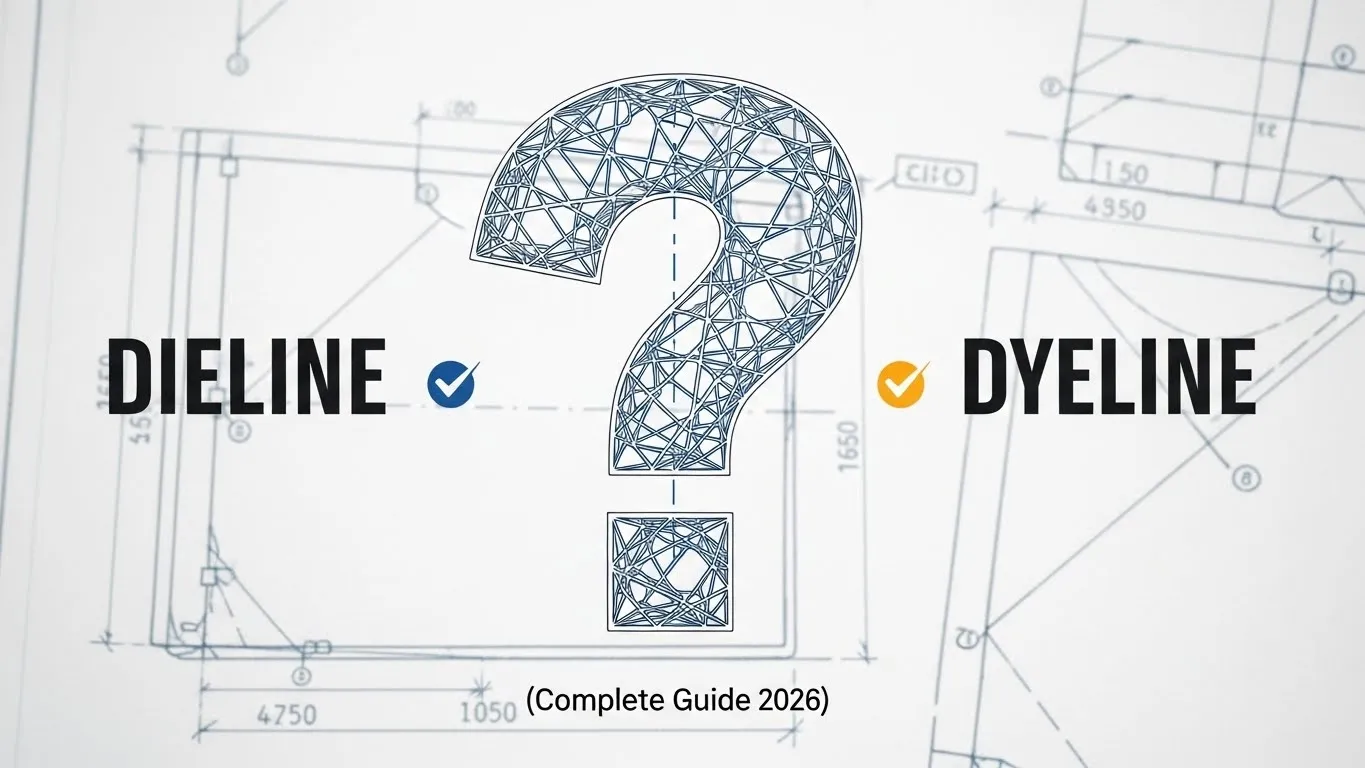
If you work in packaging, printing, graphic design, or product manufacturing, you may have searched “dieline or dyeline” at least once. The confusion is very common. You might see dieline used in professional design files, while dyeline appears in emails, job orders, or casual conversations. Both spellings look correct, sound the same, and are often used interchangeably—which makes things even more confusing.
People search this keyword because they want to avoid mistakes in professional documents. A small spelling error can look unprofessional, especially when dealing with printers, packaging vendors, or international clients. Designers want to know which spelling is industry-approved. Writers and students want the “correct” English form. Businesses want consistency across documents.
This article solves that confusion completely. You will get a clear quick answer, understand where the word comes from, see how British and American English differ, and learn which spelling you should use based on your audience. You’ll also see real-life examples, common mistakes, Google Trends insights, and FAQs—all written in simple, clear language.
By the end, you will know exactly when to use dieline and when dyeline is best avoided.
Dieline or Dyeline – Quick Answer
Dieline is the correct and widely accepted spelling.
- ✅ Correct: Please send the dieline before printing.
- ❌ Incorrect: Please send the dyeline before printing.
Dyeline is considered a misspelling or informal variant. It appears mainly because people spell the word as it sounds.
In professional design, printing, and packaging industries, dieline is the standard term.
The Origin of Dieline or Dyeline
The word dieline comes from two parts:
- Die → A metal tool used to cut or shape materials like paper, cardboard, or plastic.
- Line → The outline or guide.
A dieline is a technical drawing that shows where a package will be cut, folded, or glued.
The spelling dieline developed directly from the word die. Over time, some people started spelling it as dyeline because it sounds the same when spoken. However, dyeline has no historical or technical root in printing or manufacturing.
So:
- Dieline → Technically correct and historically accurate
- Dyeline → Phonetic spelling, not industry standard
British English vs American English Spelling
Unlike many spelling debates (color vs colour, center vs centre), this is not a UK vs US difference.
Both British English and American English prefer “dieline.”
Comparison Table
| Aspect | American English | British English |
| Preferred spelling | Dieline | Dieline |
| Used in printing industry | Yes | Yes |
| “Dyeline” accepted? | No | No |
| Found in dictionaries | Rare | Rare |
Dyeline is not officially recognized in either variant of English.
Which Spelling Should You Use?
Your choice should depend on professional standards, not personal preference.
- For US audiences: Use dieline
- For UK or Commonwealth audiences: Use dieline
- For global clients: Use dieline
- For academic or formal writing: Use dieline
- For emails with printers or designers: Use dieline
Using dyeline may make you look inexperienced or careless in professional settings.
Common Mistakes with Dieline or Dyeline
Here are frequent errors people make:
- ❌ Spelling it as dyeline in official documents
✅ Use dieline - ❌ Writing die line as two words
✅ Write dieline as one word - ❌ Capitalizing randomly (DieLine)
✅ Use lowercase unless starting a sentence - ❌ Assuming dyeline is British spelling
✅ It is not a UK variant
Avoiding these mistakes improves clarity and professionalism.
Dieline or Dyeline in Everyday Examples
Emails
- Please find the attached dieline for approval.
News / Industry Articles
- The updated dieline ensures accurate folding and cutting.
Social Media
- Always double-check your dieline before sending to print.
Formal Writing
- The packaging dieline was reviewed for production accuracy.
You will rarely see dyeline used by professionals.
Dieline or Dyeline – Google Trends & Usage Data
Search data shows that “dieline” is searched far more often than “dyeline.”
- Dieline is popular in:
- United States
- United Kingdom
- Canada
- Australia
- Design and printing industries worldwide
- Dyeline appears:
- In informal searches
- Among beginners or non-native speakers
- Mostly in regions with limited packaging industry exposure
This confirms that dieline is the dominant and trusted spelling globally.
Comparison Table: Dieline vs Dyeline
| Feature | Dieline | Dyeline |
| Correct spelling | ✅ Yes | ❌ No |
| Industry accepted | ✅ Yes | ❌ No |
| Used by professionals | ✅ Yes | ❌ Rare |
| Based on word origin | ✅ Yes | ❌ No |
| Recommended for SEO | ✅ Yes | ❌ No |
FAQs: Dieline or Dyeline
1. Is dyeline ever correct?
No. It is an informal or incorrect spelling.
2. Why do people write dyeline?
Because it sounds like “dieline” when spoken.
3. Is dieline one word or two?
One word: dieline.
4. Is dieline used only in printing?
Mostly yes, but also in packaging, manufacturing, and design.
5. Do dictionaries accept dyeline?
Most do not list it as a standard word.
6. Can I use dyeline in casual writing?
You can, but dieline is still recommended.
7. Which spelling is best for SEO?
Dieline performs better and looks professional.
Conclusion
The confusion between dieline or dyeline is understandable, but the correct choice is clear. Dieline is the accepted, professional, and technically accurate spelling. It comes directly from the word die, which refers to the cutting tool used in printing and packaging. Both American and British English agree on this spelling, making it the safest option for global use.
Dyeline, on the other hand, exists mainly because of pronunciation. While it may appear in informal messages or search queries, it lacks industry recognition and historical support. Using it in professional documents can reduce credibility, especially when dealing with designers, printers, or manufacturers.
If your goal is clarity, professionalism, and consistency, always choose dieline. It works in emails, contracts, design files, academic writing, and online content. Remember: correct spelling is not just about grammar—it’s about trust and expertise.
When in doubt, stick with dieline.
👉 Instable or Unstable: Which Spelling Is Correct? (Guide 2026)

Samuel A. Whitmore an English language writer and editor , specializes in spelling, grammar, and usage differences between British and American English. Focuses on helping readers avoid common writing mistakes through clear explanations, practical examples, and easy-to-follow comparisons. My work aims to make English spelling rules simple and accessible for students, professionals, and everyday writers.