Have you ever paused while writing and wondered if it should be cueing or cuing? You’re not alone. This is a very common spelling question, especially in writing about films, sports, music, presentations, and everyday actions.
Both spellings look correct, both are used online, and both appear in real writing which makes the confusion even stronger.
People search for cueing or cuing because English spelling rules are not always consistent. When a word ends in a silent -e, should you drop it before adding -ing, or keep it? English sometimes does one thing, sometimes the other.
That’s where uncertainty begins, especially for students, writers, and professionals who want their English to look polished.
This article clears up the confusion once and for all. You’ll get a quick answer, learn where the spellings come from, see how British and American English treat them, and understand which one to use depending on your audience.
By the end, you’ll confidently know when to write cueing and when cuing without hesitation.
Cueing or Cuing ; Quick Answer
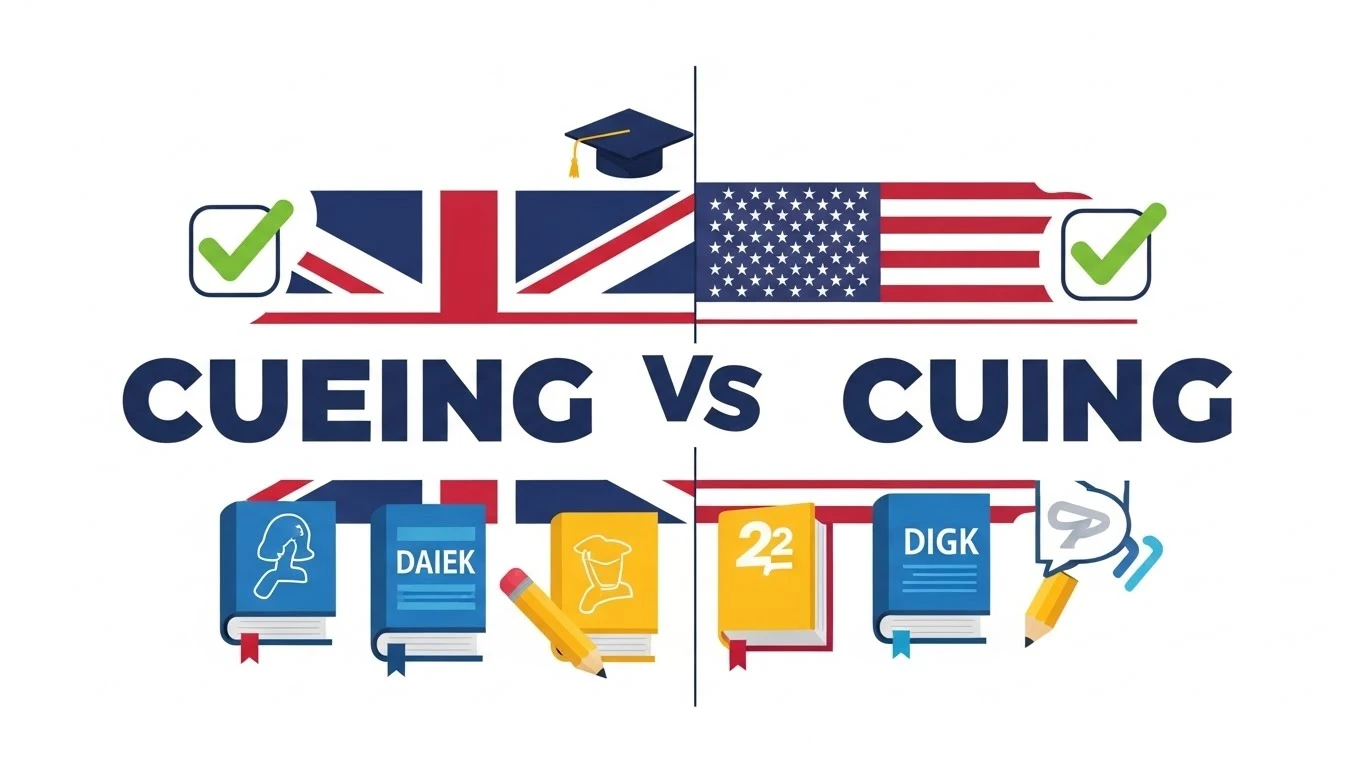
✅ Both are correct spellings.
- Cueing is more common in British English.
- Cuing is more common in American English.
Examples:
- The director is cueing the actors.
- The referee is cuing the start of the match.
The Origin of Cueing or Cuing
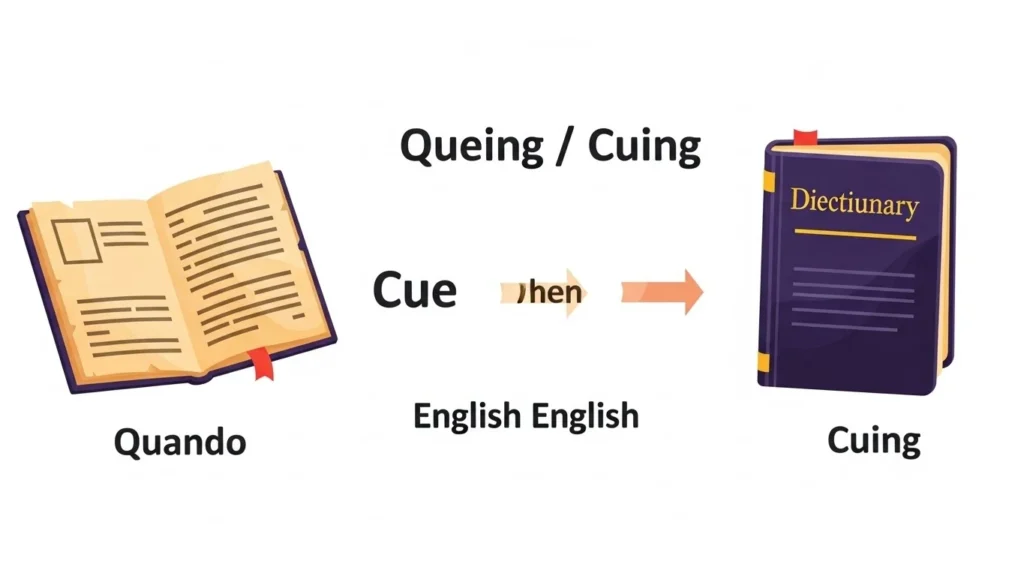
The word cue comes from the Latin quando, meaning “when.” Over time, it came to mean a signal or prompt to act. When English speakers added -ing, two forms developed. Some kept the -e (cueing), while others followed the general rule of dropping it (cuing). Both forms became accepted, leading to today’s variation.
Pronunciation: Cueing vs Cuing
Aksar log sochte hain ke shayad pronunciation bhi different hogi, lekin:
- Cueing → /ˈkjuː.ɪŋ/
- Cuing → /ˈkjuː.ɪŋ/
📌 Dono ka pronunciation bilkul same hota hai
Is wajah se spelling confusion aur barh jata hai, kyun ke bolne mein difference sunai hi nahi deta.
More about Sewn or Sewed? The Correct Past Tense Explained Simply
Cueing vs Related Confusing Words (Extra Clarity)
English learners aksar cue, queue, aur Q ko mix kar dete hain.
| Word | Meaning | Example |
| Cue | Signal / prompt | That was his cue to speak |
| Queue | Line / waiting list | We stood in a long queue |
| Q | Letter abbreviation | The script marked a “Q” |
👉 Cueing / cuing sirf “cue” se related hai, “queue” se nahi.
Verb Forms of Cue (Extended Grammar Data)
Yeh section grammar-focused readers ke liye useful hai:
| Form | Word |
| Base verb | cue |
| Past tense | cued |
| Past participle | cued |
| Present participle | cueing / cuing |
| Noun form | cue |
✅ The technician cued the sound.
✅ Music is cueing now.
Style Guides Kya Recommend Karte Hain?
Professional writers ke liye yeh section bohat powerful hota hai:
- AP Style Guide (US): prefers cuing
- Chicago Manual of Style: allows both, favors cuing for US writing
- Oxford Style Guide (UK): prefers cueing
- Cambridge Dictionary: lists both as correct
📌 Is ka matlab:
✔️ Editors bhi dono spellings accept karte hain, bas region match hona chahiye.
When Cueing Looks More Natural Than Cuing (UX Insight)
Kuch readers ke liye:
- Cueing visually zyada readable lagta hai
- Cuing thora short aur technical lag sakta hai
Isi wajah se:
- Creative writing / theatre / arts → cueing zyada use hota hai
British English vs American English Spelling
This is a regional spelling difference, not a meaning difference.
| Form | British English | American English |
| Cueing | ✅ Preferred | Acceptable |
| Cuing | Acceptable | ✅ Preferred |
Which Spelling Should You Use?
Choose based on your audience:
- UK & Commonwealth: Use cueing
- US audience: Use cuing
- Global or mixed audience: Either is acceptable, but be consistent
- Formal writing: Follow the style guide you’re using
Common Mistakes with Cueing or Cuing
- ❌ Mixing both spellings in one document
✅ Choose one and stay consistent - ❌ Thinking one is wrong
✅ Both are correct - ❌ Changing spelling based on meaning
✅ Meaning stays the same
Cueing or Cuing in Everyday Examples
- Email: “I am cueing the slides now.”
- News: “The coach was cuing the next play.”
- Social media: “Just cueing my favorite song!”
- Formal writing: “The assistant was cuing performers.”
Cueing or Cuing ; Google Trends & Usage Data
Search trends show cuing is more common in the United States, while cueing appears more often in the UK and other Commonwealth countries. Searches peak among writers, editors, and ESL learners who want to confirm which spelling is correct for their audience.
Comparison Table: Cueing vs Cuing
| Feature | Cueing | Cuing |
| Correct spelling | ✅ Yes | ✅ Yes |
| British preference | High | Low |
| American preference | Medium | High |
| Meaning | Same | Same |
FAQs
1. Is cuing correct English?
Yes, especially in American English.
2. Is cueing wrong?
No, it is correct, especially in British English.
3. Do they have different meanings?
No, the meaning is the same.
4. Which is more formal?
Neither formality depends on context.
5. Should I follow my style guide?
Yes, always.
6. Can I use both in one article?
No, consistency is important.
Conclusion
The choice between cueing or cuing is not about right versus wrong it’s about regional preference. Both spellings are accepted in standard English and carry the same meaning. Cueing is more common in British English, while cuing is preferred in American English. Understanding this difference helps you write clearly and professionally for your audience.
The key is consistency. Once you choose one spelling, stick with it throughout your writing. If you’re writing for a US audience or following American style guides, cuing is usually the better choice. For UK or Commonwealth readers, cueing will feel more familiar.
When in doubt, check your audience and style guide. With that simple step, the confusion disappears and your writing stays confident and correct.

Daniel R. Foster is an experienced English language writer and editor who specializes in explaining commonly confused words and grammar nuances. With a strong passion for clarity in communication, he creates easy-to-understand comparisons that help learners, students, and professionals use English more confidently. His articles focus on accuracy, real-world examples, and practical usage.