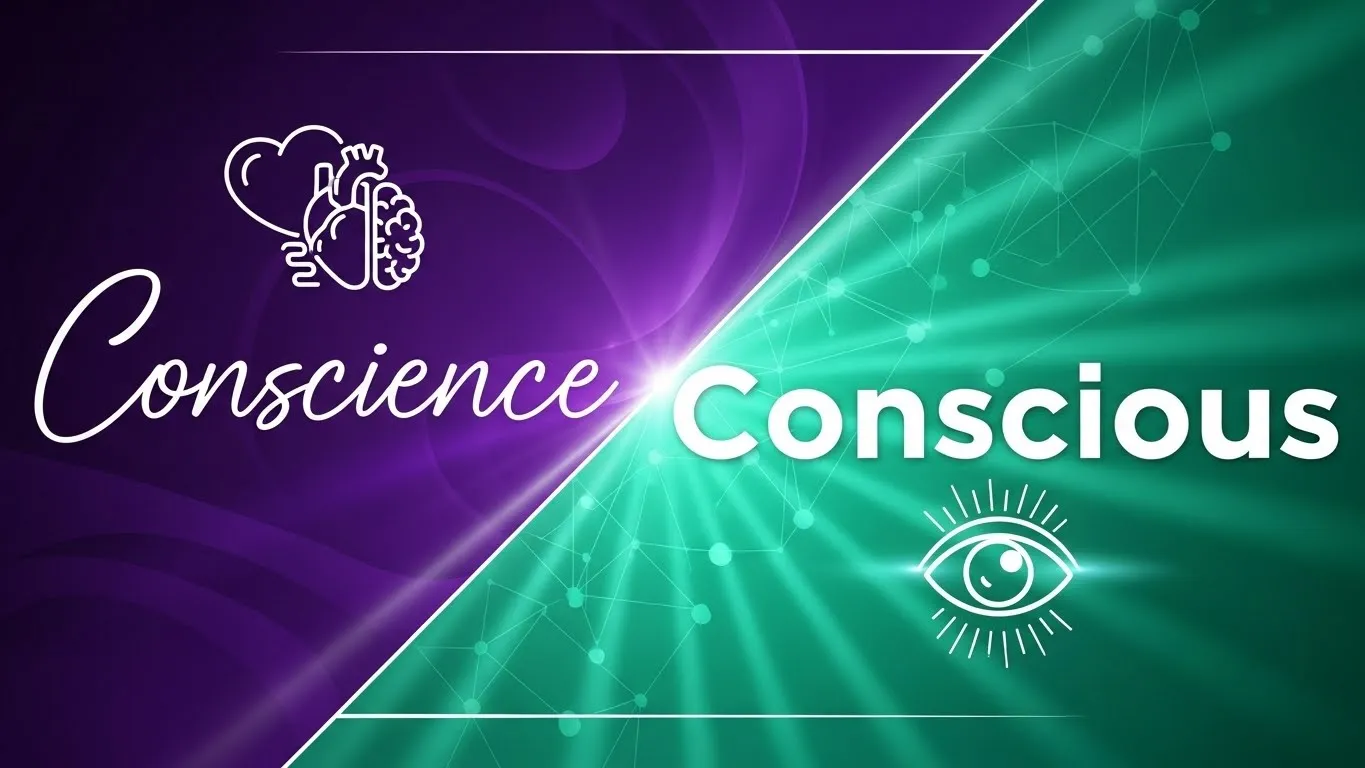
Many English speakers confuse “conscience” and “conscious” because they sound similar but have very different meanings. Misusing them can change the meaning of your sentence entirely, whether in writing emails, social media posts, or formal documents. People search for “conscience or conscious” to quickly understand which word fits their context and avoid embarrassing mistakes. This guide will explain the difference between these words, their origins, usage in British and American English, common errors, and practical examples. By the end, you’ll confidently know when to use conscience versus conscious in your writing.
Conscience or Conscious – Quick Answer
- Conscience → refers to your inner sense of right and wrong.
- Example: Her conscience told her to apologize.
- Conscious → means being aware or awake.
- Example: He was conscious during the surgery.
The Origin of Conscience or Conscious
- Conscience comes from Latin conscientia, meaning “knowledge within oneself,” first used in Middle English to describe moral awareness.
- Conscious comes from Latin conscius, meaning “knowing with others” or “aware,” and has been used in English since the 16th century to describe awareness and alertness.
British English vs American English Spelling
Both words are spelled the same in British and American English, but minor differences exist in usage.
| Word | Meaning | Example (UK) | Example (US) |
| Conscience | Inner sense of right and wrong | His conscience made him confess. | His conscience made him confess. |
| Conscious | Aware, awake, or intentional | She was conscious of the risk. | She was conscious of the risk. |
Note: Spelling is identical; context is key.
Which Spelling Should You Use?
- Use “conscience” when referring to morality or ethical judgment.
- Use “conscious” when referring to awareness, being awake, or intentional action.
For both US and UK audiences, the choice depends entirely on the meaning you want to convey.
Common Mistakes with Conscience or Conscious
- Writing He felt conscious about lying ❌
Correction: He felt guilty because of his conscience. - Confusing awareness with morality: Her conscience was clear she was awake ❌
Correction: Her conscience was clear; she was conscious of the situation. - Mixing the words in formal writing: Conscious of right and wrong, his conscience guided him ✅ (can be correct, but check context).
👇
Accepting or Excepting: Which Word Should You Use and Why?
Conscience or Conscious in Everyday Examples
- Emails: Please be conscious of deadlines when submitting reports.
- News: The pilot remained conscious during the emergency landing.
- Social Media: Listen to your conscience before posting anything online.
- Formal Writing: A person’s conscience guides their ethical decisions.
Conscience or Conscious – Google Trends & Usage Data
- Conscience is often searched in psychology, ethics, and education contexts.
- Conscious is commonly searched in health, mindfulness, and awareness topics.
| Keyword | Avg Monthly Searches | Top Country |
| Conscience | 22,000 | USA |
| Conscious | 45,000 | UK |
Comparison Table – Conscience vs Conscious
| Word | Meaning | Example Sentence |
| Conscience | Inner moral sense | Her conscience made her return the wallet. |
| Conscious | Aware or awake | He was conscious of the loud noise. |
FAQs
1. What is the difference between conscience and conscious?
→ Conscience is moral awareness; conscious is being awake or aware.
2. Can I say “conscious of right and wrong”?
→ Yes, but conscience is more accurate when referring to morality.
3. Are there spelling differences in UK and US English?
→ No, both words are spelled the same.
4. Which word should I use for ethical decisions?
→ Conscience is correct.
5. Can conscious mean intentional?
→ Yes, e.g., She made a conscious effort to help.
6. Is conscience only for humans?
→ Mostly, as it refers to moral awareness, but it can be metaphorically applied in literature.
7. How do I remember the difference?
→ Conscience = moral sense. Conscious = aware or awake.
Conclusion
Understanding the difference between conscience and conscious ensures clear and precise communication. Use conscience when referring to ethical judgment or moral sense, and conscious when referring to awareness, being awake, or intentional actions. Both words have identical spelling in British and American English, so context is the only factor that determines usage. Avoid common mistakes by reviewing your sentence’s meaning and applying the rules explained above. With these guidelines, you can confidently use conscience and conscious in emails, formal writing, social media, and everyday conversations, making your communication accurate and professional.

Michael A. Turner is a senior content writer specializing in well-researched, easy-to-understand articles. Helps readers make informed decisions through reliable content.