Many people search “can or may” because these small words cause big confusion. Both are used in questions and permissions, but they do not mean the same thing. This often leads to mistakes in emails, exams, and formal writing.
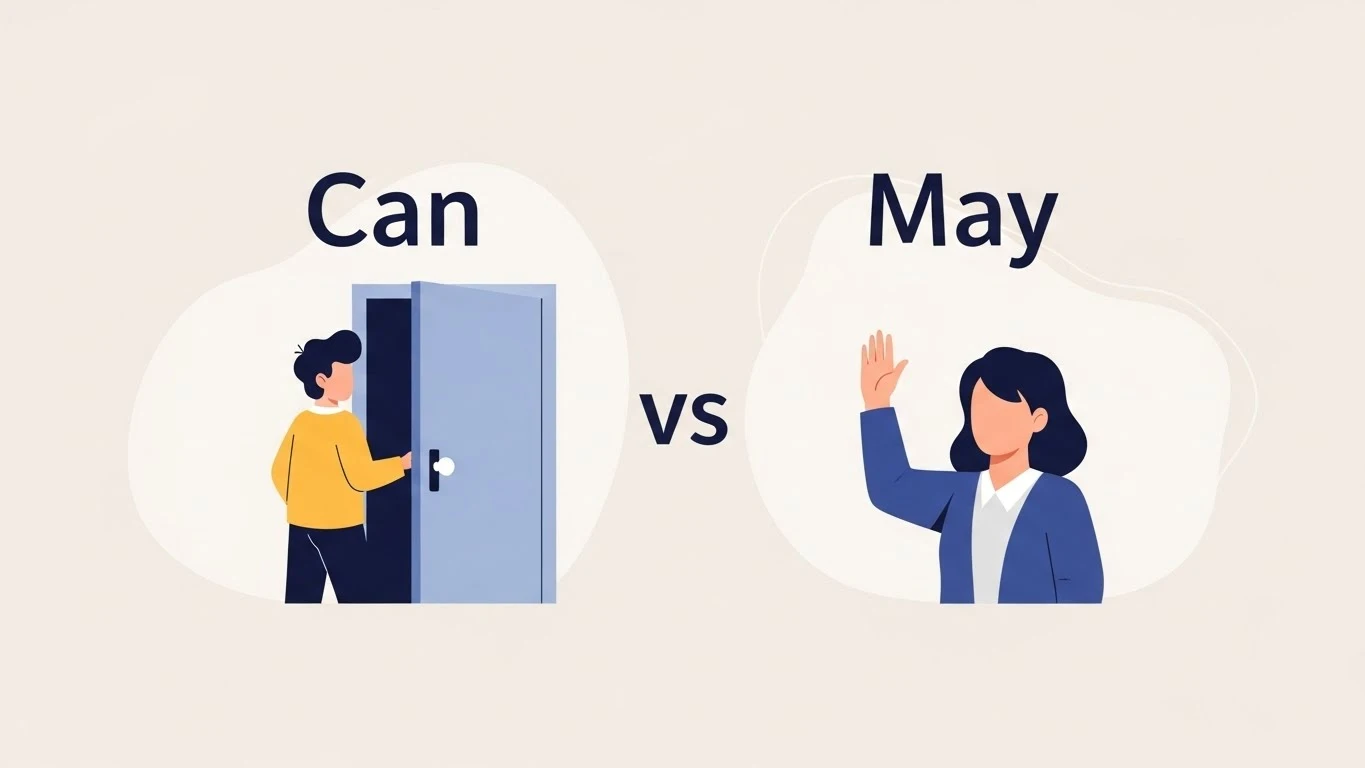
The difference is simple: can refers to ability, while may refers to permission. Spoken English has blurred this rule, which is why people mix them up. This article explains the difference in plain language with clear rules and real examples—so you know exactly when to use can and may with confidence.
Can or May – Quick Answer
- Can → talks about ability or possibility
- May → talks about permission or polite requests
Examples:
- ✅ I can swim. (ability)
- ✅ May I leave the room? (permission)
The Origin of Can or May
The word can comes from Old English cunnan, meaning “to know” or “to be able.” It was always linked to ability.
The word may comes from Old English magan, meaning “to be allowed” or “to have power.” It was linked to permission and possibility.
Over time, everyday speech mixed the two. People started using can for permission because it sounded easier and more natural. This is why confusion exists today.
British English vs American English Usage
There is no spelling difference, but usage tone can differ slightly.
- American English often uses can even for permission.
- British English prefers may in formal settings.
Comparison Table
| Context | American English | British English |
| Ability | can | can |
| Informal permission | can | can |
| Formal permission | may | may |
Which Should You Use?
Use based on situation and audience.
- US audience:
- Casual → can
- Formal → may
- UK/Commonwealth audience:
- Casual → can
- Formal → may
- Global or professional writing:
- Use may for permission
Rule to remember:
Ability = can
Permission = may
Common Mistakes with Can or May
- ❌ May you swim?
✅ Can you swim? - ❌ Can I leave the exam hall? (very formal exam)
✅ May I leave the exam hall?
Tip:
If you can replace the word with “allowed,” use may.
Can or May in Everyday Examples
Emails
- ✅ May I request a meeting?
News
- ✅ The policy may affect prices.
Social Media
- ✅ I can’t believe this happened!
Formal Writing
- ✅ Participants may withdraw at any time.
Can or May – Google Trends & Usage Data
Search data shows:
- “Can I” is more common in spoken and informal searches.
- “May I” appears more in academic and exam-related searches.
Countries with strong grammar focus (UK, India, Pakistan) search “can or may” more often for exams and formal writing.
Comparison Table: Can vs May
| Word | Main Use | Formal Level |
| can | ability, informal permission | low |
| may | permission, possibility | high |
FAQs: Can or May
1. Is “Can I go to the bathroom?” wrong?
Not wrong, just informal.
2. Is “May I go to the bathroom?” correct?
Yes, and more polite.
3. Can “may” show possibility?
Yes. Example: It may rain.
4. Can “can” show permission?
Yes, in casual speech.
5. Which is better in exams?
Use may for permission.
6. Do native speakers mix them?
Yes, very often.
7. Is one more polite?
Yes, may is more polite.
Conclusion
The difference between can or may is simple once you understand the rule. Can is about ability and informal permission. May is about permission and polite or formal situations. Both words are correct, but the context decides which one fits best.
In daily conversation, people often use can for everything, and that is normal. In exams, professional emails, legal writing, and formal requests, may is the safer and more correct choice. Knowing this difference improves clarity and shows strong language skills.
If you remember just one thing, remember this: ability equals can, and permission equals may. With this rule, you will never feel confused again.
Read More:
Choosen or Chosen: Which One Is Correct?
Many or Meny: Which Spelling Is Correct?

Daniel R. Foster is an experienced English language writer and editor who specializes in explaining commonly confused words and grammar nuances. With a strong passion for clarity in communication, he creates easy-to-understand comparisons that help learners, students, and professionals use English more confidently. His articles focus on accuracy, real-world examples, and practical usage.