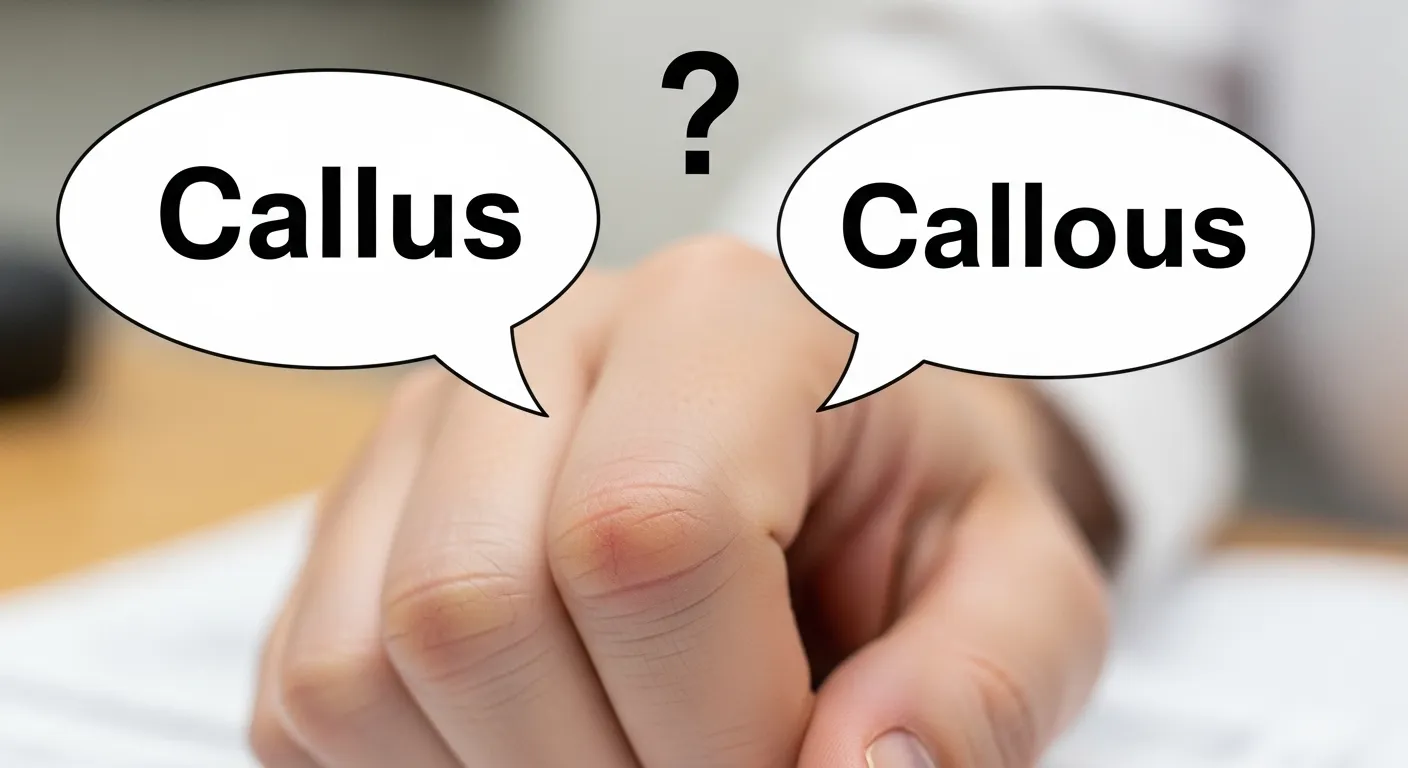
✅ Callus is a hard area of skin, while callous describes a person who is emotionally insensitive.
Many people search for “callus or callous” because these two words look almost the same but have very different meanings. Mixing them up can change the meaning of a sentence completely. For example, writing “a callous on his hand” is correct, but saying “he is callus” is wrong.
The confusion usually happens in writing, exams, emails, and health-related content. One word belongs to medical or physical descriptions, while the other describes attitude or behavior. Knowing the difference helps you write clearly and sound more professional.
In this article, you’ll get a quick answer, learn the origin of both words, see British vs American usage, spot common mistakes, and read simple everyday examples. By the end, you’ll confidently know when to use callus and when to use callous.
Callus or Callous – Quick Answer
✅ Callus = a thick, hard area of skin caused by friction or pressure.
✅ Callous = emotionally cold, insensitive, or unkind.
Examples:
- He has a callus on his foot from running.
- She made a callous remark about the accident.
They are not interchangeable.
The Origin of Callus and Callous
Callus comes from Latin callus, meaning hard skin. It has always referred to a physical condition.
Callous also comes from Latin callosus, meaning hard. Over time, English extended its meaning from physical hardness to emotional hardness a lack of feeling or sympathy.
This shared origin explains why the words look similar but serve different purposes.
British English vs American English Usage
There is no spelling difference between British and American English for these words.
| Word | British English | American English |
| Callus | ✅ Correct | ✅ Correct |
| Callous | ✅ Correct | ✅ Correct |
The difference is meaning, not region.
Which Word Should You Use?
Use callus when:
- Talking about skin, feet, hands, or medical topics
- Referring to physical pressure or friction
Use callous when:
- Describing attitude, behavior, or emotions
- Talking about cruelty or lack of sympathy
Memory tip:
- Callus = skin
- Callous = cold heart
Common Mistakes with Callus or Callous
❌ He developed a callous on his hand.
✅ He developed a callus on his hand.
❌ She is very callus toward others.
✅ She is very callous toward others.
Callus or Callous in Everyday Examples
Emails:
- Long typing hours caused a callus on his finger.
News:
- The official’s callous response angered the public.
Social Media:
- Gym life = hands full of calluses 💪
Formal Writing:
- Repeated pressure leads to callus formation.
- His callous attitude showed no empathy.
Comparison Table: Callus vs Callous
| Word | Meaning | Usage | Example |
| Callus | Hard skin | Medical / physical | A callus formed on her heel. |
| Callous | Emotionally insensitive | Behavior / attitude | A callous comment shocked everyone. |
FAQs: Callus or Callous
1. Can callous refer to skin?
No, use callus for skin.
2. Is callus a medical term?
Yes, commonly used in medical contexts.
3. Are both words used worldwide?
Yes, with the same spelling in all regions.
4. Which one is negative?
Callous has a negative meaning.
5. How can I remember the difference?
Callus = skin, callous = cold heart.
Conclusion
The confusion between callus or callous happens because the words look alike but mean very different things. Callus refers to a physical condition of the skin, while callous describes emotional coldness or lack of empathy.
Remember the simple rule: hands get calluses, hearts get callous. Once you know this, you’ll never mix them up again. Using the correct word improves clarity, professionalism, and confidence in your English.
Vail or Veil: Which Spelling Is Correct and When to Use It?

Miles Thornton is a seasoned author and content specialist with a knack for simplifying complex topics. Passionate about clear, engaging writing, creates articles that inform and inspire readers. With years of experience in digital publishing, Miles combines professionalism with creativity, delivering insightful content for diverse audiences